Daily basics
Morning
- Fresh diaper and a clean outfit
- Wipe the face, neck folds and hands with a warm washcloth
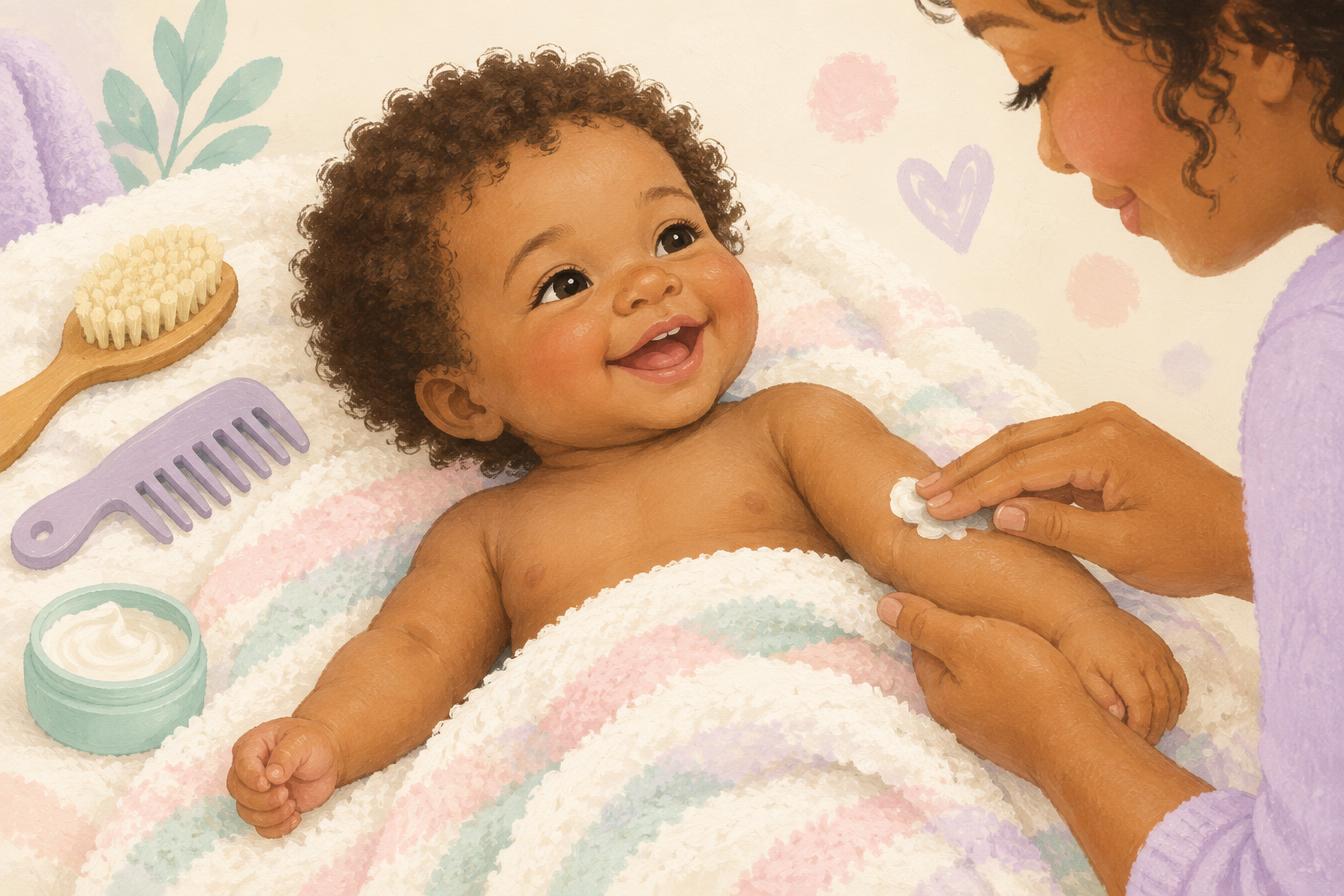
- Moisturize any dry patches
- Open curtains for daylight
Throughout the day
- Change diapers promptly; add barrier cream if needed
- Wipe drool and milk from the chin and neck
- Supervised tummy time while awake
- Shade and covering clothes outdoors
Evening
- Bath (on bath days) or a warm washcloth wipe
- Moisturize, fresh diaper and pajamas or a sleep sack
- Feed, a song or book, and into the safe sleep space on the back
Weekly tasks
- Two or three baths
- Hair wash — two or three times for most babies; once a week or less for some with coily hair
- Trim or file fingernails
- Wash brushes and combs
- Check clothing sizes and stock diapers, wipes and creams
Building your routine, step by step
- Start with the non-negotiables: feeding, diapers and safe sleep.
- Add daily skin basics: face and fold wiping, diaper-area care.
- Choose bath days that suit your family — for example, Monday, Wednesday and Saturday evenings.
- Pick one small calming ritual to repeat before sleep.
- Review every few weeks as your baby grows and your needs change.
Tip: Write your routine on a simple chart and stick it where everyone can see it. It helps partners, grandparents and babysitters keep things consistent.
Adapting to your baby
Every baby is different. A baby with eczema may need more moisturizing and fewer baths. A baby with thick, coily hair may need longer between shampoos and more conditioner. A baby who dislikes baths may prefer shorter ones. Follow your baby’s cues, and ask your pediatrician for guidance if you’re unsure.
A sample day
Here is one example of how a care routine might look for a baby around four months old. Times are only a guide — your baby’s cues matter more than the clock.
Morning
- Wake, feed, diaper and outfit change
- Face and neck wipe; moisturize dry spots
- Tummy time and floor play
Midday
- Nap in the safe sleep space
- Feed and diaper change
- A walk in the shade, or play
Afternoon
- Nap
- Feed and diaper change
- Wipe drool and milk from chin and neck
Evening
- Bath on bath days
- Moisturize, diaper and sleep sack
- Feed, song, and into the crib
At every age
Every child is different — use these as a starting point, not a rulebook.
0–1 month
Sponge baths, frequent diaper changes, lots of cuddles. Routine is very loose.
1–6 months
Tub baths on set days, a short bedtime routine, weekly nail care.
6–12 months
Add teeth brushing, face and hand washing after meals, and sun protection outdoors.
Common mistakes to avoid
- Trying to copy someone else’s routine exactly.
- Adding more products instead of simplifying.
- Changing the bedtime routine every night.
- Expecting your baby to follow the routine perfectly.
Helpful parent tips
- Prepare supplies in advance so each step is quick.
- Share the routine with everyone who cares for your baby.
- Let the routine bend on busy days — consistency over time matters more than perfection.
Questions parents ask
When should I start a routine?
You can start gentle patterns right away, but most babies don’t follow predictable timing until a few months old.
What if my baby hates bath time?
Keep baths short, make sure the room and water are warm, and try a different time of day.
Do I need a written routine?
Not necessarily, but many families find a simple chart helpful, especially when several people help with care.