How often?
The AAP notes that about three baths a week may be enough during the first year. Bathing more often can dry out the skin, especially for babies with eczema or very dry skin. Between baths, wash the face, hands, neck folds and diaper area daily.
Safety first
- Never leave your baby alone in or near water — not even for a moment.
- Fill the tub with only 2–3 inches of warm water before your baby goes in, and turn off the tap.
- Test the water with your wrist or elbow; it should feel warm, not hot.
- Keep your hot water heater set at or below 120°F (49°C).
- Bath seats and rings are not safety devices and do not prevent drowning.
A step-by-step tub bath
- Gather everything first: washcloth, mild fragrance-free cleanser, towel, diaper, clothes and moisturizer.
- Lower your baby in feet first, supporting the head and neck.
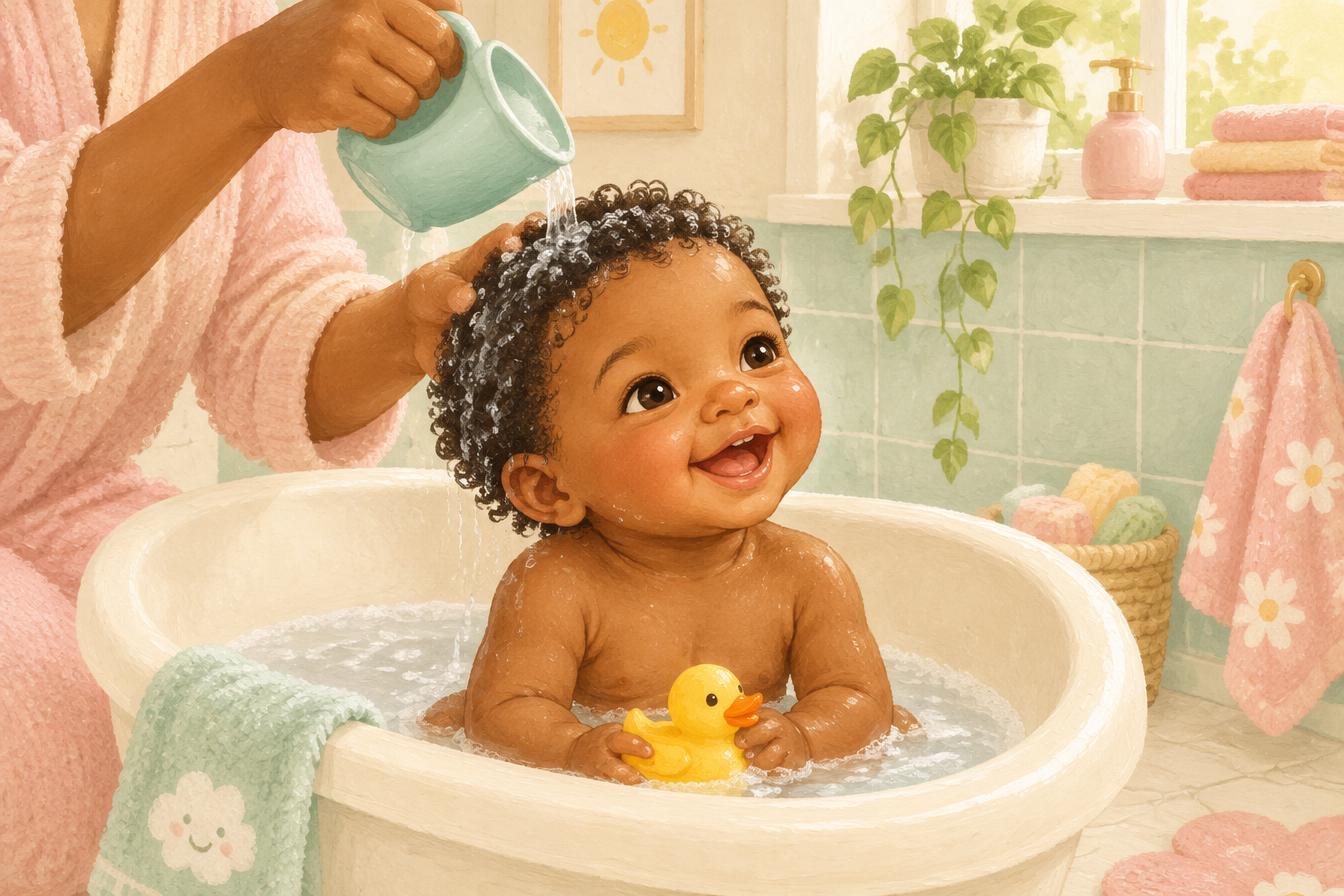
- Keep your baby warm by pouring cupfuls of water over their body regularly.
- Wash the face with plain water, then the body from top to bottom, using a small amount of cleanser only where needed.
- Wash the diaper area last.
- Wash and rinse the hair.
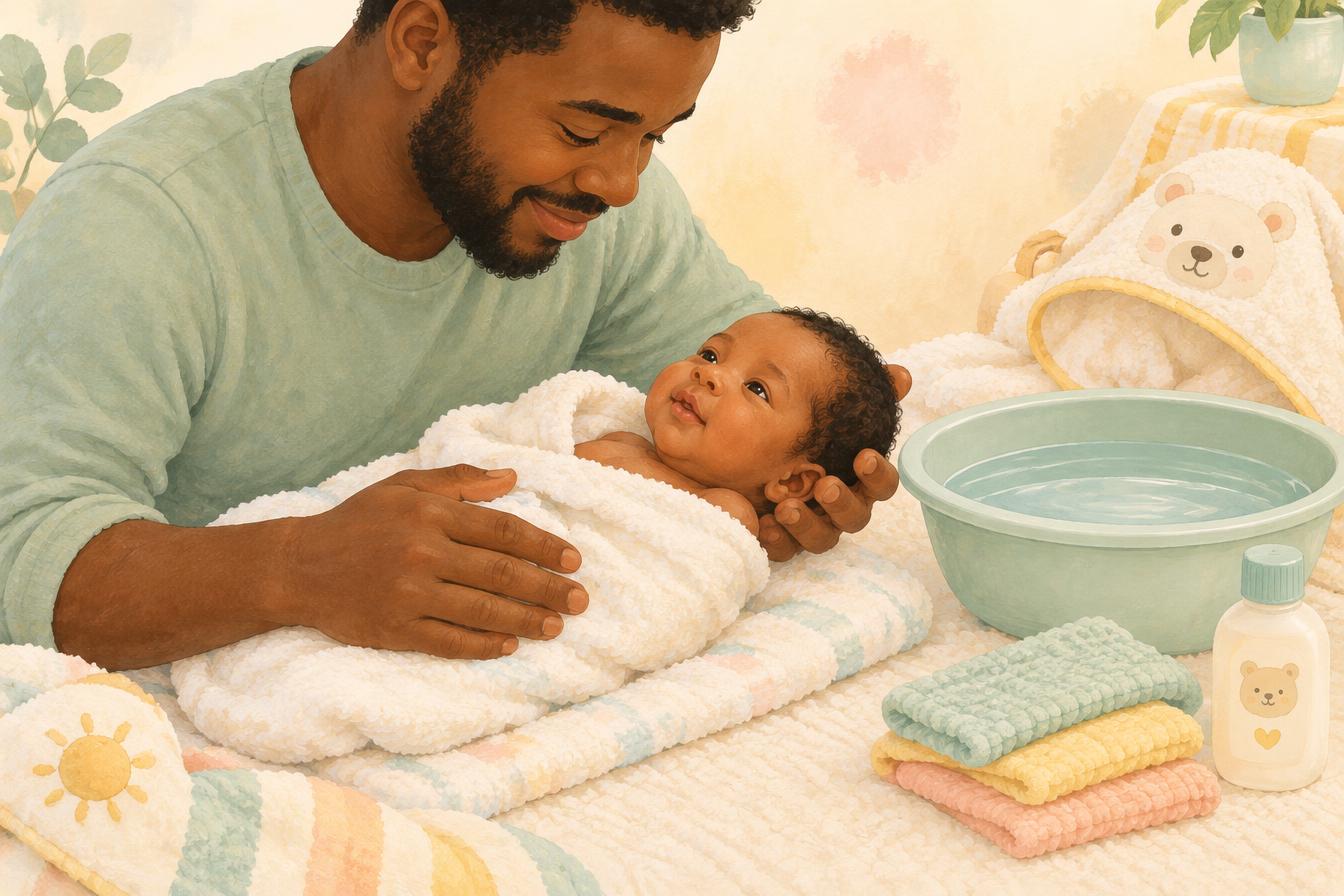
- Lift your baby out onto a towel, wrap them up and pat dry.
Protecting the skin barrier
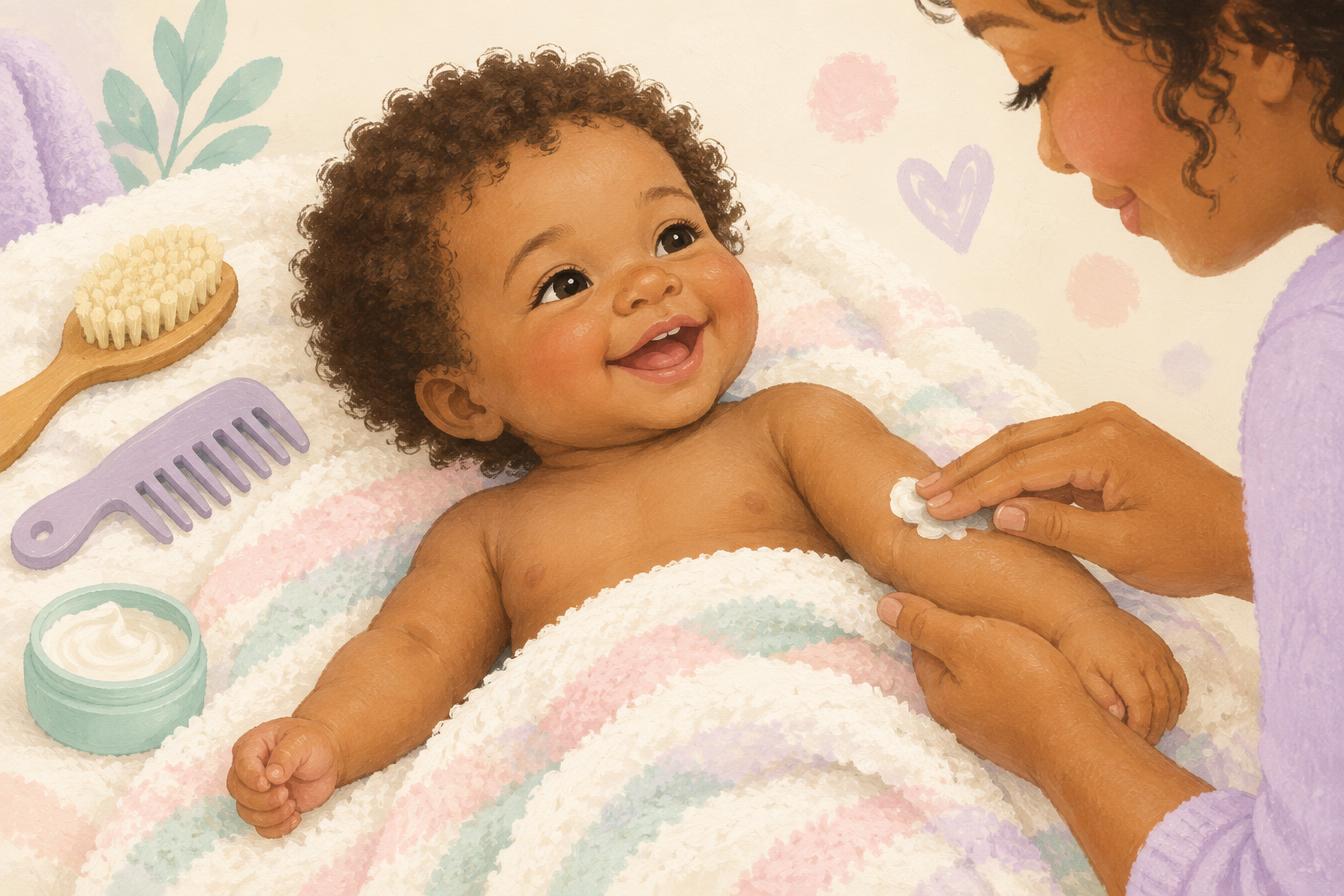
Baby skin loses moisture easily. Keep baths to about five to ten minutes in lukewarm water. Right after patting dry, while the skin is still slightly damp, apply a thin layer of fragrance-free moisturizer if your baby’s skin tends to be dry.
Making bath time enjoyable
- Keep the room warm to avoid chills.
- Sing or talk throughout.
- Introduce simple cups or bath toys once your baby can sit with support.
- If your baby dislikes baths, try a shorter bath or bathing together (with another adult to help hand your baby in and out).
Bath time for babies with eczema, dry skin or textured hair
Some babies need a slightly different approach. If your baby has eczema or very dry skin, dermatologists usually recommend short, lukewarm baths with a small amount of fragrance-free cleanser, then moisturizer within a few minutes of patting dry. Your pediatrician may suggest how often to bathe — for some babies, a daily short soak followed straight away by moisturizer helps; for others, fewer baths are better.
For babies with curly or coily hair, you don’t need to shampoo every bath. Some baths can be body-only, with the hair simply rinsed or left alone. On hair-wash days, adding a little conditioner and finger-detangling before rinsing reduces tangles and pulling.
At every age
Every child is different — use these as a starting point, not a rulebook.
1–3 months
Short tub baths, fully supported, three times a week or so.
4–6 months
Your baby may enjoy kicking and splashing. Keep water shallow.
6–12 months
Babies may sit up but can still slip and tip. Constant supervision is essential.
Common mistakes to avoid
- Bathing every day with soap, which can dry the skin.
- Bubble baths or perfumed products, which can irritate skin.
- Leaving a baby in the care of an older sibling in the bath.
- Filling the tub while your baby is in it.
Helpful parent tips
- Place a towel or non-slip mat in the tub for grip.
- Keep a spare hand towel nearby to cover your baby’s tummy and keep them warm.
- For curly hair, add a little conditioner during the bath and detangle with fingers before rinsing.
Questions parents ask
Can I bathe my baby every day?
You can, but it’s not necessary and may dry the skin. If you bathe daily, keep it brief, use plain water most days and moisturize afterward.
What temperature should the bath be?
Warm, not hot — it should feel comfortable on your wrist or elbow. Some families use a bath thermometer and aim for around body temperature.
Should I use cleanser on my baby’s face?
Plain water is usually enough for the face.
My baby hates getting out of the bath. What helps?
Have a warm towel ready, keep the room cozy, and wrap your baby immediately. A cuddle and a familiar song as soon as they come out can make the transition easier.