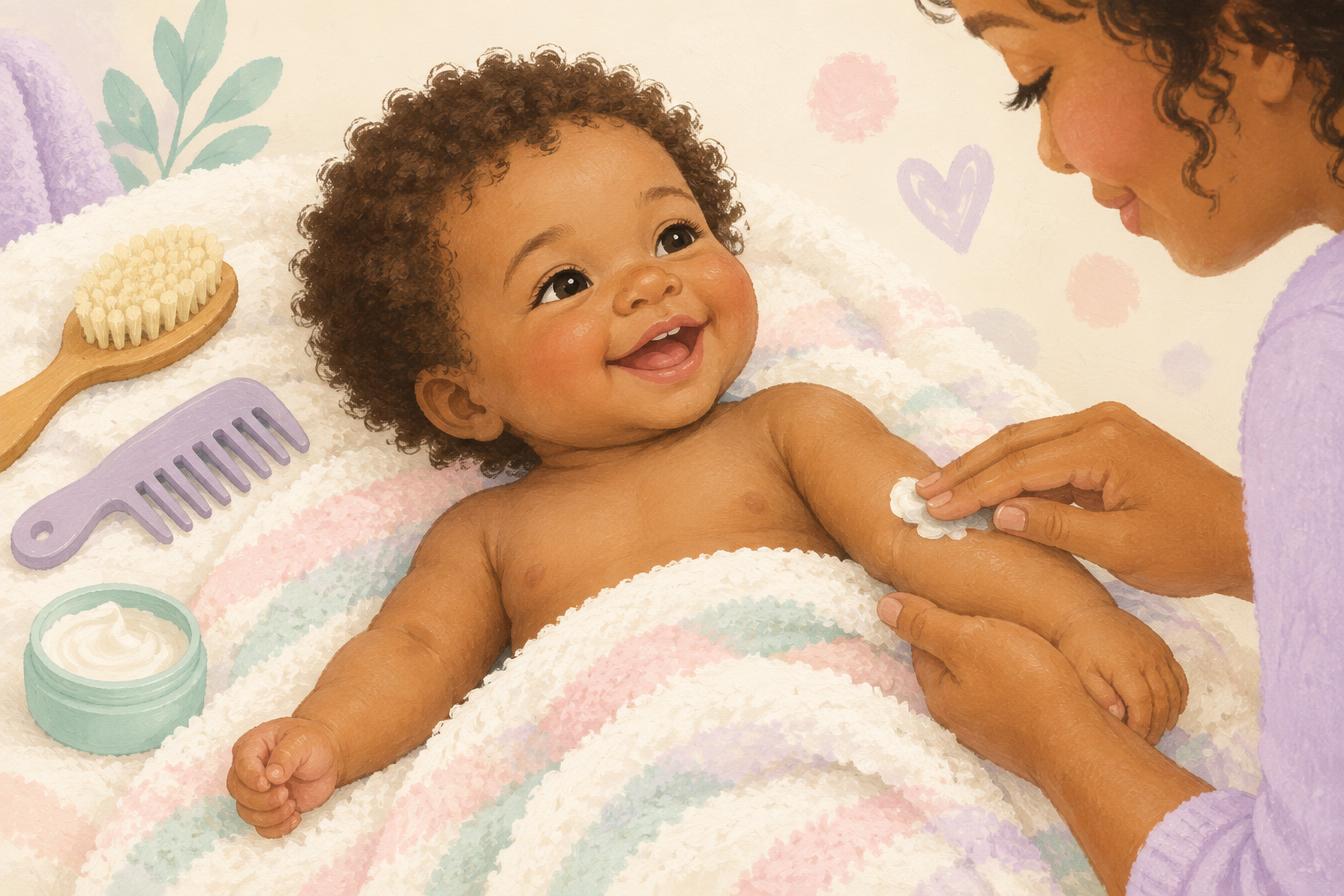
Signs your baby’s skin needs moisture
- Rough, flaky or scaly patches
- Ashy or gray-looking skin, often most noticeable on melanin-rich skin
- Small cracks, especially on hands, feet or around the ankles
- Skin that looks tight or dull after bathing
Lotion, cream or ointment?
Moisturizers range from thin to thick. In general, the thicker the product, the better it holds moisture in. Dermatologists often recommend creams or ointments over lotions for dry skin.
Lotions
Light and easy to spread, but contain more water and may need reapplying more often. Fine for mildly dry skin in humid weather.
Creams
Thicker and more moisturizing. A good everyday choice for many babies.
Ointments
The thickest option, such as plain petroleum jelly. Very effective for very dry or cracked areas, but can feel greasy.
How to apply moisturizer
- After a short, lukewarm bath, pat your baby mostly dry, leaving the skin slightly damp.
- Within a few minutes, warm a small amount of moisturizer between your hands.
- Smooth it on in the direction of hair growth using gentle, downward strokes.
- Pay attention to dry areas: cheeks, elbows, knees, hands and feet.
- Reapply to dry patches during the day as needed, such as at diaper changes.
Tip: Moisturizing time doubles as baby massage. Slow strokes and a calm voice make it a lovely bonding ritual.
Choosing a moisturizer
- Fragrance-free (not just “unscented”) is often the gentlest option.
- Short ingredient lists make it easier to spot irritants.
- Avoid products with essential oils, strong fragrances or botanical extracts for very young or sensitive babies.
- Try a new product on a small patch of skin for a day or two first.
Moisturizing eczema-prone skin
If your baby has eczema, the AAD recommends moisturizing at least once or twice a day and right after every bath. Your pediatrician or dermatologist may also prescribe medicine for flares; continue moisturizing alongside it as directed.
Moisture and melanin-rich skin
Dryness on brown and Black skin often shows up as a grayish or ashy look, most noticeably on knees, elbows, shins and the backs of the hands. It’s a helpful visual cue: if you see ashiness, your baby’s skin could use a little moisture.
Itchy dry patches that are scratched can sometimes leave darker marks behind on melanin-rich skin. Keeping skin moisturized and treating itch early can help reduce these marks.
At every age
Every child is different — use these as a starting point, not a rulebook.
Newborn
Peeling is normal and often needs nothing. Use plain moisturizer only on cracked areas.
1–6 months
Moisturize after baths if skin is dry; this is when eczema often first appears.
6–12 months
Drool and food can irritate cheeks and chin. A thin barrier of ointment helps.
Common mistakes to avoid
- Using perfumed lotions or adult body products.
- Applying moisturizer to completely dry skin long after the bath.
- Choosing thin lotions for very dry, ashy skin.
- Trying several new products at once, making reactions hard to trace.
Helpful parent tips
- Keep moisturizer next to the changing station so it’s easy to reapply to dry spots.
- On melanin-rich skin, ashy patches are an easy visual cue that moisture is needed.
- Pumps and tubes are more hygienic than open jars you dip into.
When to call a professional
Everyday care supports comfort — it doesn’t diagnose or treat. Contact your pediatrician, dermatologist or healthcare provider if you notice:
- Dry patches that become red (or darker than usual), itchy, weepy or crusty — possibly eczema.
- Skin that bleeds, cracks deeply or shows signs of infection.
- Dryness that doesn’t improve with regular moisturizing.
Questions parents ask
Can I use coconut or olive oil as a moisturizer?
Some families do, but plant oils vary and some may not help the skin barrier. A plain fragrance-free cream or ointment is a reliable choice. Ask your pediatrician if you’re unsure.
How much moisturizer should I use?
Enough to leave a thin, even layer that absorbs within a few minutes. For eczema, doctors often recommend generous amounts.
Does moisturizing prevent eczema?
Research is mixed. Moisturizing helps manage dry skin and eczema, but it isn’t a guaranteed way to prevent eczema.