Winter and cold weather
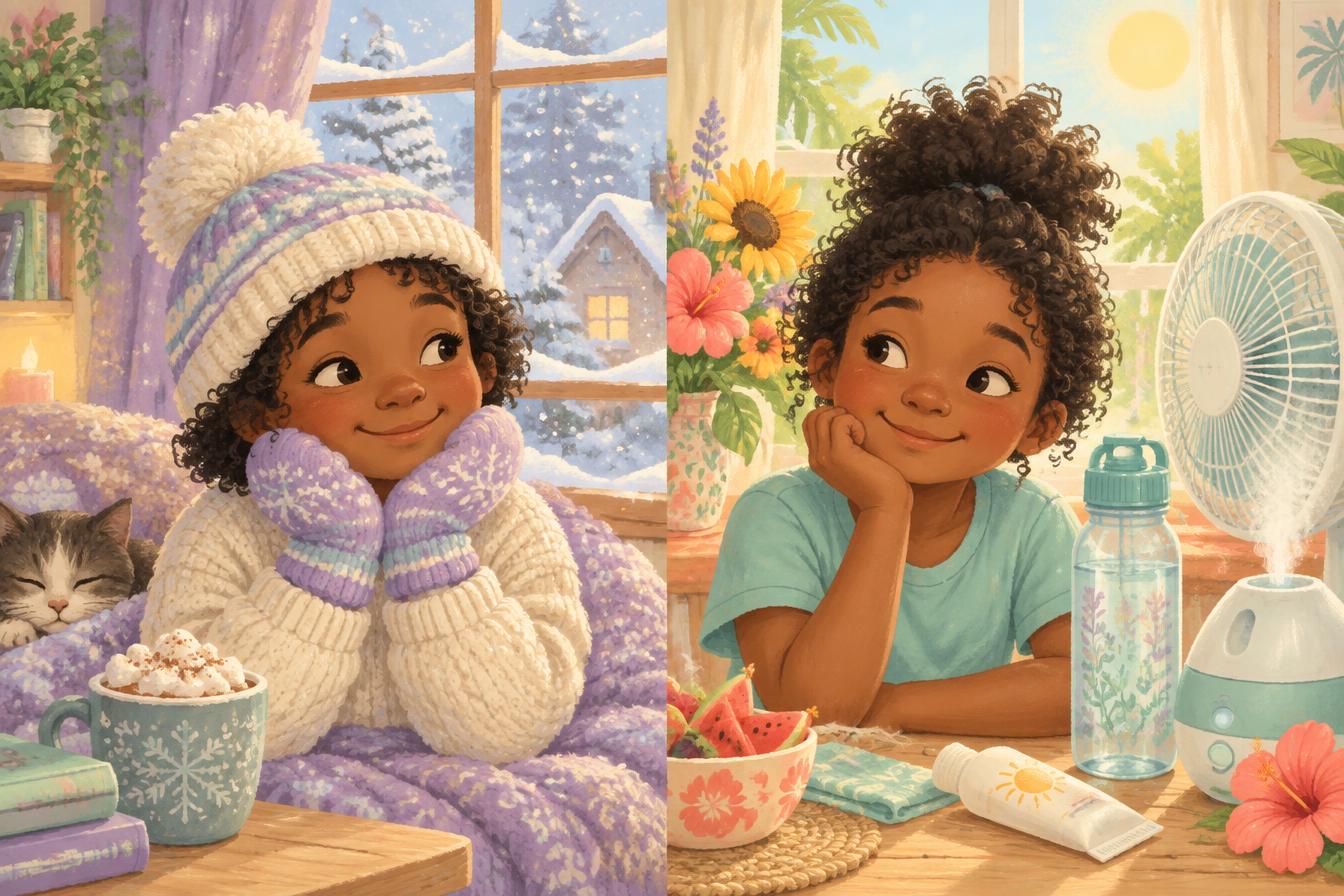
Cold outdoor air and indoor heating both pull moisture from the skin. Babies with eczema or melanin-rich skin may look more ashy or dry in winter.
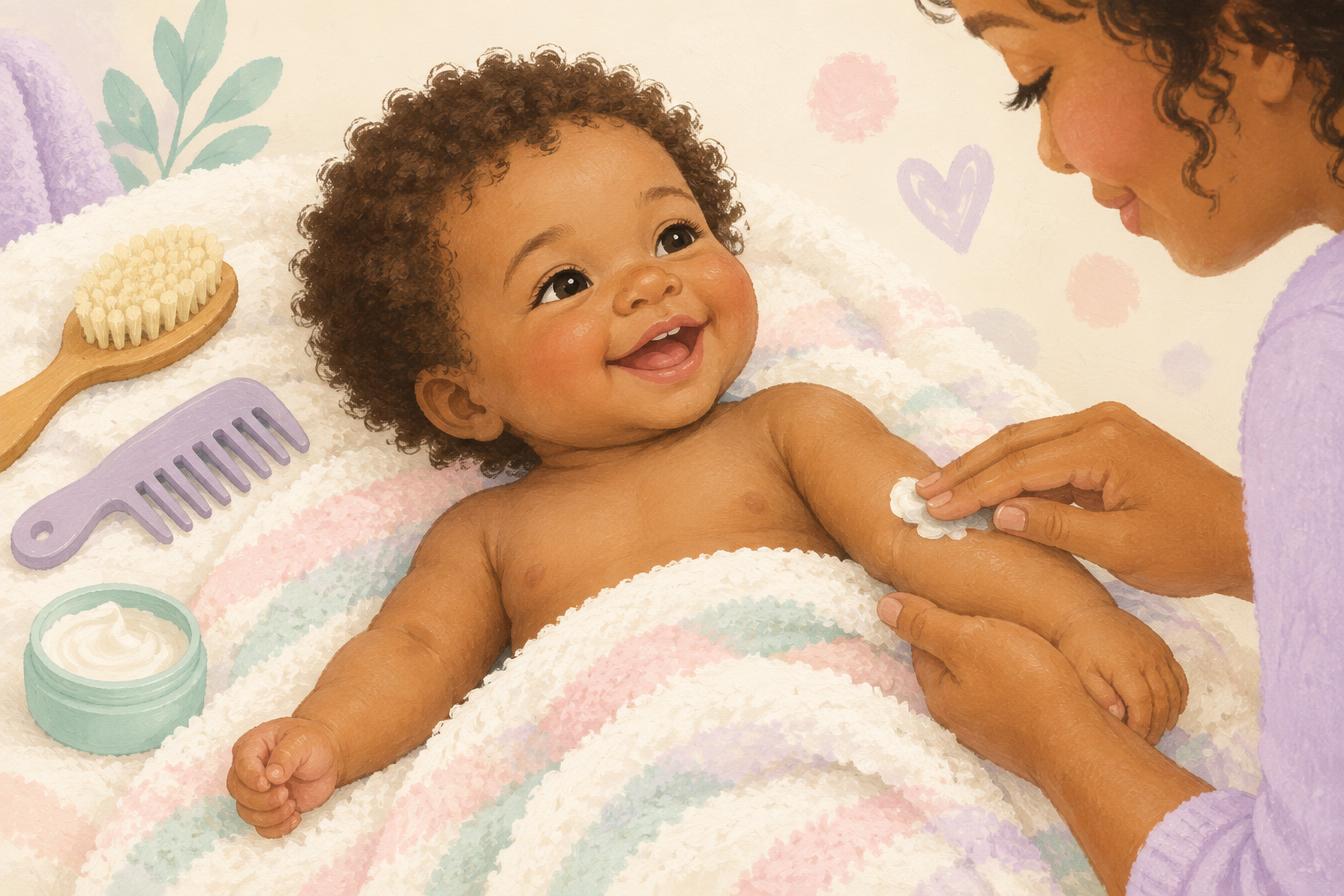
- Switch to a thicker cream or ointment.
- Keep baths short and lukewarm, then moisturize straight away.
- Protect cheeks from wind with a thin layer of ointment before going out.
- Dress in layers, with soft cotton next to the skin.
- Consider a cool-mist humidifier in the bedroom, cleaned regularly.
Summer and hot weather
- Dress in light, loose, breathable cotton.
- Watch for heat rash in neck folds, armpits and the diaper area.
- Switch to lighter lotions if heavy creams feel sticky.
- Offer feeds often to keep your baby hydrated.
- Never leave a baby in a parked car, even for a minute.
Sun safety for babies
Under 6 months
The AAD and AAP advise keeping babies under 6 months out of direct sun. Use shade, stroller canopies, lightweight long sleeves and a wide-brimmed hat. If shade and clothing aren’t enough, a small amount of broad-spectrum, SPF 30+ sunscreen can be applied to small exposed areas such as the face and backs of hands.
6 months and older
Use a broad-spectrum, water-resistant sunscreen with SPF 30 or higher on all exposed skin 15 minutes before going out, and reapply every two hours or after water play. Mineral sunscreens with zinc oxide or titanium dioxide are often gentler on sensitive skin.
Tip: Melanin-rich skin can still burn and needs sun protection too.
Spring and fall transitions
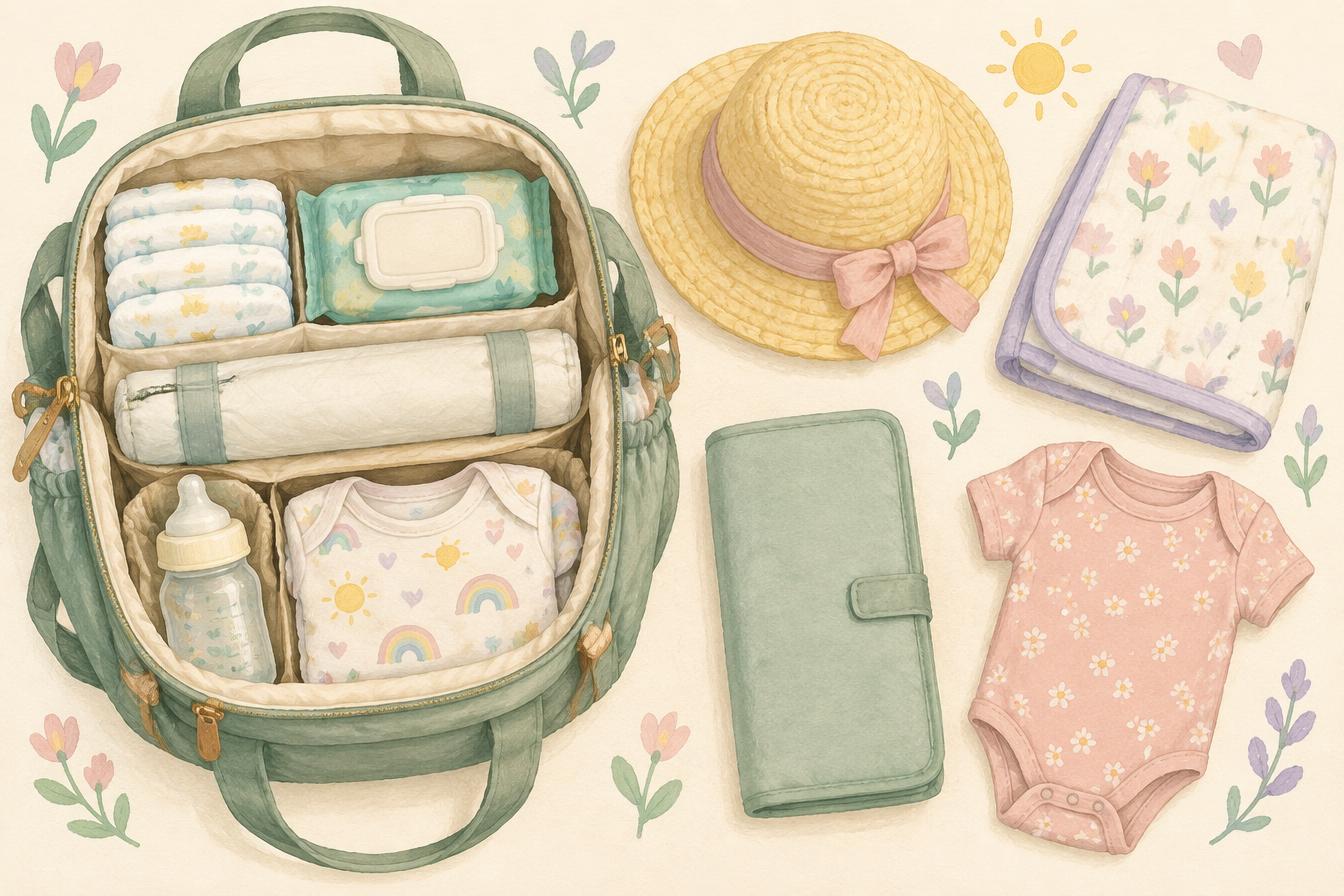
Changing seasons are a good time to review your routine: swap moisturizer weights, check that clothing and sun hats still fit, and restock your diaper bag with weather-appropriate items.
Dressing for the weather
A good general rule is to dress your baby in about one more layer than an adult would wear to feel comfortable. Feel your baby’s chest or back of the neck: sweaty means too warm; cool means add a layer. Hands and feet often feel cool even when your baby is warm enough.
Safe sleep through the seasons
Weather changes can tempt parents to add blankets in winter or leave babies in just a diaper in summer. The AAP recommends keeping the sleep space bare year-round and dressing your baby in no more than one layer more than an adult would wear to be comfortable.
- Use a wearable blanket or sleep sack instead of loose blankets when it’s cold.
- Avoid hats and hoods indoors during sleep — babies release heat through their heads.
- In hot weather, a light cotton bodysuit or sleep sack is usually enough.
- Check the back of the neck: sweaty means too warm.
At every age
Every child is different — use these as a starting point, not a rulebook.
0–6 months
Shade and clothing first for sun. Avoid overheating in both summer and winter.
6–12 months
Sunscreen on exposed skin. Crawlers may get chapped knees in dry weather.
1–2 years
Active toddlers need sunscreen reapplied often and hats that stay on.
Common mistakes to avoid
- Overbundling in winter, which can lead to heat rash — and overheating is a sleep risk.
- Long, hot baths in winter.
- Assuming cloudy days don’t need sun protection.
- Putting a baby in a car seat in a bulky coat.
Helpful parent tips
- Keep a small tube of ointment in your coat pocket for wind-chapped cheeks.
- Choose hats with neck flaps or wide brims for summer.
- Wearable blankets are safer than loose blankets for cold nights.
When to call a professional
Everyday care supports comfort — it doesn’t diagnose or treat. Contact your pediatrician, dermatologist or healthcare provider if you notice:
- Sunburn on a baby under 1 year — call your pediatrician.
- Signs of overheating: unusual sleepiness, flushed hot skin, fast breathing, fewer wet diapers.
- Very dry skin that cracks, bleeds or doesn’t improve with moisturizer.
Questions parents ask
Can I use sunscreen on a baby under 6 months?
Shade and clothing come first. If they aren’t possible, a small amount of broad-spectrum SPF 30+ sunscreen on small exposed areas is acceptable, according to the AAP.
Do babies with darker skin need sunscreen?
Yes. All skin tones can burn and be damaged by UV rays.
Should I use a humidifier?
A cool-mist humidifier can help in dry winter air. Clean it often to prevent mold and bacteria.