How to pack in layers
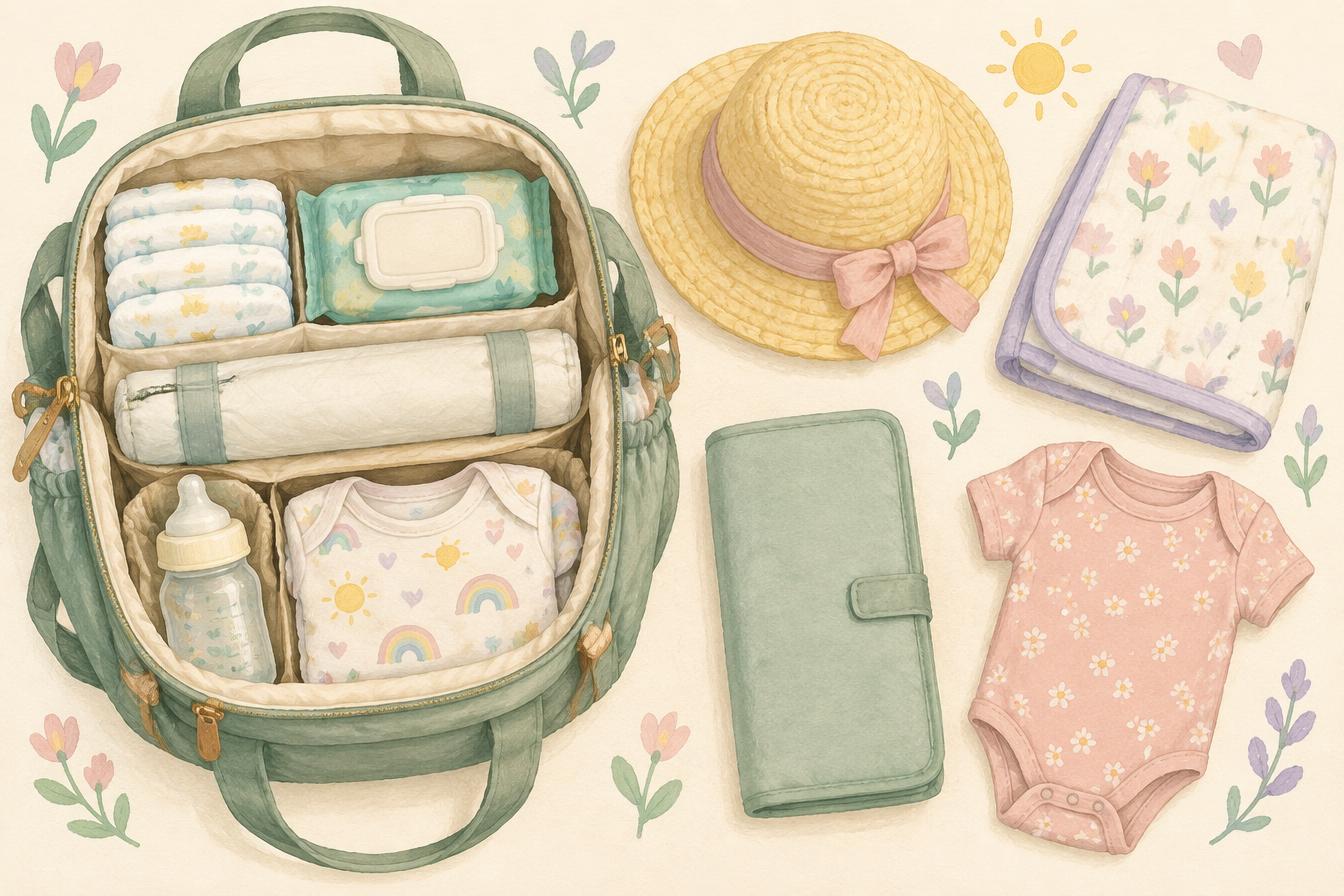
Think of your bag as three parts: a core kit that always stays packed, extras you add for longer outings, and a small emergency pouch. Restock the core kit as soon as you get home, so it’s ready next time.
Tip: Use small zip pouches or clear bags for each category — diapering, feeding, clothes — so you can grab what you need with one hand.
Short outings (up to 2–3 hours)
- 2–3 diapers (one more than you think you’ll need)
- Unscented wipes in a travel pack
- A portable changing pad
- A small tube of barrier cream
- One spare outfit (bodysuit, pants, socks)
- A burp cloth or muslin
- Feeding supplies for one feed, if needed
- A few disposable bags for dirty diapers or wet clothes
- Hand sanitizer for you
Longer trips and full days out
Add these to the short-outing kit:
- One diaper for roughly every two to three hours you’ll be out, plus two extra
- A second spare outfit, and a spare top for you
- Enough feeding supplies for every expected feed, plus one
- For babies eating solids: a bib, spoon, snacks and a sealed container of food
- A light blanket that can double as a nursing cover or play mat
- A familiar comfort item or small toy
- A water bottle and snack for you
Formula and bottle safety on the go
If you bottle-feed, the safest option for outings is often pre-measured powder in a clean container plus a separate bottle of water, mixed when you need it, or ready-to-feed formula. Follow the instructions on the formula label and your pediatrician’s advice about storage times. Expressed breast milk can travel in an insulated bag with ice packs.
The emergency pouch
Keep a small pouch permanently in the bag so you’re covered even on a rushed day:
- One diaper and a few wipes
- A tiny first-aid kit: adhesive bandages, gauze, antiseptic wipes
- Any medications your baby’s doctor has prescribed
- A card with your pediatrician’s number, allergies and emergency contacts
- A little cash and a phone charging cable
- A spare pacifier, if your baby uses one
At every age
Every child is different — use these as a starting point, not a rulebook.
Newborn
More diapers and outfit changes; feeds are frequent, so pack generously.
3–6 months
Add a teething toy and a light blanket for floor play.
6–12 months
Add snacks, a bib, a spoon and a sippy or open cup once solids start.
Toddlers
Fewer diapers, more snacks and activities. Include a spare pair of underwear during potty learning.
Common mistakes to avoid
- Packing for every possible scenario — a heavy bag often stays at home.
- Forgetting to restock after an outing.
- Leaving bottles of prepared formula at room temperature for long periods.
- Putting your baby in a car seat wearing a bulky coat — it can prevent harness straps from fitting snugly.
Helpful parent tips
- Keep a spare diaper and outfit in the car as a backup to the backup.
- A backpack-style bag keeps both hands free.
- Tuck in a small pouch of hair and skin basics — a travel moisturizer and a soft brush — for longer trips.
Questions parents ask
How many diapers should I pack?
A good rule is one diaper for every two to three hours you’ll be away, plus one or two spares.
Do I need a special diaper bag?
No. Any roomy bag or backpack works. Pouches inside keep things organized.
Can I use sunscreen on my newborn?
The AAD and AAP recommend keeping babies under 6 months out of direct sun and using shade and clothing. If that isn’t possible, a small amount of broad-spectrum SPF 30+ sunscreen on exposed areas may be used — ask your pediatrician.