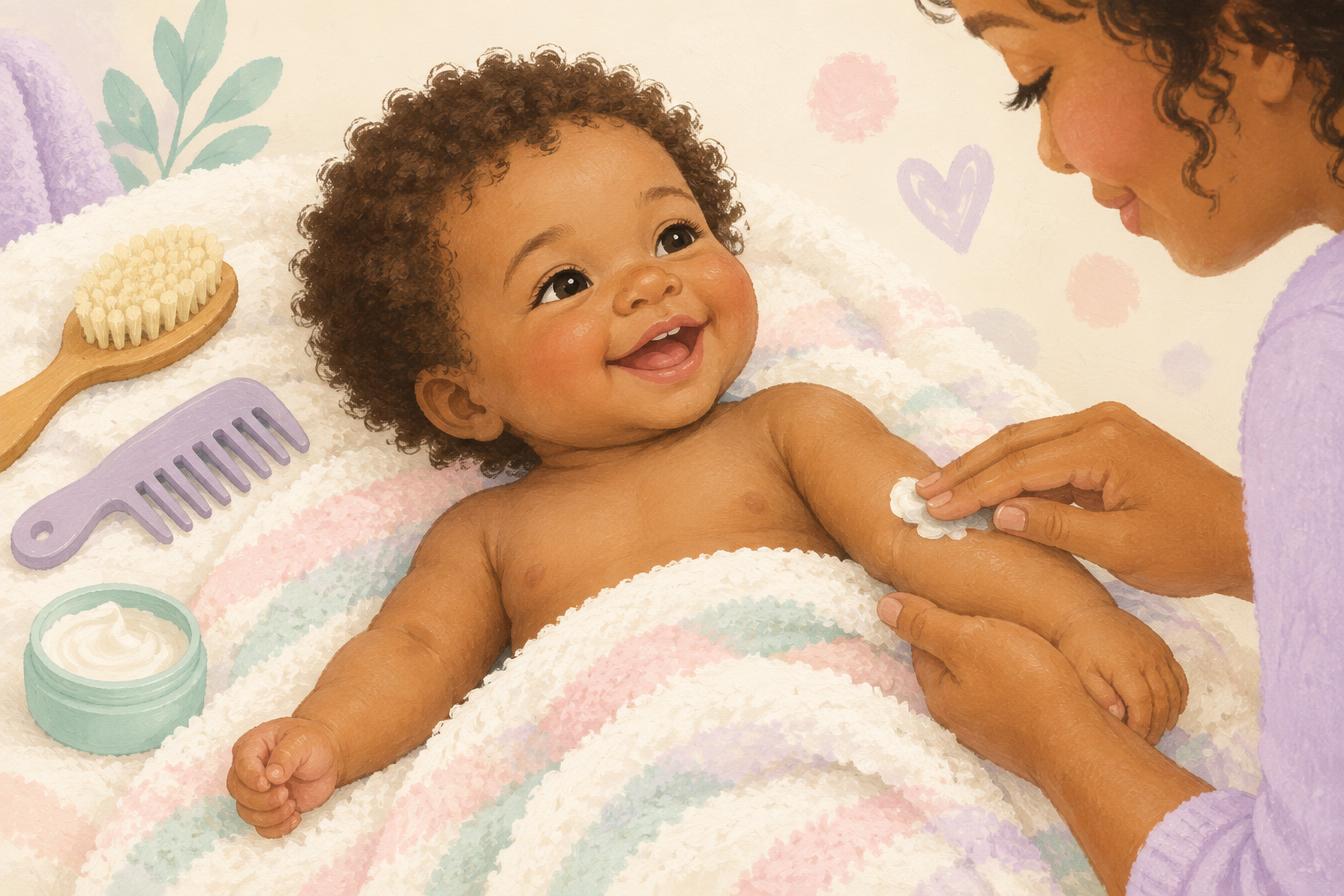
Everyday diaper care
- Change wet or dirty diapers promptly, including once overnight if your baby wakes.
- Clean the skin gently with warm water and a soft cloth, or with unscented, alcohol-free wipes.
- Wipe front to back, especially for girls, and clean inside skin folds.
- Pat dry — or let the skin air-dry for a minute or two.
- Apply a thin layer of barrier cream or ointment if the skin looks pink or your baby is prone to rashes.
- Fasten the new diaper snugly but not tight, leaving room for air.
Choosing a barrier cream
The AAP recommends barrier creams containing zinc oxide or petroleum jelly. They form a protective layer between skin and moisture. Apply thickly, like icing a cake, when a rash is present. You don’t need to scrub off all the old cream at each change — just gently clean away soiled cream and add more.
Treating a mild diaper rash
- Change diapers even more often.
- Give diaper-free time on a towel.
- For sore skin, rinse the area with a squirt bottle of warm water instead of wiping.
- Use a thick layer of zinc oxide paste at every change.
- Temporarily go up a diaper size for more airflow.
Tip: On darker skin, diaper rash may look dark pink, purple, brown or gray rather than bright red. Look for texture changes, shine, bumps or your baby seeming uncomfortable.
Things that can make it worse
- Wipes with fragrance or alcohol
- Baby powder or cornstarch — powders can be inhaled and cornstarch may encourage yeast
- Tight diapers or plastic pants
- Harsh laundry detergents on cloth diapers
Other causes of diaper-area rashes
Some rashes need different treatment. A yeast (candida) rash is often bright and beefy with small spots at the edges, and tends to occur in skin folds. Rashes can also follow antibiotics, a new food or diarrhea. If a rash doesn’t respond to barrier cream in a few days, your pediatrician may recommend an antifungal cream or another treatment.
Cloth diapers, disposables and wipes
Both cloth and disposable diapers can keep skin healthy. The biggest difference is how often they’re changed. If you use cloth, change often, rinse soiled diapers promptly, and wash them in a fragrance-free detergent with an extra rinse. Some barrier creams can affect cloth absorbency — check the diaper maker’s guidance.
Wipes are convenient, but some contain fragrance, alcohol or preservatives that can sting sore skin. When your baby’s skin is irritated, switching to warm water and soft cloths — or a squirt bottle of water — is often more comfortable.
At every age
Every child is different — use these as a starting point, not a rulebook.
Newborn
Frequent diapers mean frequent changes. Plain water and soft cloths are ideal.
6–12 months
Starting solids can change stools and trigger rashes. Keep barrier cream handy.
Toddlers
Rashes can flare during illness or teething. Continue gentle care through potty learning.
Common mistakes to avoid
- Scrubbing the skin to remove all cream at every change.
- Using scented wipes on irritated skin.
- Using powder.
- Using over-the-counter steroid or antifungal creams without advice from your pediatrician.
Helpful parent tips
- Keep a travel tube of barrier cream in the diaper bag.
- After bath time, let your baby kick on a towel for a few minutes before putting on a diaper.
- Cloth diapers can work well — change them often and use a fragrance-free detergent.
When to call a professional
Everyday care supports comfort — it doesn’t diagnose or treat. Contact your pediatrician, dermatologist or healthcare provider if you notice:
- The rash doesn’t improve after two to three days of home care.
- Blisters, pus-filled bumps, open sores, bleeding or crusting.
- Fever, or your baby seems unwell or unusually fussy.
- The rash spreads beyond the diaper area.
Questions parents ask
How often should I change my baby’s diaper?
Whenever it’s wet or dirty. Newborns can need 8 to 12 changes a day.
Are disposable or cloth diapers better for rashes?
Either can work. What matters most is changing often and keeping the skin clean and dry.
Can teething cause diaper rash?
Many parents notice rashes during teething, often linked to changes in drool, stools or diet. The care is the same.