A simple grooming kit
- Baby nail file or emery board, and baby clippers or blunt-ended scissors
- Soft washcloths
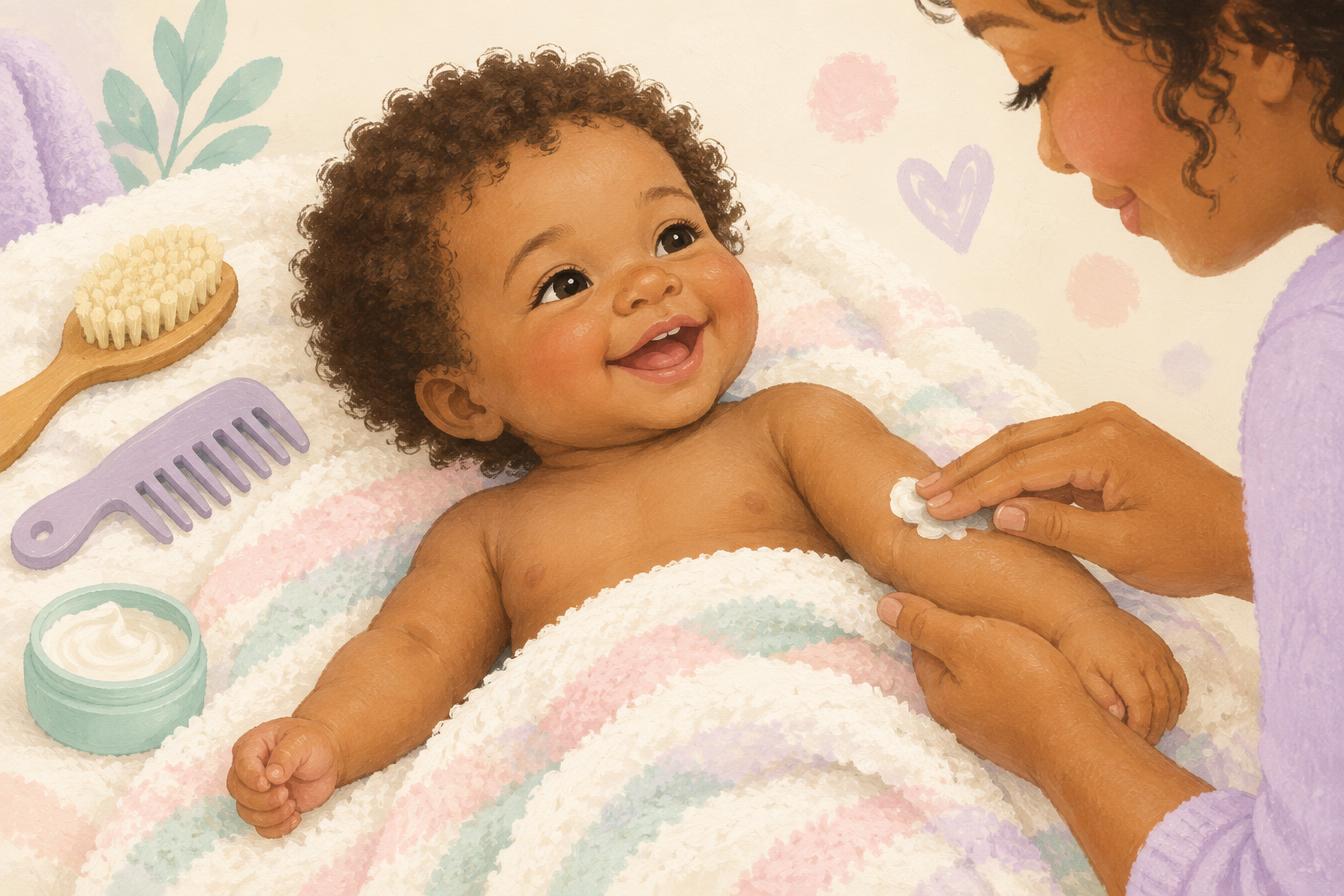
- A soft-bristled baby brush
- A wide-tooth comb for curly, coily or longer hair
- A nasal saline spray or drops and a bulb syringe or nasal aspirator
- A digital thermometer
- A soft infant toothbrush or gum wipe (once teeth arrive)
Nails
Fingernails grow quickly and may need filing or trimming about once a week; toenails less often. Many parents find it easiest while their baby sleeps or right after a bath, when nails are softer. File in one direction, following the curve of the finger.
Ears
Clean the outer ear and behind the ears with a damp washcloth. Don’t put cotton swabs or anything else inside the ear canal — earwax protects the ear and moves out on its own.
Nose
- For a stuffy nose, put one or two drops of saline in each nostril.
- Wait a moment, then gently use a bulb syringe or nasal aspirator to remove mucus.
- Clean the tool thoroughly after each use.
- Wipe away crusts around the nostrils with a soft, damp cloth.
Gums and first teeth
Before teeth arrive, you can wipe your baby’s gums with a clean, damp cloth. Once the first tooth appears, brush twice a day with a soft infant toothbrush and a smear of fluoride toothpaste about the size of a grain of rice, as the AAP recommends.
Hair tools for every texture
Soft brushes suit fine or short hair and help lift cradle cap flakes. For curly and coily hair, a wide-tooth comb and your fingers are gentler. Always detangle damp hair from the ends toward the roots, holding the hair above the section you’re working on to reduce pulling on the scalp.
Keeping grooming calm and safe
Grooming goes more smoothly when your baby is fed, rested and comfortable. Many parents do nails during sleep and noses or ears after a bath when everything is soft and relaxed.
- Keep one hand on your baby whenever they’re on a raised surface.
- Work in good light, and never rush.
- Stop and try later if your baby becomes very upset.
- Keep small items, clippers and scissors out of reach once your baby can grab.
- Wash hands before and after, especially when cleaning noses and gums.
Tip: Two people can make grooming much easier in the early months — one to soothe and hold, one to trim or clean.
At every age
Every child is different — use these as a starting point, not a rulebook.
Newborn
Nail file, washcloths and a soft brush are enough.
4–12 months
Add a toothbrush when the first tooth arrives, often around 6 months.
1–2 years
Let your toddler hold a brush or comb too — practice builds cooperation.
Common mistakes to avoid
- Using cotton swabs inside the ear canal.
- Using adult nail clippers on tiny nails.
- Brushing curly hair dry from root to tip.
- Skipping gum care before teeth come in.
Helpful parent tips
- Store the kit in one caddy near the changing station.
- Wash brushes and combs weekly in warm, soapy water.
- Turn grooming into a routine with a song so your baby knows what to expect.
When to call a professional
Everyday care supports comfort — it doesn’t diagnose or treat. Contact your pediatrician, dermatologist or healthcare provider if you notice:
- Redness, swelling or pus around a nail.
- Discharge or a bad smell from the ear, or your baby pulling at an ear with fever.
- Breathing difficulty, flaring nostrils or a very congested baby who can’t feed.
Questions parents ask
Should I use a nail file or clippers?
Either is fine. Files are gentler and lower-risk for newborns; clippers are quicker for older babies.
How do I clean my baby’s ears?
Only the outer ear, with a damp cloth. Never put anything inside the ear canal.
When should I start brushing teeth?
As soon as the first tooth appears, twice a day with a rice-grain smear of fluoride toothpaste.
How do I clean a bulb syringe?
Squeeze warm, soapy water in and out several times, rinse with clean water, and let it dry with the tip pointing down. Replace it if you notice anything growing inside.