How often to wash
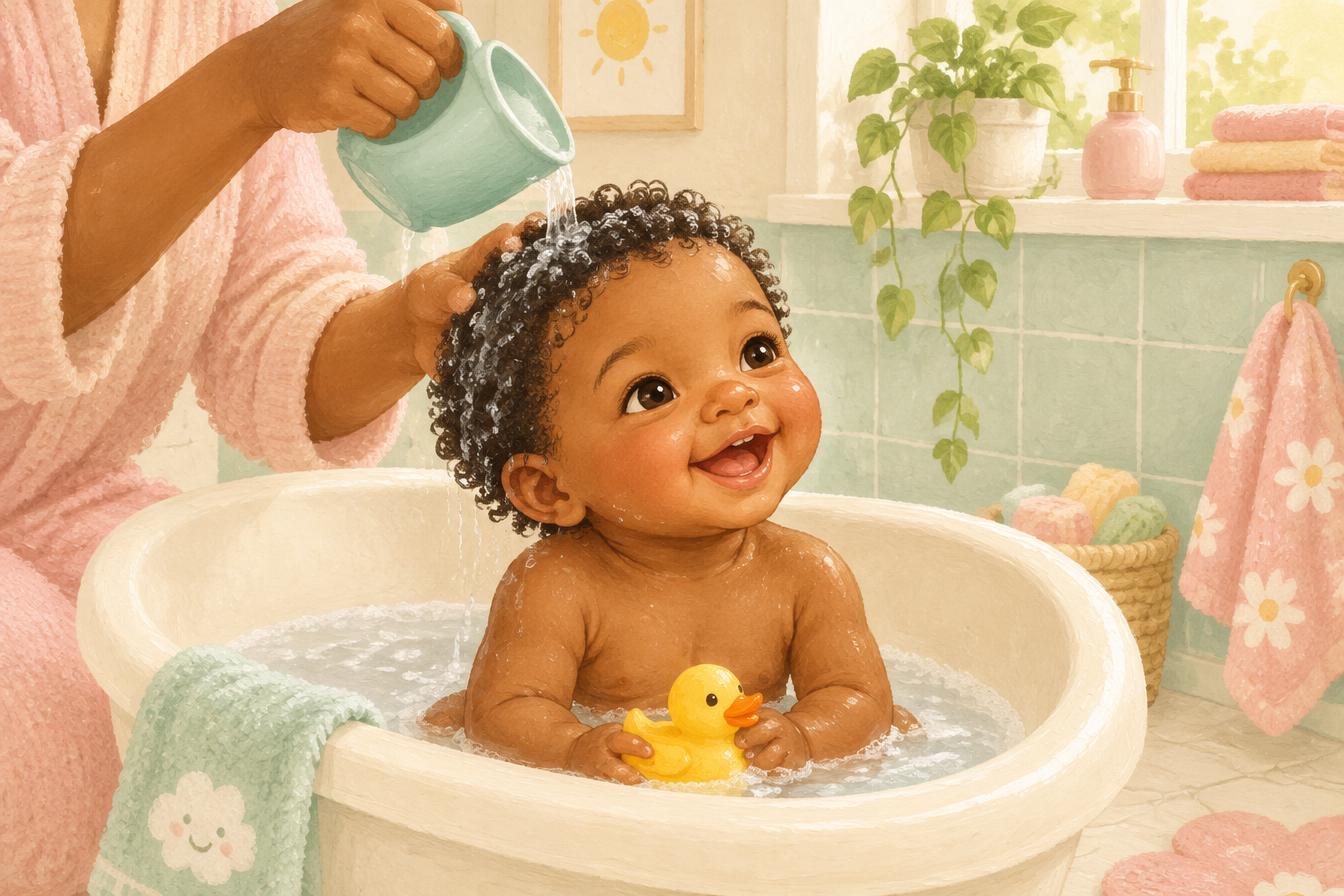
Many babies with coily hair do well with shampoo about once a week or every other week, with plain water rinses or conditioner-only washes in between if needed. The Society for Pediatric Dermatology notes that tightly coiled hair can be washed less often than straight hair. Watch your baby’s scalp: if it looks flaky or feels oily, adjust.
A gentle wash routine
- Wet hair thoroughly with lukewarm water.
- Massage a small amount of mild, fragrance-free cleanser into the scalp with your fingertips.
- Rinse well, letting suds run through the lengths.
- Apply a gentle conditioner to the hair (not the scalp).
- Detangle with fingers or a wide-tooth comb while the conditioner is in, working from the ends toward the roots.
- Rinse, or leave a little in if it’s a leave-in product.
- Squeeze out water with a soft cotton T-shirt or towel, then let hair air-dry.
Moisture that lasts
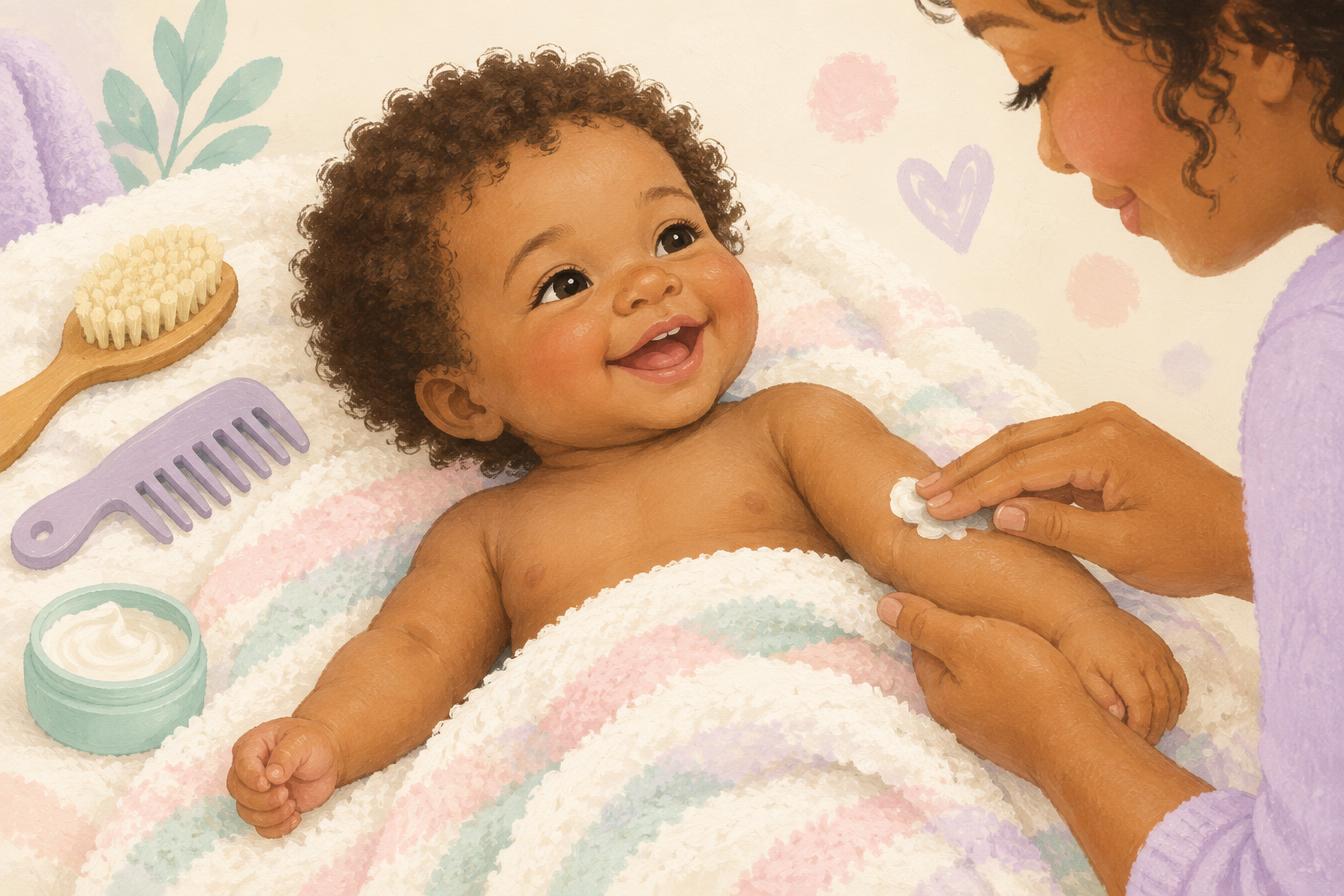
Between washes, you can lightly mist hair with water and apply a small amount of baby-appropriate leave-in or cream. Focus on the hair rather than coating the scalp. A little goes a long way — too much product can build up, feel heavy and attract dust.
Styles for babies
For most babies, the best style is simply loose, soft curls. If you do style, keep it minimal and loose.
- Loose, free curls
- A soft headband worn only while awake
- Very loose puffs using soft, snag-free ties — for older babies with enough hair
- Change the position of any tie each time to avoid stress on one area
Tip: Dermatologists warn that styles that pull — tight ponytails, braids, clips or elastic bands — can cause hair loss called traction alopecia, even in young children. If your baby’s scalp shows bumps, redness or tenderness, loosen the style.
Protecting hair at night
Friction against sheets can cause tangles and breakage. A satin or silk-like fitted crib sheet may help reduce friction. Do not put bonnets, scarves, hats or headbands on a sleeping baby — these are suffocation and strangulation risks. Save bonnets for older children who sleep in a bed.
At every age
Every child is different — use these as a starting point, not a rulebook.
0–6 months
Wash gently, condition lightly, keep hair loose. Friction may cause bald spots that fill in later.
6–12 months
Hair is often longer and more prone to tangles. Finger-detangle with conditioner.
1–2 years
Very loose puffs or twists can work for some toddlers. Keep sessions short and positive.
Common mistakes to avoid
- Brushing dry curls from root to tip.
- Tight ponytails, braids, beads, bows or clips on babies.
- Heavy greases or oils caked on the scalp.
- Bonnets or headbands during sleep.
- Heat styling or chemical treatments — never appropriate for babies.
Helpful parent tips
- Hold hair above the section you’re detangling so the pull doesn’t reach the scalp.
- Sing or play music during hair care to make it a joyful ritual.
- Celebrate your baby’s curls out loud — children absorb the words we use about their hair.
When to call a professional
Everyday care supports comfort — it doesn’t diagnose or treat. Contact your pediatrician, dermatologist or healthcare provider if you notice:
- Patches of hair loss with bumps, redness or scaling.
- Scalp bumps or pus around follicles.
- Ongoing flakiness that doesn’t improve with gentle care.
Questions parents ask
Should I oil my baby’s scalp?
Usually not necessary. Heavy oils can build up and may worsen cradle cap. If hair feels dry, a light leave-in on the hair is often better.
When can I start braiding my baby’s hair?
There’s no set age, but avoid braids and tight styles for babies. For toddlers, very loose, short-term styles with no pulling may be okay.
Why does my baby have a bald spot at the back?
Friction from lying on the back is common and normal. Hair usually fills in once your baby sits up.