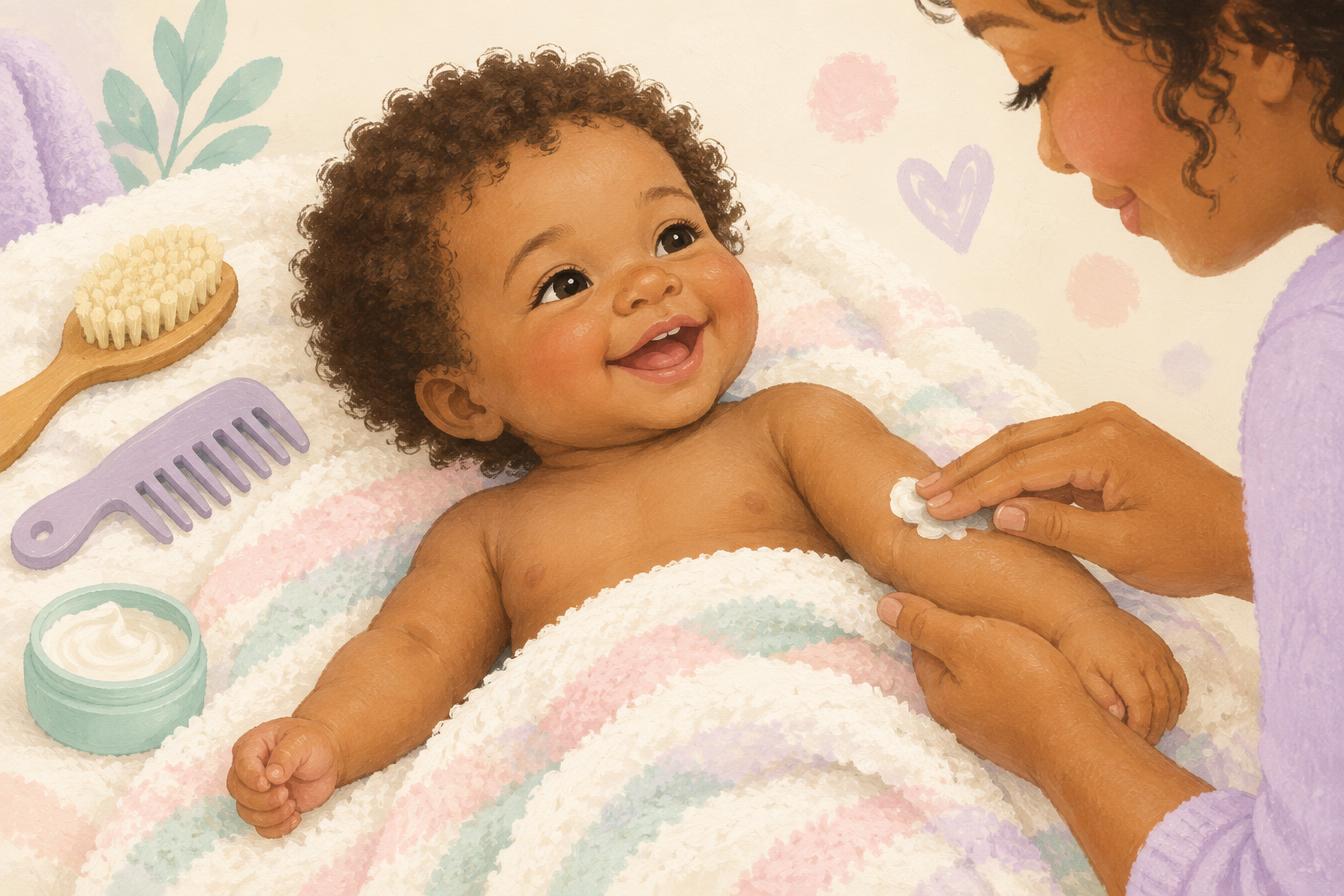
What cradle cap looks like
Doctors call it infant seborrheic dermatitis. The exact cause isn’t fully understood, but it’s thought to be linked to oil glands in the skin and a yeast that normally lives on the skin.
- Patchy, crusty or greasy scales on the scalp
- White, yellow or light brown flakes
- Sometimes on the eyebrows, eyelids, behind the ears or in skin folds
- Usually not itchy — babies often don’t notice it
Gentle home care, step by step
The AAD and AAP suggest a simple approach:
- Wash your baby’s scalp once a day with a mild baby shampoo while cradle cap is present.
- While the shampoo is on, loosen scales gently with a soft baby brush or a soft washcloth, using small circles.
- Rinse thoroughly and pat dry.
- For thick scales, you can massage a small amount of plain petroleum jelly or mineral oil into the scalp a few minutes before washing, then shampoo it out completely.
- Once cleared, return to washing two or three times a week.
Tip: Don’t pick or scratch at scales. This can irritate the skin and lead to infection.
What to avoid
- Adult dandruff shampoos, unless your pediatrician specifically recommends one.
- Leaving oils on the scalp for long periods — this can make cradle cap worse.
- Olive oil, which some dermatologists advise against because it may encourage the yeast linked to cradle cap.
- Scrubbing hard or combing aggressively.
Cradle cap in curly and coily hair
In thick, textured hair, scales can be harder to see and may cling to strands. Part the hair into a few loose sections with your fingers so you can reach the scalp. Rinse well to avoid leaving residue that can mix with flakes.
Cradle cap may also be confused with dry scalp. Dryness tends to be fine and white; cradle cap is usually thicker and greasier.
A sample weekly plan
Many parents find it helpful to have a simple plan while cradle cap is active, rather than trying something new every day. Here’s one gentle approach you can adapt:
Daily while scales are present
- Wash the scalp with a mild baby shampoo
- Loosen scales gently with a soft brush while shampoo is on
- Rinse well and pat dry
Two or three times a week, for thick scales
- Massage a little petroleum jelly or mineral oil into the patches
- Leave for about 15 minutes
- Shampoo it out completely
Tip: Once the scalp is clear, go back to washing two or three times a week. Cradle cap sometimes returns for a while; the same gentle routine usually settles it again.
At every age
Every child is different — use these as a starting point, not a rulebook.
2 weeks–3 months
Most common time for cradle cap to appear.
3–12 months
Usually improves steadily with gentle care.
After 12 months
Seborrheic dermatitis can occur later; see your pediatrician if scales persist or return.
Common mistakes to avoid
- Picking scales off dry.
- Using heavy oils and not washing them out.
- Assuming cradle cap means you’re not washing enough — it isn’t caused by poor hygiene.
Helpful parent tips
- Brush gently after the bath while hair is still damp, when scales lift most easily.
- Be patient. Cradle cap can come and go for weeks before it clears.
- Photos help you see progress over time.
When to call a professional
Everyday care supports comfort — it doesn’t diagnose or treat. Contact your pediatrician, dermatologist or healthcare provider if you notice:
- Cradle cap spreads to the face or body, or the skin looks red and inflamed.
- The scalp oozes, bleeds, smells or develops crusts that look infected.
- Your baby seems itchy or uncomfortable.
- It doesn’t improve with regular gentle care. Your pediatrician may suggest a medicated shampoo or cream.
Questions parents ask
Is cradle cap contagious?
No. It’s not an infection and cannot spread to other people.
Does cradle cap cause hair loss?
Sometimes hair comes away with the scales, but it grows back once the cradle cap clears.
Should I use baby oil?
A small amount of mineral oil or petroleum jelly to soften scales before washing can help, but always shampoo it out afterward.
Can I use a regular hair brush to remove the scales?
Use a very soft baby brush, a soft toothbrush set aside for this purpose, or a washcloth. Stiff bristles can scratch the scalp.