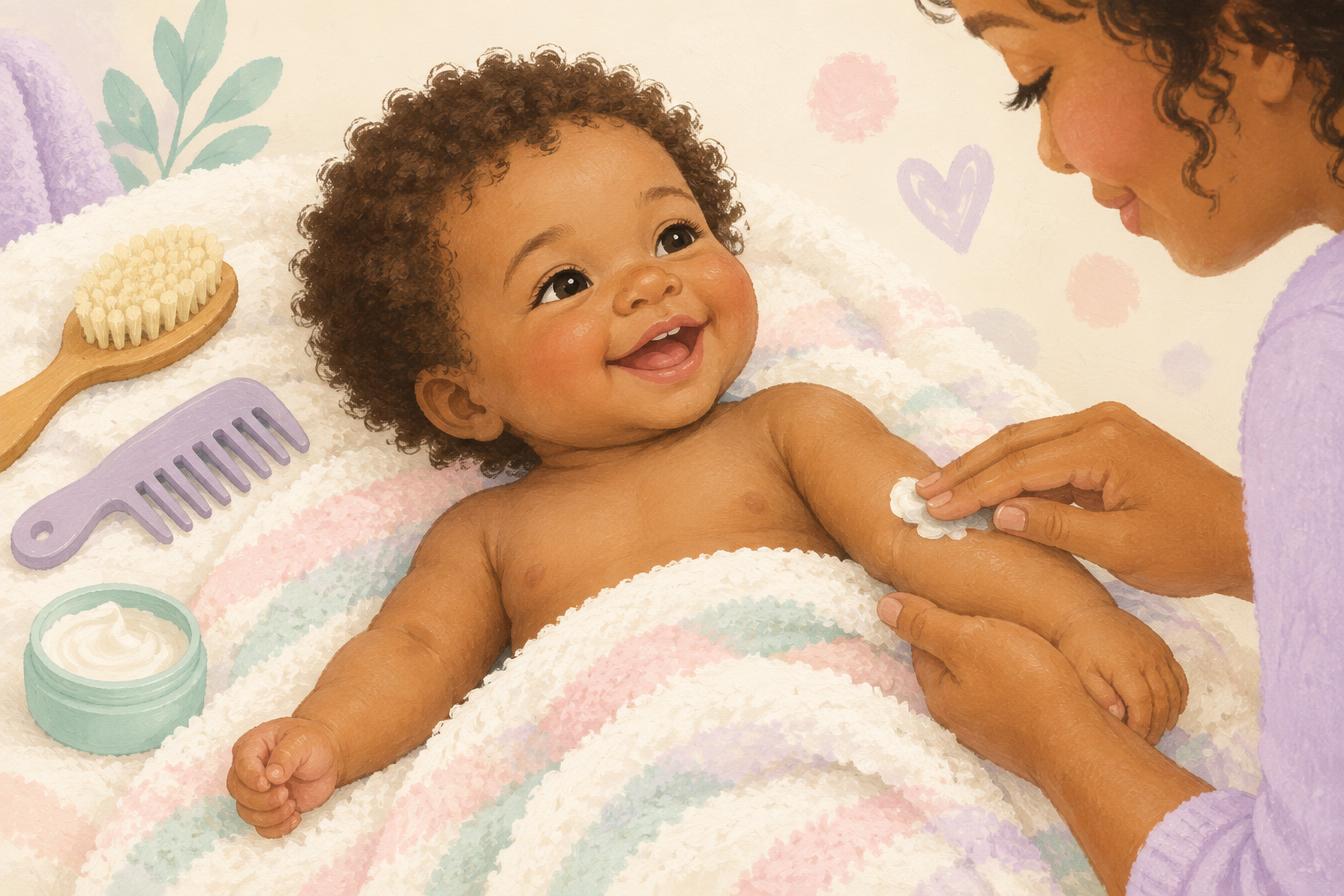
Rashes look different on different skin tones
Many guides describe rashes as “red.” On brown and Black skin, the same rash may look purple, gray, dark brown or ashy, or simply be felt as a change in texture. Eczema on darker skin can also appear as small bumps, sometimes around hair follicles. Keep this in mind when comparing your baby’s skin to photos.
Eczema (atopic dermatitis)
Eczema causes dry, itchy patches that come and go. In babies it often starts on the cheeks, scalp and outer arms and legs. It’s common, not contagious and often improves with age.
- Short, lukewarm baths with a mild, fragrance-free cleanser.
- Generous moisturizer right after bathing and at least once more each day.
- Soft, breathable cotton clothing and fragrance-free laundry detergent.
- See your pediatrician for a diagnosis and a plan — prescription treatment may be needed for flares.
Heat rash
Heat rash (prickly heat) appears as tiny bumps where sweat is trapped — neck, armpits, chest and skin folds. It happens when babies are overdressed or in hot weather. Cool the baby down, dress them in light, loose clothing and avoid heavy creams in affected areas. It usually clears within a few days.
Drool rash
Constant drool, especially during teething, can irritate the chin, cheeks and neck. Wipe drool gently with a soft cloth, pat dry and apply a thin layer of ointment as a barrier.
Diaper rash
Frequent changes, gentle cleaning and a zinc oxide or petroleum-based barrier cream clear most diaper rashes in a few days. See our diaper-area care guide for more detail.
Other common concerns
Baby acne and milia
Small bumps on the face in the first weeks. Leave them alone; they usually clear by themselves.
Cradle cap
Greasy, scaly patches on the scalp. Gentle washing and brushing usually help.
Dry skin
Rough or ashy areas that improve with a plain moisturizer.
Contact irritation
A rash where skin touched something new — a detergent, wipe or fabric. Removing the trigger usually helps.
Keeping a simple rash diary
- Note when the rash appeared and where it started.
- Take a clear photo in daylight each day.
- List any new products, foods, detergents or illnesses.
- Record what you tried and whether it helped.
- Bring the notes and photos to your appointment.
At every age
Every child is different — use these as a starting point, not a rulebook.
0–3 months
Baby acne, milia, cradle cap and heat rash are common.
3–12 months
Eczema often appears; drool rash with teething.
1–2 years
Eczema may move to elbow and knee creases. Contact irritation from new foods and products.
Common mistakes to avoid
- Using adult creams or steroid creams without medical advice.
- Covering heat rash with thick creams.
- Assuming a rash isn’t there because it doesn’t look red.
- Trying many remedies at once.
Helpful parent tips
- Photos in natural light help clinicians see color changes on darker skin.
- Keep your baby’s nails short to reduce scratching.
- Don’t hesitate to ask how a condition looks on skin like your baby’s.
When to call a professional
Everyday care supports comfort — it doesn’t diagnose or treat. Contact your pediatrician, dermatologist or healthcare provider if you notice:
- Any rash with fever, especially in babies under 3 months (100.4°F / 38°C or higher).
- A rash that doesn’t fade when you press a clear glass against it — seek urgent care.
- Blisters, pus, crusting, bleeding or skin that looks infected.
- Swelling of the lips, face or tongue, or trouble breathing — call 911.
- A rash that spreads quickly, or your baby seems unwell, sleepy or unusually fussy.
Questions parents ask
Is eczema caused by something I did?
No. Eczema is linked to genetics and differences in the skin barrier and immune system. It’s not caused by poor hygiene or parenting.
Can food cause my baby’s rash?
Sometimes, but not often. Talk to your pediatrician before cutting foods from your baby’s diet or your own if you’re breastfeeding.
Should I use a steroid cream on my baby’s rash?
Only if your pediatrician recommends it. They will tell you which strength to use, where and for how long.