Common newborn skin changes
Many of these look alarming the first time you see them, but they are usually harmless:
- Peeling or flaky skin, especially on hands and feet, in the first weeks
- Vernix — a white, creamy coating at birth that protects the skin; it can be left to absorb
- Milia — tiny white bumps on the nose and cheeks that clear without treatment
- Baby acne — small red or skin-colored bumps on the face, often around 2–4 weeks
- Erythema toxicum — blotchy spots with small centers that come and go in the first days
- Stork bites or angel kisses — pink or red patches on the neck, eyelids or forehead
Newborn skin on melanin-rich babies
Many Black and brown babies are born with lighter skin that deepens over the first weeks and months. Ears and the skin around the nail beds can be a clue to your baby’s eventual skin tone.
Congenital dermal melanocytosis (once called “Mongolian spots”) is common in babies with darker skin: flat blue-gray patches, often on the lower back or buttocks. They are harmless and usually fade in childhood. Ask your pediatrician to note them in your baby’s record so they’re never mistaken for bruises.
On darker skin, redness from a rash may look purple, gray, brown or simply darker than surrounding skin, rather than pink.
A gentle daily routine
- Wipe the face, neck folds and hands with a warm, damp cloth each day.
- Clean the diaper area thoroughly at every change.
- Give sponge baths (until the cord falls off) about three times a week.
- Pat skin dry, paying attention to creases.
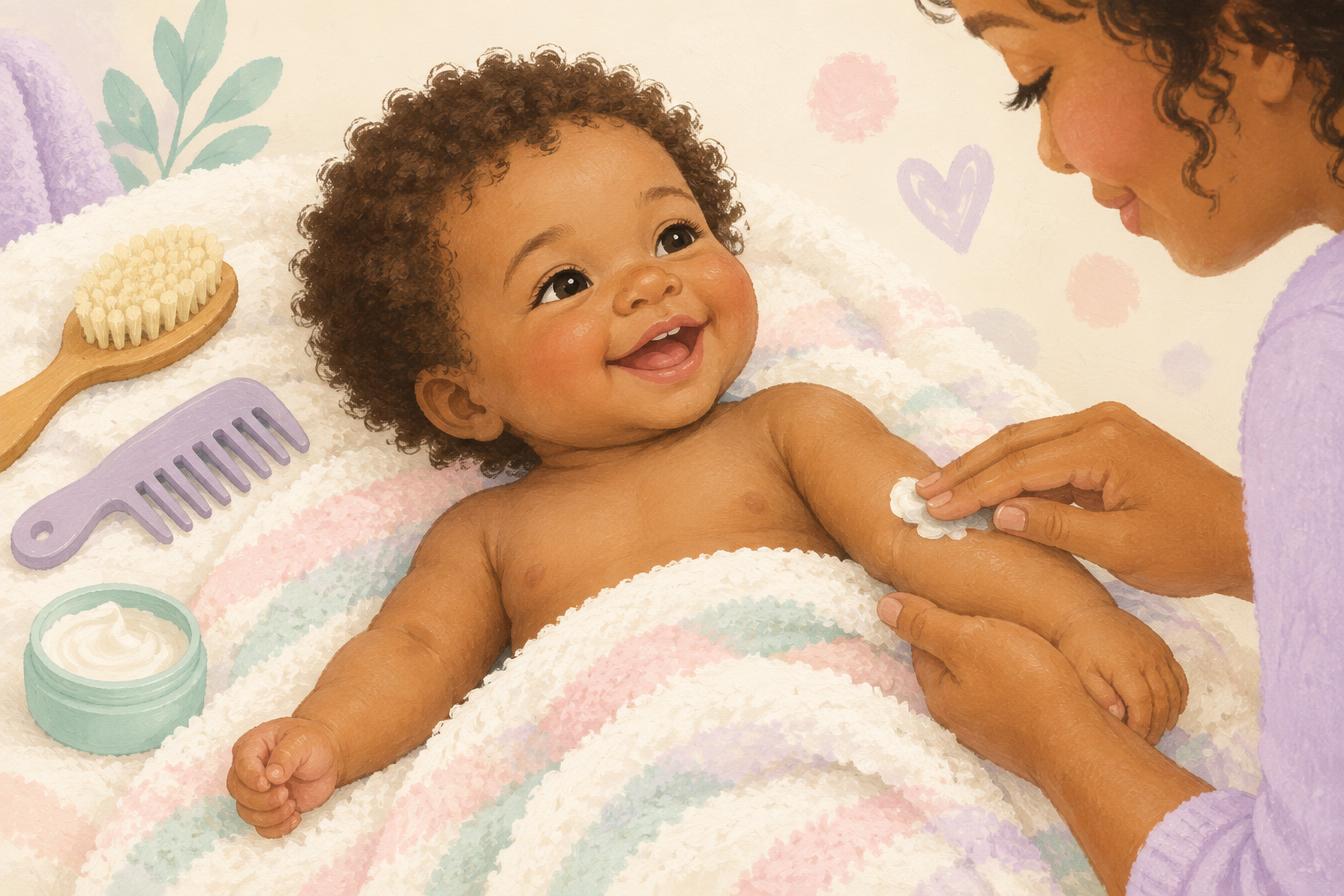
- If skin looks dry or cracked, apply a thin layer of plain, fragrance-free moisturizer.
- Dress your baby in soft, breathable fabrics washed in fragrance-free detergent.
Handling baby acne and milia
Resist squeezing, scrubbing or applying adult acne products. Wash the face with plain water once a day and pat dry. Baby acne often clears within a few weeks to months. If it’s widespread, lasts beyond a few months or looks inflamed, check in with your pediatrician.
Protecting newborn skin
- Keep babies under 6 months out of direct sunlight; use shade and light, covering clothing.
- Avoid overheating, which can cause heat rash — dress your baby in about one more layer than you’re comfortable in.
- Skip perfumed lotions, powders and bubble baths.
At every age
Every child is different — use these as a starting point, not a rulebook.
First week
Vernix, peeling and blotchy spots are common. Keep care minimal.
2–6 weeks
Baby acne may appear. Cradle cap may start on the scalp.
1–3 months
Skin usually settles. Watch for dry patches, which can be an early sign of eczema in some babies.
Common mistakes to avoid
- Rubbing off vernix or peeling skin.
- Treating baby acne with adult products or oils.
- Using lots of different lotions and potions at once.
- Assuming redness always looks red — on darker skin, it may not.
Helpful parent tips
- Take photos of spots or rashes to show your pediatrician; they often fade before the appointment.
- Fewer products make it easier to spot what irritates your baby’s skin.
- For babies with curly hair, the scalp can be drier than it looks. Gentle washing and a little moisture help.
When to call a professional
Everyday care supports comfort — it doesn’t diagnose or treat. Contact your pediatrician, dermatologist or healthcare provider if you notice:
- Yellowing of the skin or whites of the eyes (jaundice), especially if it spreads or appears in the first 24 hours. On darker skin, check the whites of the eyes, gums and palms.
- Blisters, pus-filled spots, or skin that looks raw or weepy.
- A rash with fever. In babies under 3 months, a temperature of 100.4°F (38°C) or higher needs prompt medical advice.
- Any rash that doesn’t fade when you press a clear glass against it.
Questions parents ask
Should I moisturize my newborn every day?
Not necessarily. Many newborns don’t need it. If skin looks dry or cracked, a small amount of plain, fragrance-free moisturizer helps. Ask your pediatrician about daily moisturizing if eczema runs in your family.
Will my baby’s skin color change?
Often, yes. Many babies with melanin-rich skin gradually darken in the first months.
Are blue-gray patches on my baby’s back a concern?
Congenital dermal melanocytosis is common and harmless. Ask your pediatrician to document them.