How often to wash
The AAP suggests washing a baby’s hair about two to three times a week with a mild baby shampoo or wash. Babies with very coily or dry hair may do well with less frequent shampooing and water-only rinses in between.
Washing your baby’s hair, step by step
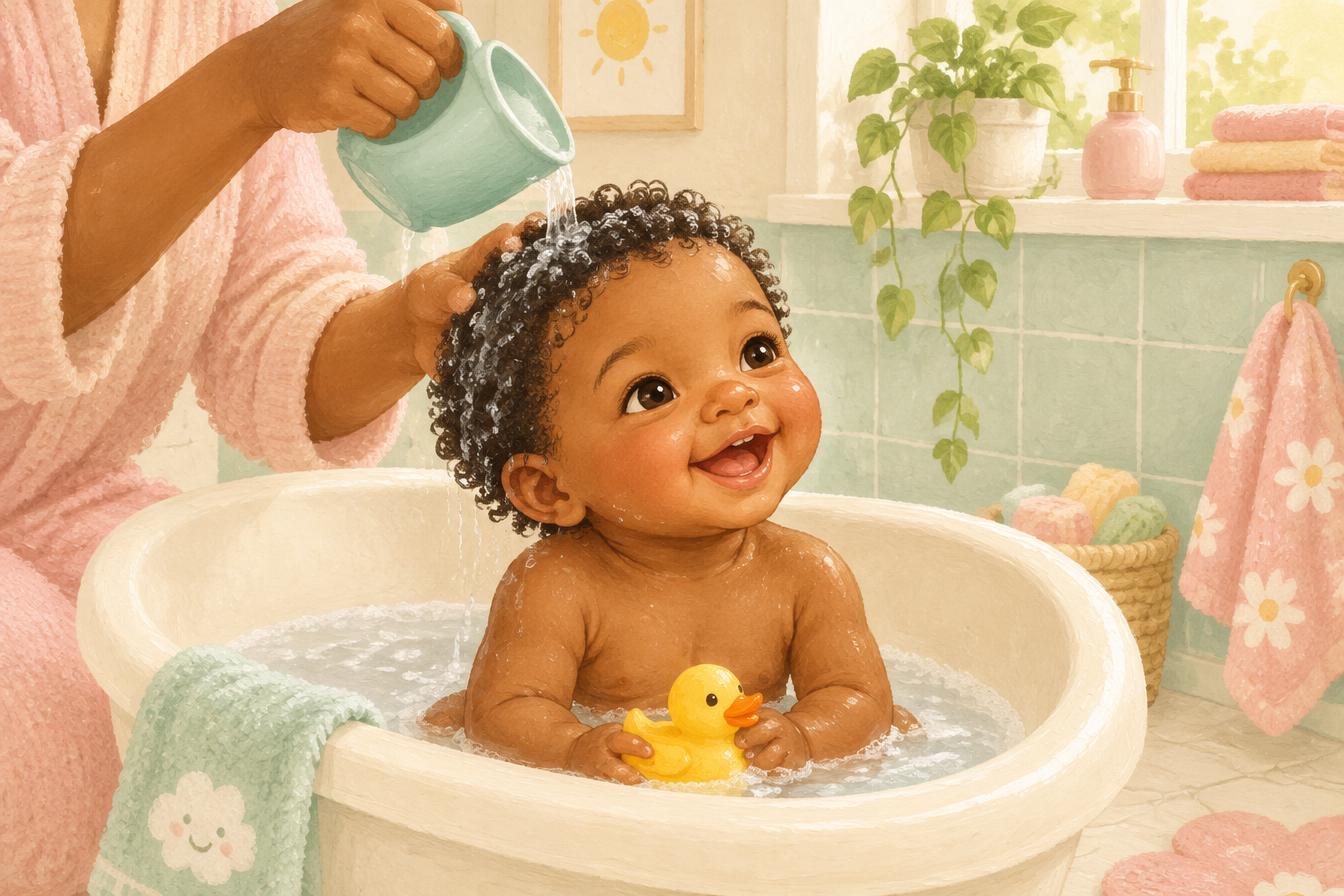
- Support your baby’s head and neck in the crook of your arm, tilting slightly back.
- Wet the hair with a cup of lukewarm water, shielding the eyes with your hand.
- Massage a small amount of mild shampoo into the scalp with your fingertips.
- Rinse thoroughly, pouring from front to back.
- Pat the hair dry with a soft towel — no vigorous rubbing.
Tip: The soft spot (fontanelle) is protected by a tough membrane. Gentle washing and brushing over it is safe.
Brushing and combing
A soft-bristled baby brush can loosen flakes and stimulate the scalp. For longer or curly hair, detangle with your fingers or a wide-tooth comb while the hair is damp, working from the ends up.
Normal hair changes
- Many babies lose some or most of their birth hair in the first months; it regrows, sometimes a different color or texture.
- A bald patch at the back of the head is common from lying on the back, and usually fills in once your baby sits up.
- Hair texture often changes over the first two years — straight hair can become curly and vice versa.
Scalp moisture
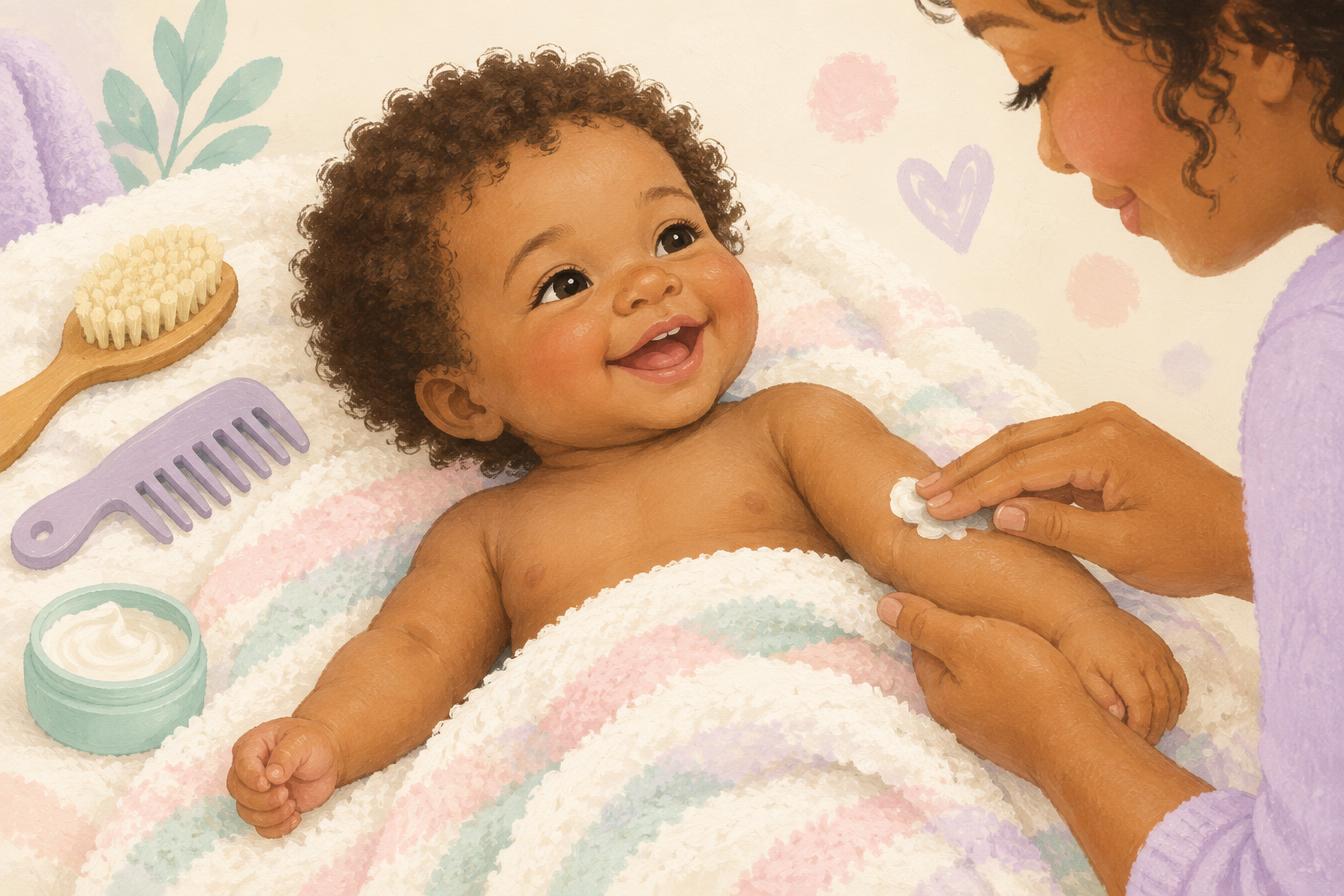
Dry, flaky scalp is common. Most babies need nothing more than regular gentle washing. For textured hair, a small amount of fragrance-free, baby-appropriate moisturizer on the hair (not caked on the scalp) can help keep it soft.
Yellow, greasy scales are usually cradle cap rather than dryness — see our cradle cap guide.
Hair care for different hair types
Babies’ hair varies enormously, even within one family. Fine, straight hair may look greasy quickly and benefits from regular gentle washing. Thick, wavy or curly hair tangles more easily and does best with conditioner and finger detangling. Tightly coiled hair is usually the most fragile and driest, so many families shampoo it less often and focus on moisture and very gentle handling.
Whatever your baby’s hair type, the principles are the same: mild products, lukewarm water, soft hands, and no pulling. You don’t need to match a routine you’ve seen online — watch how your baby’s hair and scalp respond and adjust.
- Fine or straight hair: wash two to three times a week; a soft brush is usually enough.
- Wavy or curly hair: add a little gentle conditioner; detangle with fingers while damp.
- Coily hair: shampoo less often, condition every wash, and keep hands-on time short and kind.
At every age
Every child is different — use these as a starting point, not a rulebook.
0–3 months
Wash two to three times a week. Birth hair may shed. Keep products minimal.
3–6 months
Hair may begin to regrow. Brush gently to help with flakes.
6–12 months
Hair is often thicker. Detangle damp hair gently, and keep styles loose if any.
Common mistakes to avoid
- Using adult shampoos or heavily fragranced products.
- Rubbing hair dry roughly with a towel.
- Pulling hair into tight bands, clips or bows — this can stress hair follicles.
- Coating the scalp in heavy oils for days at a time.
Helpful parent tips
- Make hair washing the last step of bath time so your baby doesn’t get cold.
- A washcloth rolled across the forehead helps keep water out of the eyes.
- Keep sessions short and sing a song — a positive start builds good feelings about hair care.
When to call a professional
Everyday care supports comfort — it doesn’t diagnose or treat. Contact your pediatrician, dermatologist or healthcare provider if you notice:
- Red, swollen, oozing or painful patches on the scalp.
- Patches of hair loss with scaly skin, broken hairs or redness.
- A bulging or sunken soft spot, especially with fever, vomiting or unusual sleepiness.
Questions parents ask
Why is my baby losing hair?
Hair loss in the first months is very common and usually related to hormonal changes after birth and rubbing on the sleep surface. It typically grows back.
Can I use conditioner on my baby?
Yes, a gentle, fragrance-free conditioner can help with longer or curly hair. Rinse it thoroughly or use a baby-appropriate leave-in.
Is it safe to brush over the soft spot?
Yes, gentle brushing and washing over the fontanelle is safe.
Will shaving my baby’s head make hair grow back thicker?
No. Shaving doesn’t change how thick or fast hair grows. Some families shave a baby’s head for cultural or religious reasons, which is a personal choice — just use great care around the scalp.