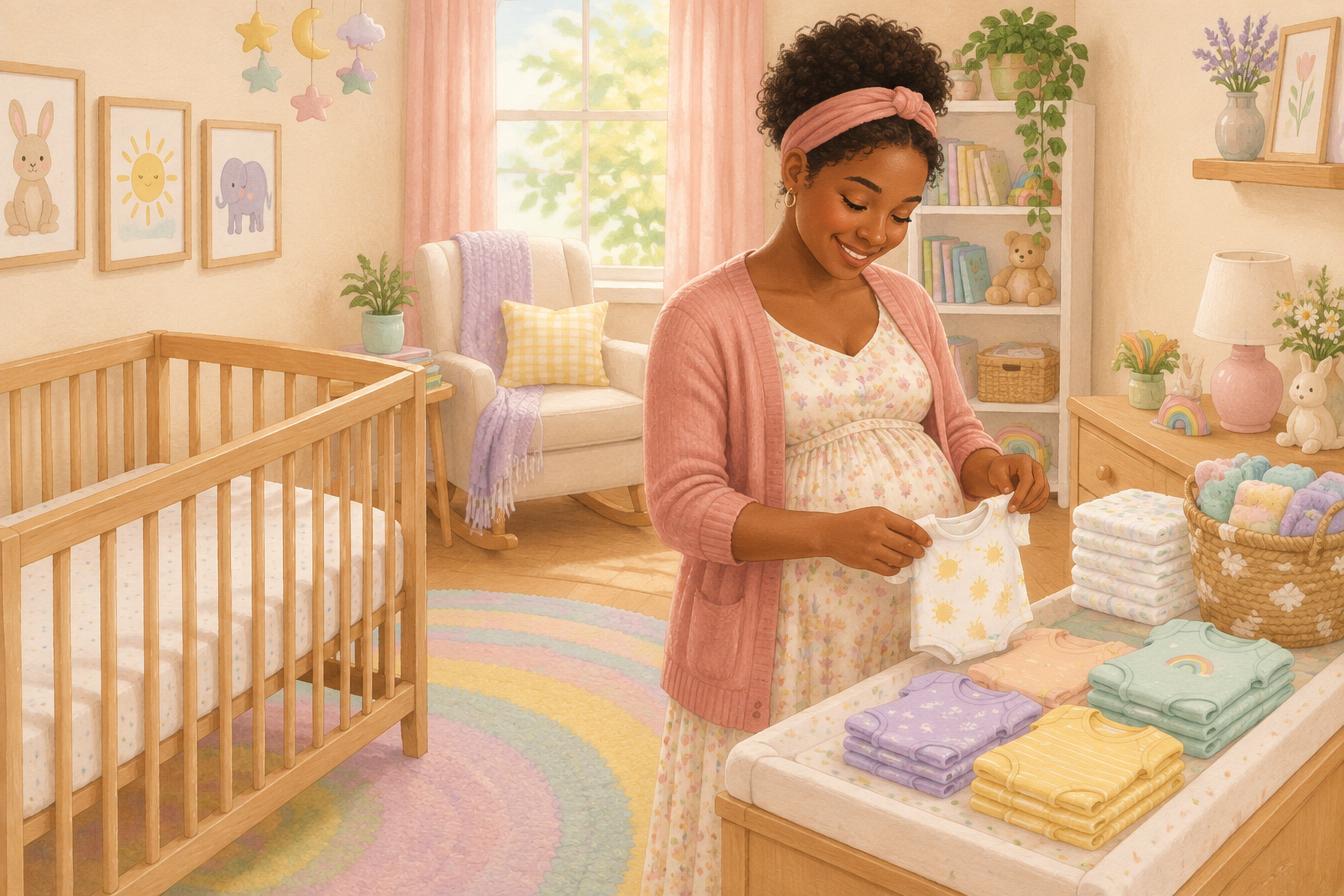
Start with a safe sleep space
If you set up only one thing ahead of time, make it the place where your baby will sleep. The American Academy of Pediatrics (AAP) recommends a crib, bassinet, portable crib or play yard that meets current safety standards, with a firm, flat mattress that fits snugly and a fitted sheet — and nothing else inside.
That means no pillows, bumpers, blankets, positioners or soft toys. They can look cozy, but they raise the risk of suffocation. Plan to keep the sleep space in your room, close to your bed but not in it, for at least the first six months.
- Check that second-hand cribs have all their hardware, instructions and no recalls.
- Choose a surface that is flat — anything inclined more than 10 degrees isn’t safe for sleep.
- Wearable blankets or sleep sacks can replace loose blankets when you need extra warmth.
Tip: If a safe sleep space is out of reach financially, many local agencies and hospitals offer free or low-cost cribs and play yards — ask your prenatal clinic or social worker.
Prepare your home, one zone at a time
You don’t need a finished nursery. Many families simply create a few small “stations” in the rooms they already use most.
A changing station
- A changing pad on a sturdy surface or the floor
- Diapers, wipes or soft cloths, barrier cream
- A spare outfit and a small trash can with a lid
A feeding corner
- A comfortable chair with back support
- Burp cloths, a water bottle and snacks for you
- A phone charger and a soft light for night feeds
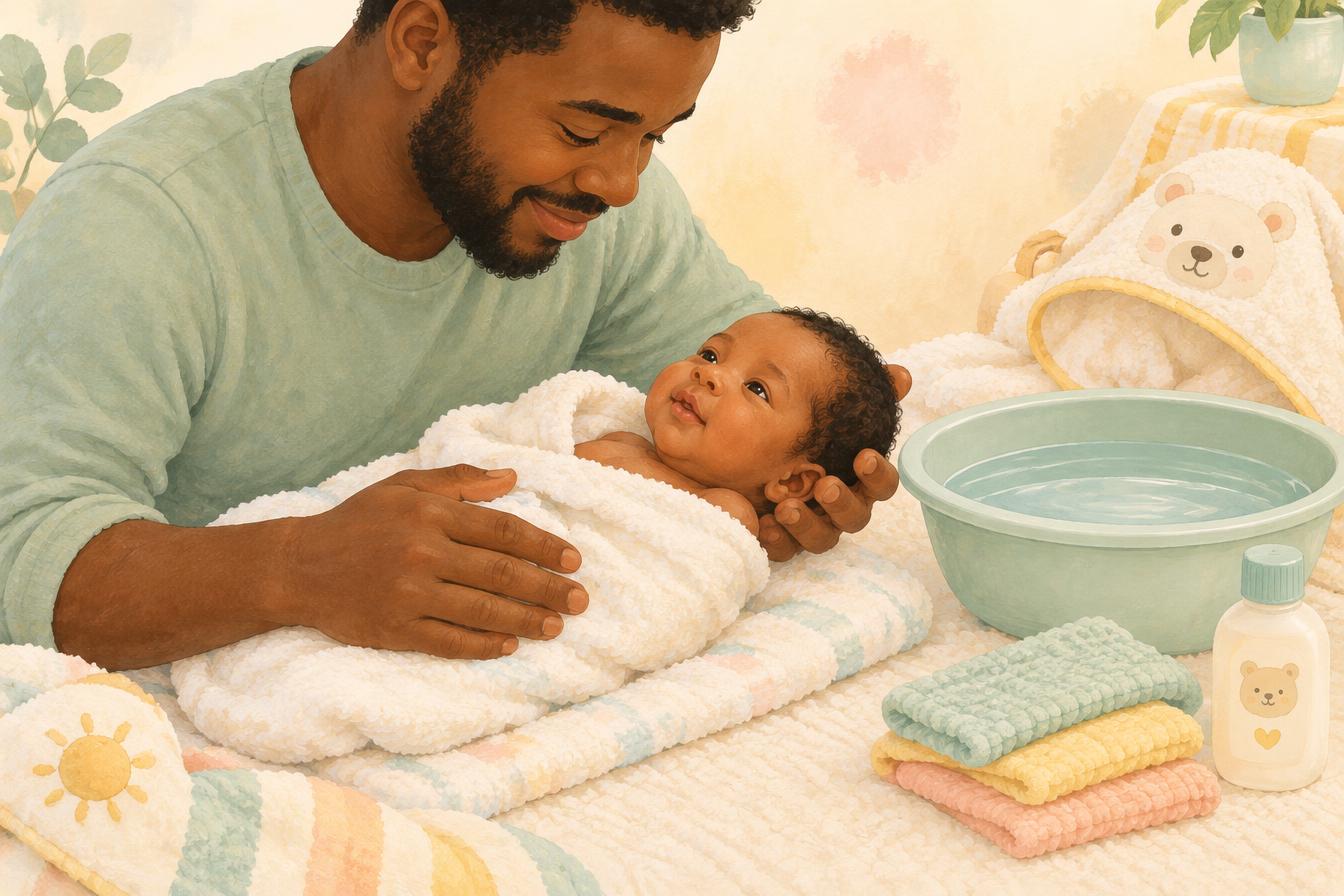
A bath kit
- Two or three soft washcloths and a hooded towel
- A mild, fragrance-free baby wash
- A basin or infant tub for after the cord stump falls off
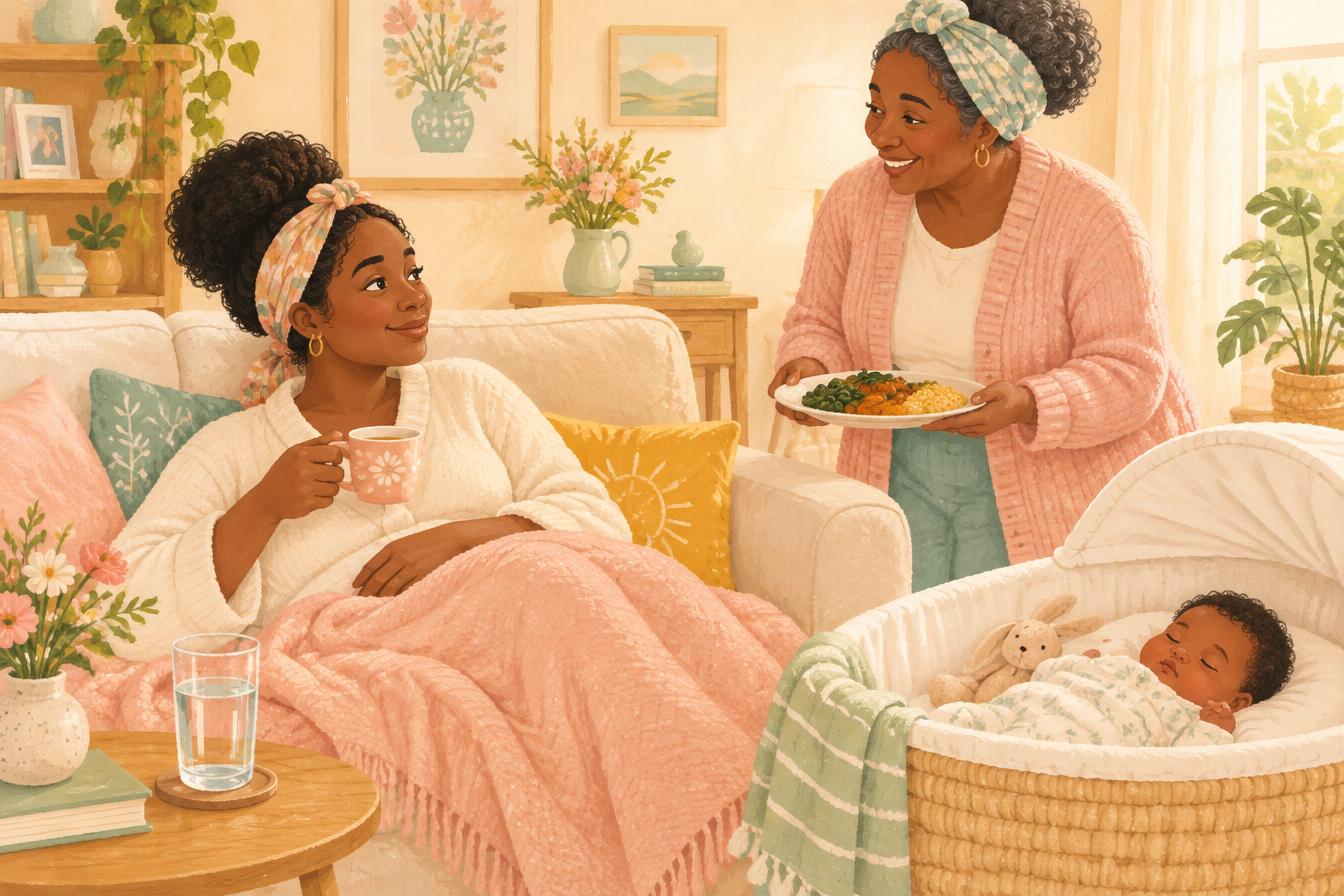
A grown-up recovery spot
- Pads, comfortable underwear and any medications you’ve been advised to use
- A basket of easy snacks and a refillable water bottle
- Important phone numbers written down
Clothing and supplies: less than you think
Babies outgrow the newborn size quickly — some never wear it at all. Buy a small starter set and wash everything before use with a fragrance-free detergent, as dermatologists suggest for delicate skin.
Soft, simple pieces with snaps or zips are easiest for middle-of-the-night changes. Skip anything with long ties, loose buttons or decorations that could come off.
The practical to-do list
- Install a rear-facing infant car seat and have the fit checked if you can — you’ll need it to drive home.
- Choose a pediatrician or clinic and save their phone number, including the after-hours line.
- Stock the kitchen with easy meals, or ask a friend to organize a meal rota.
- Pack a hospital or birth-center bag a few weeks before your due date.
- Talk with your partner or support people about who will handle nights, meals, older children and pets.
- Set the water heater so the hottest tap water is no more than 120°F (49°C), as the AAP recommends, to help prevent scalds.
Newborn essentials checklist
Use this as a starting point. Every family’s budget, space and feeding plan is different, so cross off what you don’t need.
Sleep
- Crib, bassinet or play yard
- Firm mattress + 2–3 fitted sheets
- 2–3 sleep sacks or swaddles
Diapering
- Newborn and size 1 diapers
- Unscented wipes or soft cloths
- Zinc oxide or petroleum-based barrier cream
Clothing
- 6–8 bodysuits or sleepers
- 2–3 soft hats and socks
- One weather-appropriate outer layer
Feeding
- Burp cloths
- Nursing pads or bottles and formula, depending on your plan
- Bottle brush if bottle feeding
Care and health
- Digital thermometer
- Baby nail file or clippers
- Mild fragrance-free baby wash
Getting around
- Rear-facing infant car seat
- A carrier or stroller
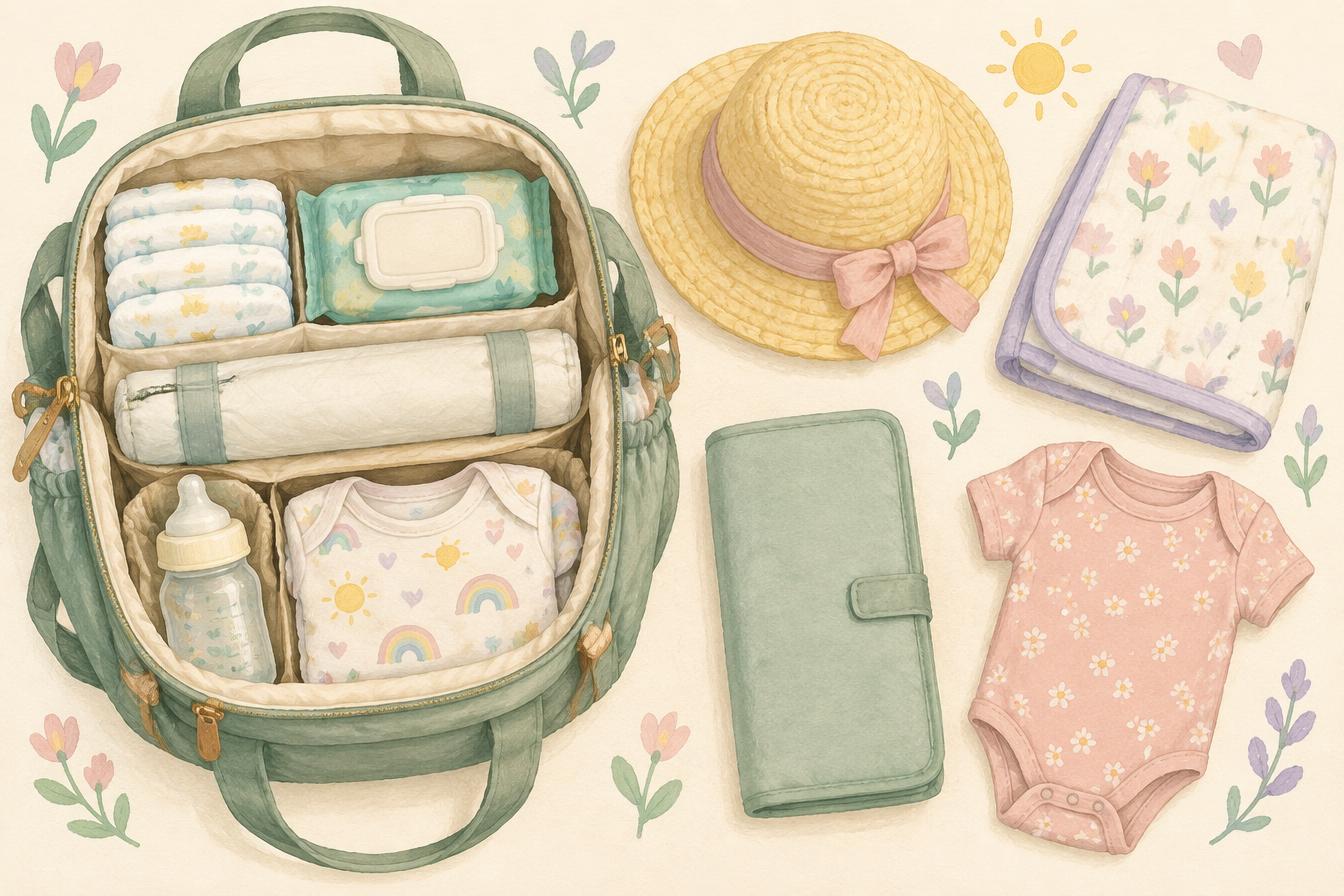
- A simple diaper bag
At every age
Every child is different — use these as a starting point, not a rulebook.
Second trimester
Research sleep spaces and car seats, and start a short registry of genuine essentials.
Third trimester
Wash clothes, set up stations, install the car seat and pack your bag.
First weeks home
Buy only what you discover you need. Many families find they use far less than expected.
Around 3 months
Review clothing sizes and move up a diaper size as your baby grows.
Common mistakes to avoid
- Filling the crib with bumpers, pillows or stuffed toys for decoration.
- Buying large amounts of newborn-size clothing and diapers before you know your baby’s size.
- Leaving car seat installation until the day you go home.
- Preparing everything for the baby and nothing for the recovering parent.
Helpful parent tips
- Keep a small basket of diapering supplies on each floor of your home to save trips up and down stairs.
- Write a short list of jobs visitors can do — dishes, laundry, a grocery run — so it’s easy to say yes to help.
- If your baby has a lot of hair, add a soft brush and a wide-tooth comb to the bath kit, but skip the styling products for now.
Questions parents ask
Do I need a changing table?
No. A changing pad on the floor or on a sturdy dresser works well. If the surface is off the ground, keep one hand on your baby at all times.
Is a second-hand crib safe?
It can be, as long as it meets current safety standards, has all its parts and instructions, isn’t broken and hasn’t been recalled. Never use a drop-side crib.
How many diapers will I need?
Newborns often go through 8 to 12 diapers a day in the early weeks. Start with one pack of newborn and one of size 1 until you know how quickly your baby grows.
When should I pack my hospital bag?
Many families aim for about four to six weeks before the due date, so everything is ready if the baby comes early.