Sponge baths come first
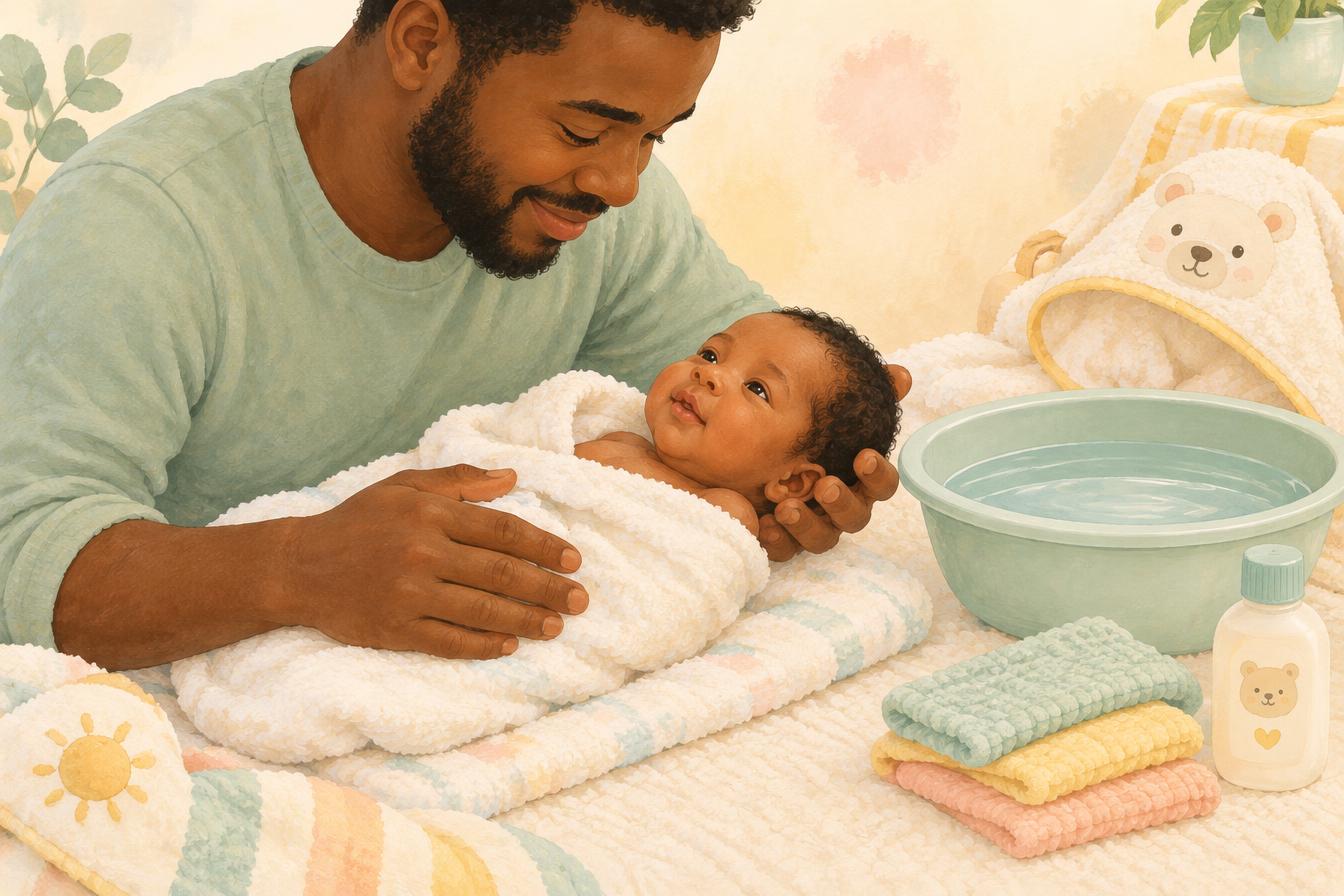
The AAP advises sponge baths only until the umbilical cord stump falls off, which usually happens by about one to two weeks of age. Babies rarely get dirty enough to need a full bath every day — about three baths a week may be enough in the first year.
Gather your supplies first
- Two soft washcloths and a hooded towel
- A basin or bowl of warm water
- Mild, fragrance-free baby wash (optional — water alone is often enough for newborns)
- A clean diaper, fresh clothes and a blanket
- A plain, fragrance-free moisturizer if your baby’s skin is dry
- A padded surface: a towel on a changing table, bed, counter or the floor
Tip: Warm the room first and lay out the towel and clothes in the order you’ll use them.
Check the water temperature
Water should feel warm, not hot. Test it with your wrist or the inside of your elbow before it touches your baby. The AAP recommends that the hottest temperature at the tap be no more than 120°F (49°C); many families adjust their water heater to help prevent scalds.
Giving a sponge bath
- Undress your baby except for the diaper and wrap them in a towel, uncovering one area at a time.
- Wipe each eye with a clean corner of a damp washcloth, from the inner to the outer corner, using plain water.
- Wash the face, outside and behind the ears, and the neck folds with plain water. Pat dry.
- Wash the chest, arms, hands and underarms, using a little mild cleanser only where needed. Rinse and pat dry.
- Wash the legs and feet, then remove the diaper and clean the diaper area last, front to back.
- Wash the hair at the end, supporting the head over the basin, so your baby stays warm.
- Wrap in the hooded towel, pat — don’t rub — dry, and dress in a fresh diaper and clothes.
Moisturizing after the bath
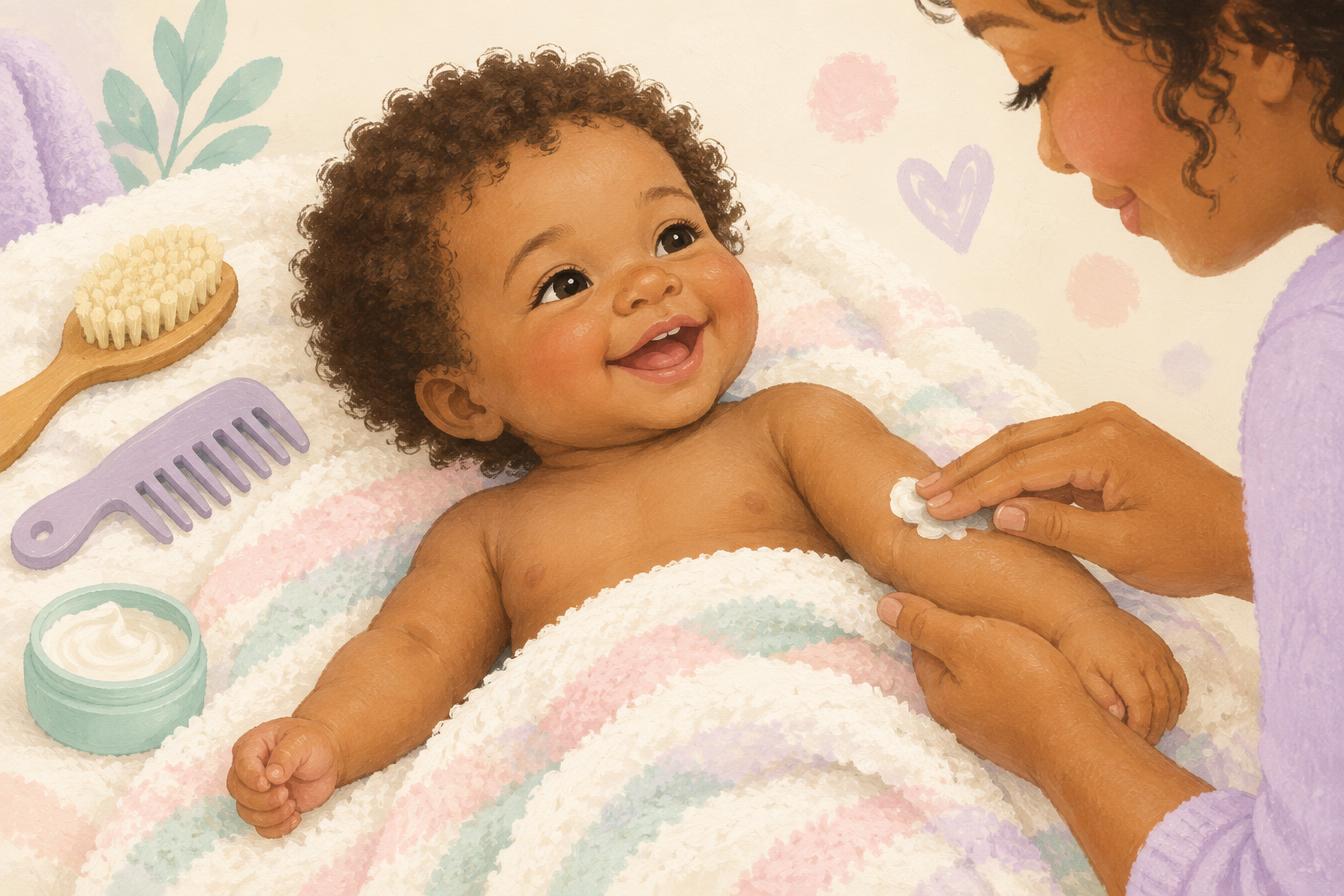
Newborn skin often peels a little in the first weeks — this is normal and usually settles on its own. If skin looks dry, cracked or ashy, smooth on a small amount of plain, fragrance-free cream or ointment while the skin is still slightly damp.
Umbilical cord care
Keep the stump clean and dry while it shrivels and falls off. Fold the top of the diaper down below the stump so it can air-dry, and avoid soaking it. A few drops of blood around the time it falls off is normal.
- Don’t pull on the stump, even if it’s hanging by a thread.
- If it gets dirty, clean around it with plain water and pat dry.
- Call your baby’s doctor right away if it actively bleeds.
Moving to tub baths
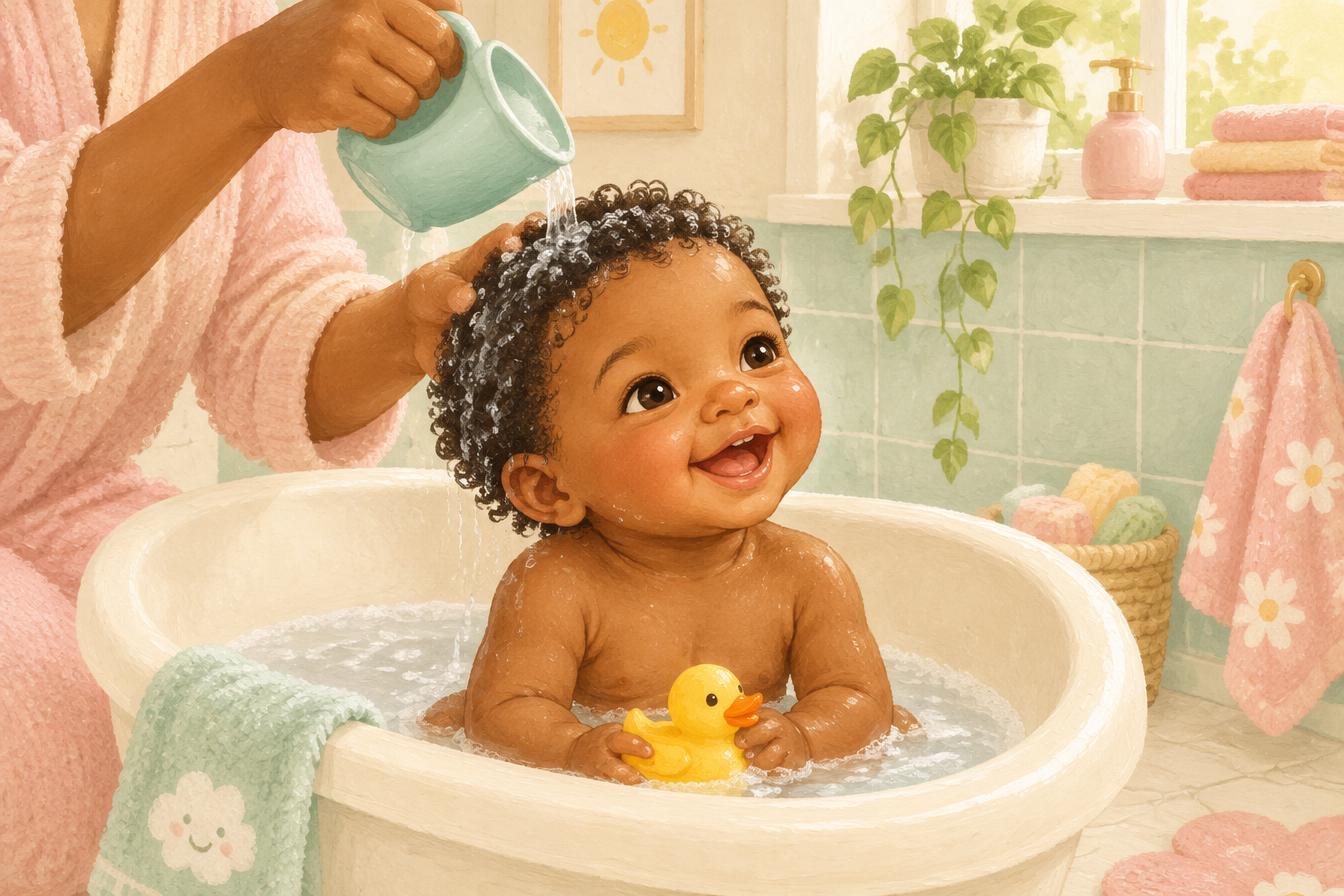
Once the stump has fallen off and the area has healed, you can use an infant tub with just a couple of inches of warm water. Keep one hand on your baby at all times, and never leave them — even for a second — to answer the door or fetch a towel.
At every age
Every child is different — use these as a starting point, not a rulebook.
Birth to cord separation
Sponge baths only, about three times a week, plus daily cleaning of the face, folds and diaper area.
After the cord heals
Short tub baths in 2–3 inches of warm water. Five to ten minutes is plenty.
1–3 months
Bath time can become part of a calming bedtime routine if your baby enjoys it.
Common mistakes to avoid
- Running water while your baby is in the tub — temperature can change suddenly.
- Using bubble bath or perfumed products on newborn skin.
- Rubbing off vernix or peeling skin instead of letting it come away naturally.
- Stepping away, even briefly. Babies can slip under water silently in seconds.
Helpful parent tips
- If your baby cries through the bath, keep it short and try again another day — or try a different time, such as mid-morning.
- Talk or sing softly throughout. Your voice is reassuring.
- For curly or coily hair, a small amount of conditioner and finger detangling can make later washes easier.
When to call a professional
Everyday care supports comfort — it doesn’t diagnose or treat. Contact your pediatrician, dermatologist or healthcare provider if you notice:
- The cord stump actively bleeds, oozes pus, smells bad, or the skin around it becomes red or swollen.
- The stump has not fallen off after about three weeks — mention it to your pediatrician.
- Your baby has a fever. In babies under 3 months, a rectal temperature of 100.4°F (38°C) or higher needs prompt medical advice.
Questions parents ask
Should I use soap for my newborn’s first bath?
Plain warm water is often enough. If you use a cleanser, choose a mild, fragrance-free one and use it only on areas that need it, then rinse.
What time of day is best for a bath?
Whenever you and your baby are calm and not hungry. Many families like the evening as part of winding down; others prefer mornings.
Do I need an infant tub?
It helps once your baby moves beyond sponge baths, but a clean sink with a towel lining can work too. Never use bath seats as a substitute for holding your baby.
Is it normal for newborn skin to peel?
Yes. Mild peeling in the first weeks is common and usually clears without treatment. A little plain moisturizer can help if skin looks cracked.