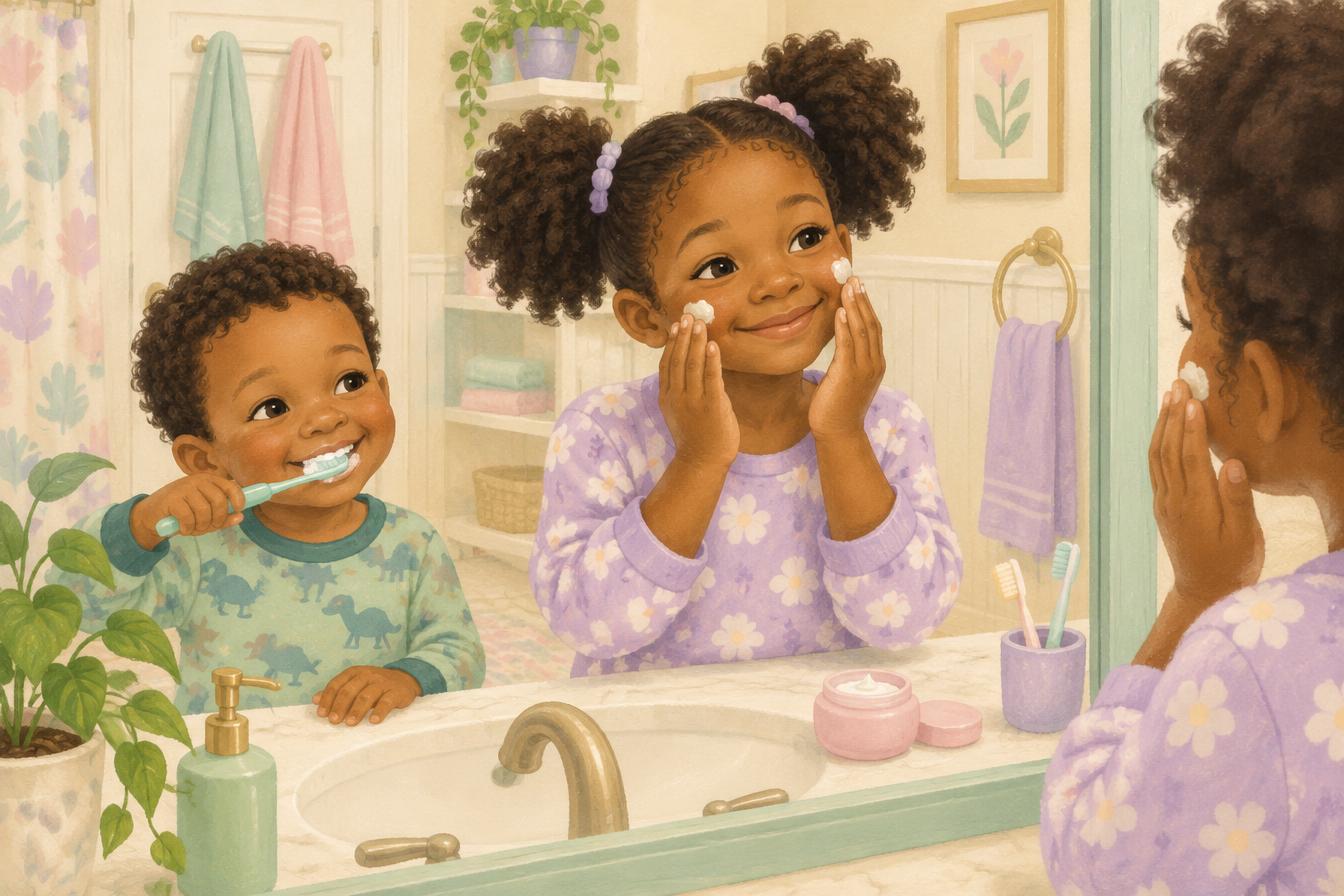
The three steps
1. Cleanse
Use lukewarm water and a mild, fragrance-free cleanser on areas that need it. For young children, bath time or a quick face wash is enough. Rinse well and pat dry.
2. Moisturize
Apply a plain, fragrance-free moisturizer after bathing while skin is still a little damp, and again on dry areas as needed.
3. Protect
On days outdoors, apply broad-spectrum, SPF 30+ sunscreen to exposed skin, and use hats and clothing for extra protection.
A sample daily routine
Morning
- Rinse face with water or a gentle wash
- Moisturizer on dry areas, lip balm if needed
- Sunscreen on exposed skin before outdoor time
After school or play
- Wash hands and face
- Change out of sweaty clothes
Evening
- Bath or shower on bath days; face and hand wash on others
- Moisturize after bathing
- Brush teeth and hair
Setting up the routine, step by step
- Choose a few basic, fragrance-free products.
- Keep them at child height in the bathroom.
- Make a picture chart for younger children showing each step.
- Do the steps together at first, then let your child take the lead.
- Praise effort rather than results.
Tip: Tie the skin routine to habits your child already has, like brushing teeth. Linked habits are easier to remember.
Adjusting the routine
Add more moisturizer in winter and more sunscreen in summer. After swimming or sports, rinse off chlorine or sweat. When puberty begins, many tweens need daily showers and a gentle facial cleanser. Children with eczema or sensitive skin may need a routine recommended by their pediatrician or dermatologist.
Routines for different skin needs
Dry or eczema-prone skin
Short lukewarm baths, generous thick moisturizer right after, and a second coat at bedtime. Follow any treatment plan from your child’s doctor.
Sensitive skin
Keep products to a minimum, choose fragrance-free, and introduce one new product at a time.
Active, sporty kids
Rinse off sweat or pool water after activities, reapply sunscreen during long outdoor sessions, and change out of damp clothes.
Tweens starting puberty
Add a daily shower, a gentle face wash morning and night, and deodorant if needed. Talk to a doctor before starting acne products.
Making it stick
Routines work best when they’re predictable. Doing the same steps at the same point each day — after breakfast, after bath, before bed — turns them into habits children barely think about. Picture charts, sticker trackers and a little praise help younger children, while tweens often prefer a routine they have chosen themselves within a few simple rules.
At every age
Every child is different — use these as a starting point, not a rulebook.
2–5 years
Adults do most of the steps; children help. Use a picture chart.
6–9 years
Children can do most steps with reminders and occasional checks.
10–12 years
Tweens can manage independently. Add deodorant and a gentle face wash if needed.
Common mistakes to avoid
- Copying adult or influencer routines.
- Using hot water, which strips moisture.
- Applying sunscreen only on beach days.
- Skipping moisturizer on children with dry skin.
Helpful parent tips
- Let children choose between two approved products — it builds ownership.
- Keep a sunscreen by the front door as a reminder.
- Make the evening routine a calm wind-down before bed.
Questions parents ask
How long should a child’s skin routine take?
Just a few minutes. If it’s taking much longer, it’s probably more complicated than necessary.
Do kids need toner or serums?
No. These aren’t needed for children and may irritate their skin.
Should my child use a separate face moisturizer?
Not usually. A gentle, fragrance-free moisturizer can be used on the face and body.
My child refuses moisturizer. What can I do?
Try a different texture — some children dislike greasy ointments but accept a light cream — let them apply it themselves, or turn it into a quick game. For eczema, ask your doctor about options your child will tolerate.