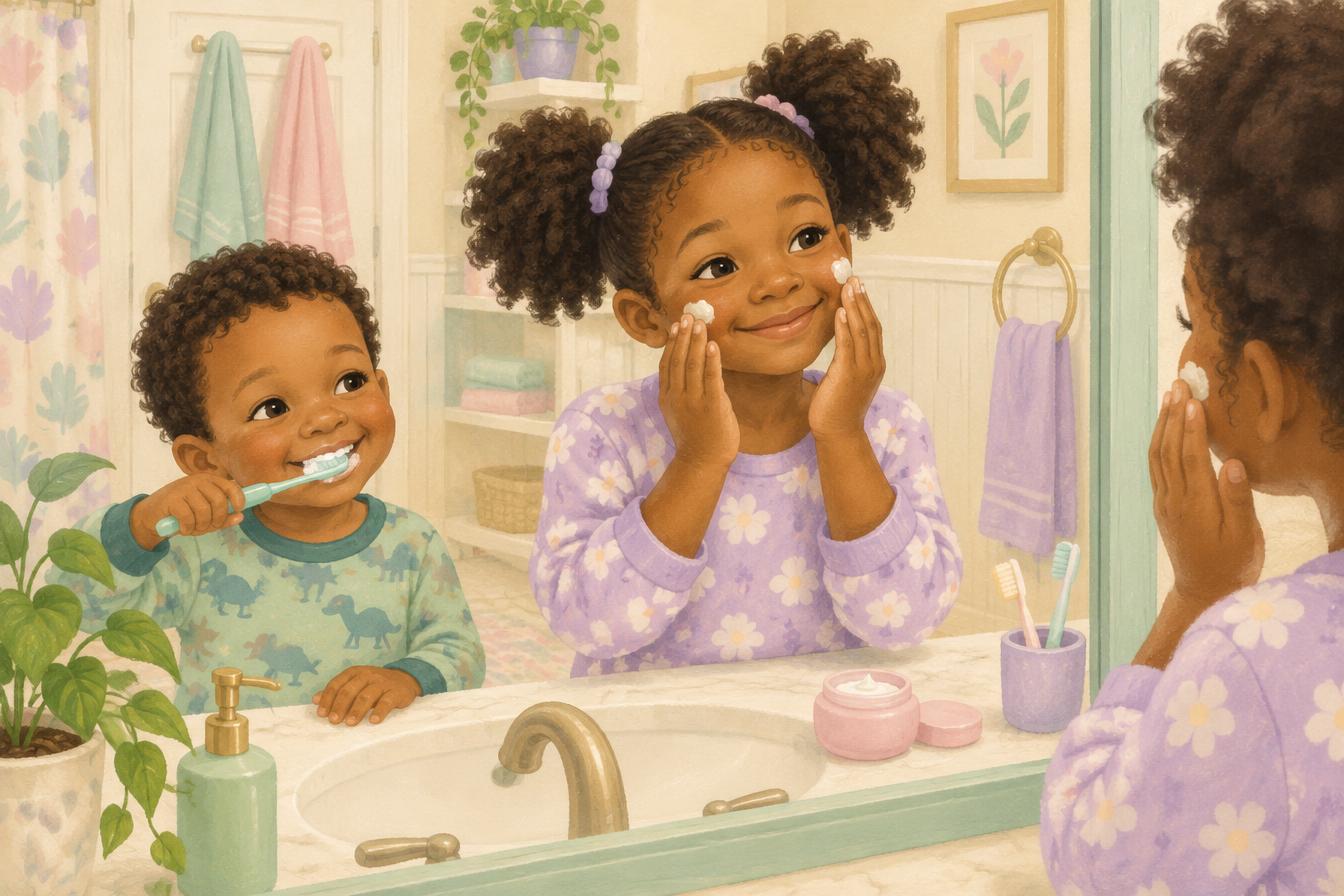
How children’s skin is different
- The outer barrier layer is still maturing, so it can lose water more quickly and dry out more easily.
- Irritants and allergens can pass through more easily, which is why fragrance and harsh ingredients matter more.
- Children have more skin surface for their body weight, so products applied widely are absorbed in greater proportion.
- Young children produce less oil than teenagers, so acne treatments and oil-control products aren’t needed.
How skin changes as children grow
Toddlers and preschoolers (2–5)
Skin is soft and often dry. Eczema that began in infancy may continue or improve. Scrapes, bites and minor rashes are part of active play.
School-age children (6–9)
Skin is generally stable. Children become more active outdoors and in sports, so sun protection and after-activity washing matter more.
Tweens (10–12)
Puberty can begin, bringing more oil, sweat, body odor and sometimes acne. A little more cleansing may be needed — still gentle, still simple.
What healthy kids’ skin needs
- Gentle cleansing when dirty or sweaty, with a mild, fragrance-free cleanser.
- Moisturizer, especially after baths and in dry weather.
- Sun protection: shade, clothing, hats and broad-spectrum SPF 30+ sunscreen.
- Enough sleep, water and a balanced diet — they support healthy skin too.
Melanin-rich skin in children
Children with brown and Black skin can be more prone to dryness that looks ashy, and to dark marks (post-inflammatory hyperpigmentation) that linger after scrapes, bites or eczema. Gentle care, regular moisturizing and early attention to itchy rashes can help reduce these marks.
Why simple is better
Social media increasingly promotes multi-step routines, serums and actives to children. Dermatologists caution that products such as retinoids, acids and strong exfoliants aren’t designed for children’s skin and can cause irritation, rashes and sensitivity. Most children need only three things: cleanse, moisturize and protect.
Signs your child’s skin is healthy and comfortable
Healthy skin in children doesn’t have to look perfect. Scrapes, bruises and the occasional bite are normal parts of active childhood. Signs that skin is generally comfortable include:
- It isn’t regularly itchy, tight or stinging
- Small cuts and scrapes heal within a week or two
- Dry patches improve quickly with moisturizer
- Your child sleeps without scratching
Tip: If your child scratches at night, has patches that keep returning, or seems self-conscious about their skin, it’s worth mentioning to your pediatrician.
At every age
Every child is different — use these as a starting point, not a rulebook.
2–5 years
Bathe a few times a week. Moisturize daily if skin is dry. Sunscreen outdoors.
6–9 years
Bathe at least once or twice a week and after swimming, sweating or getting dirty.
10–12 years
Many tweens need daily showers once puberty starts, plus a gentle face wash.
Common mistakes to avoid
- Buying adult skin care for young children.
- Scrubbing skin to get it ‘really clean’.
- Skipping sunscreen for children with darker skin.
- Ignoring persistent itchy patches.
Helpful parent tips
- Keep products in a shared family caddy so children see a simple routine modelled.
- Talk about skin in positive, non-appearance-focused language.
- Teach children that skin care is about comfort and health, not looks.
When to call a professional
Everyday care supports comfort — it doesn’t diagnose or treat. Contact your pediatrician, dermatologist or healthcare provider if you notice:
- Itchy, dry patches that keep coming back — possibly eczema.
- Rashes with fever, blisters, pus or rapid spreading.
- Changes in a mole: size, shape, color, bleeding or itching.
Questions parents ask
Does my child need a face wash?
Most young children can wash their face with water or the same mild cleanser they use on their body. Tweens may benefit from a gentle facial cleanser once puberty begins.
Is it okay for kids to use adult moisturizer?
Plain, fragrance-free moisturizers are fine for the whole family. Avoid products with actives such as retinol, acids or anti-aging ingredients.
When does acne usually start?
Often with puberty, which can begin around ages 8 to 13. Talk to your pediatrician about gentle options if acne appears.