Core habits to teach
- Washing hands with soap and water for 20 seconds
- Washing face and body gently
- Moisturizing after bathing
- Wearing sunscreen and hats outdoors
- Changing out of sweaty clothes
- Not picking at scabs, spots or bites
Handing over responsibility, step by step
- Show: do the routine while your child watches.
- Help: do it together, with your child doing some steps.
- Remind: your child does it with reminders.
- Check: your child does it independently while you check occasionally.
- Trust: your child owns the routine.
Making habits fun
- Use a picture chart or sticker tracker.
- Sing a 20-second handwashing song.
- Let children choose their own towel or sunscreen stick.
- Make applying sunscreen a game (‘dot-to-dot’ before rubbing in).
- Celebrate streaks and effort, not perfection.
Tip: Our printable Skin Care Routine Tracker is designed for exactly this.
Positive language about skin and hair
Children absorb how we talk about bodies. Focus on how skin care helps skin feel comfortable and stay healthy, not on appearance or ‘fixing’ something. Celebrate your child’s skin tone and hair texture, and avoid comparisons with siblings or friends.
Preparing for puberty
Around ages 8 to 13, puberty can bring sweat, body odor and acne. Talk about these changes before they happen, so they feel normal. Introduce daily showers, deodorant and a gentle face wash when needed.
Hands-on activities that teach skin care
Children learn best by doing. A few simple activities can make skin care feel like play:
- Glitter hand-washing: sprinkle a little washable glitter on hands and practice washing until it’s gone.
- Sunscreen dot-to-dot: dot sunscreen on cheeks, nose and chin, then rub in.
- Shadow check: before playing outside, look at your shadow — shorter than you means sun protection is especially important.
- Routine charts: let your child draw pictures for each step of their routine.
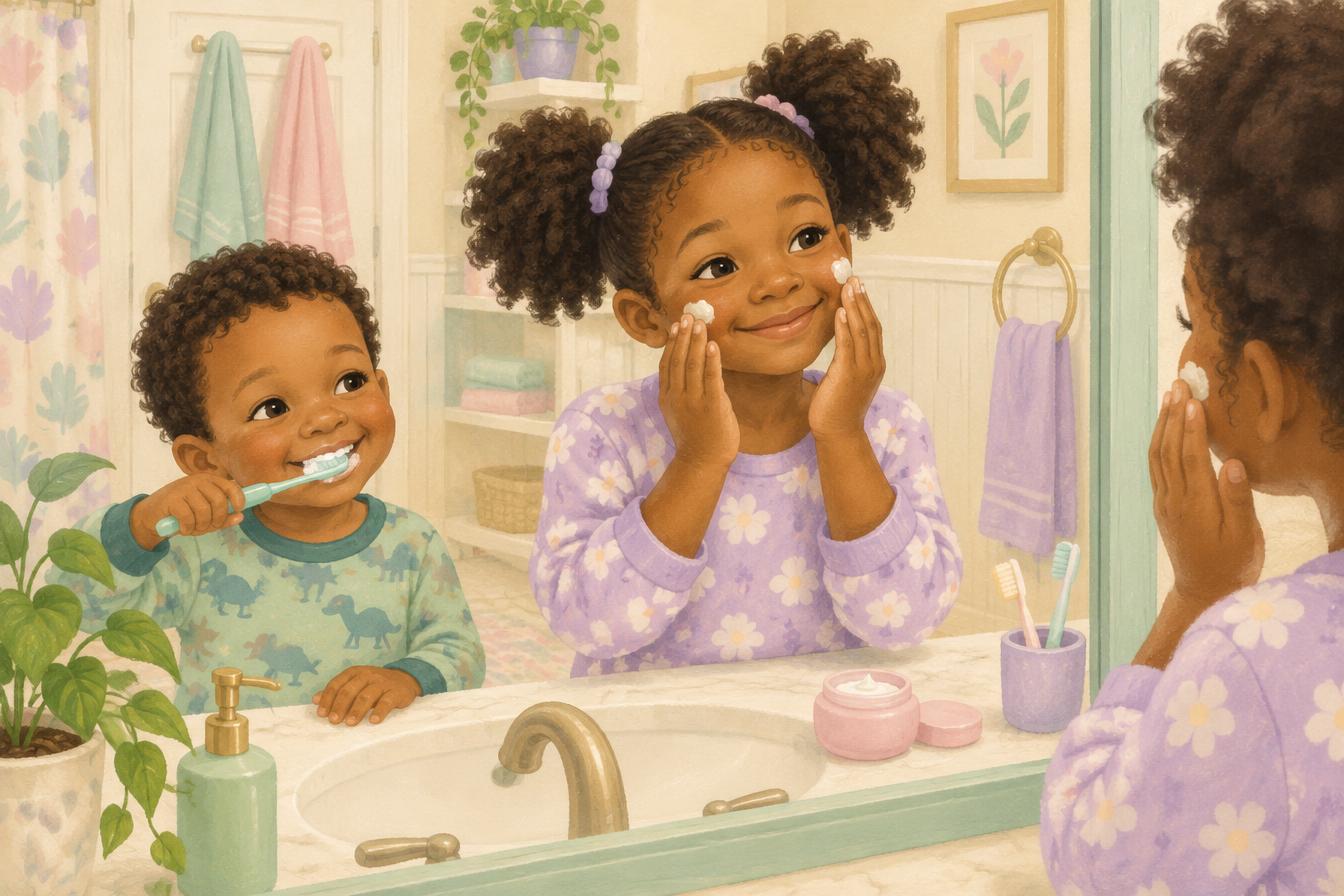
- Mirror time: practice applying moisturizer to elbows and knees in front of a mirror.
Supporting children with sensory sensitivities
Some children — including many autistic children and those with sensory processing differences — find the feel of lotions, water or towels uncomfortable. Try lighter or thicker textures, warmer or cooler water, soft cotton towels, and giving plenty of warning before each step. Letting your child apply products themselves often helps. Progress may be gradual, and that’s okay.
At every age
Every child is different — use these as a starting point, not a rulebook.
2–5 years
Show and help. Picture charts and songs work well.
6–9 years
Remind and check. Children can do most steps themselves.
10–12 years
Trust with occasional check-ins. Prepare for puberty changes.
Common mistakes to avoid
- Expecting independence too early — or holding on too long.
- Using shame or criticism about skin or hygiene.
- Making routines complicated.
- Focusing on appearance rather than health and comfort.
Helpful parent tips
- Model the habits yourself — children copy what they see.
- Keep products at child height.
- Pair skin care habits with teeth brushing to make them stick.
Questions parents ask
When can my child manage their own skin care?
Many children can manage basic steps with reminders by around 6 to 8, and more independently by 10 to 12.
How do I get my child to wear sunscreen?
Make it routine, let them choose a product they like, use sticks for faces, and model it yourself.
What if my child is embarrassed about their skin?
Listen, reassure them, and focus on comfort and health. If a skin concern is affecting their confidence, talk to your pediatrician.
How do I stop my child picking at scabs?
Keep nails short, cover healing scrapes with a bandage, and offer a fidget or something to do with their hands. Gently remind them that scabs are skin’s way of healing.