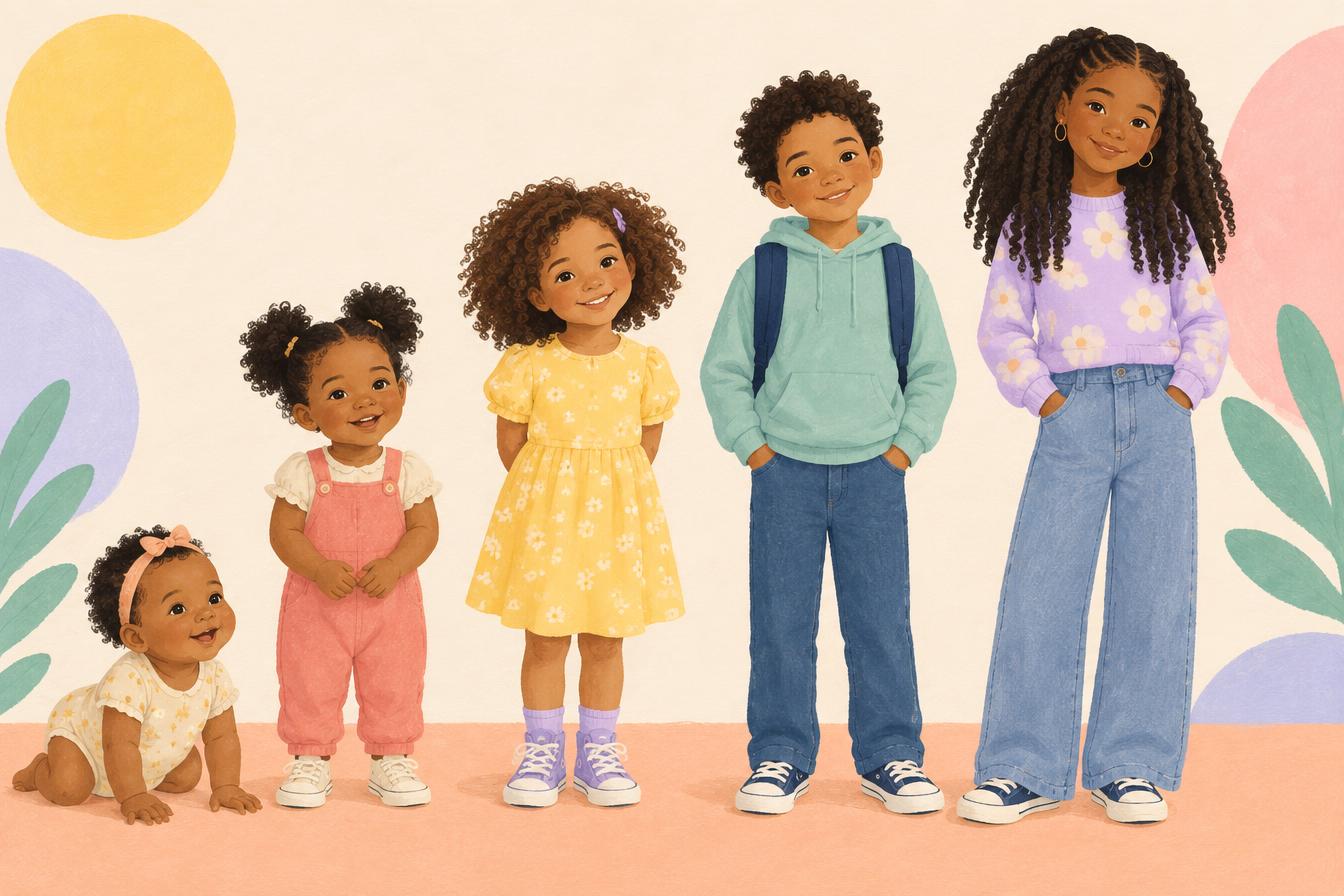
Babies (birth to 12 months)
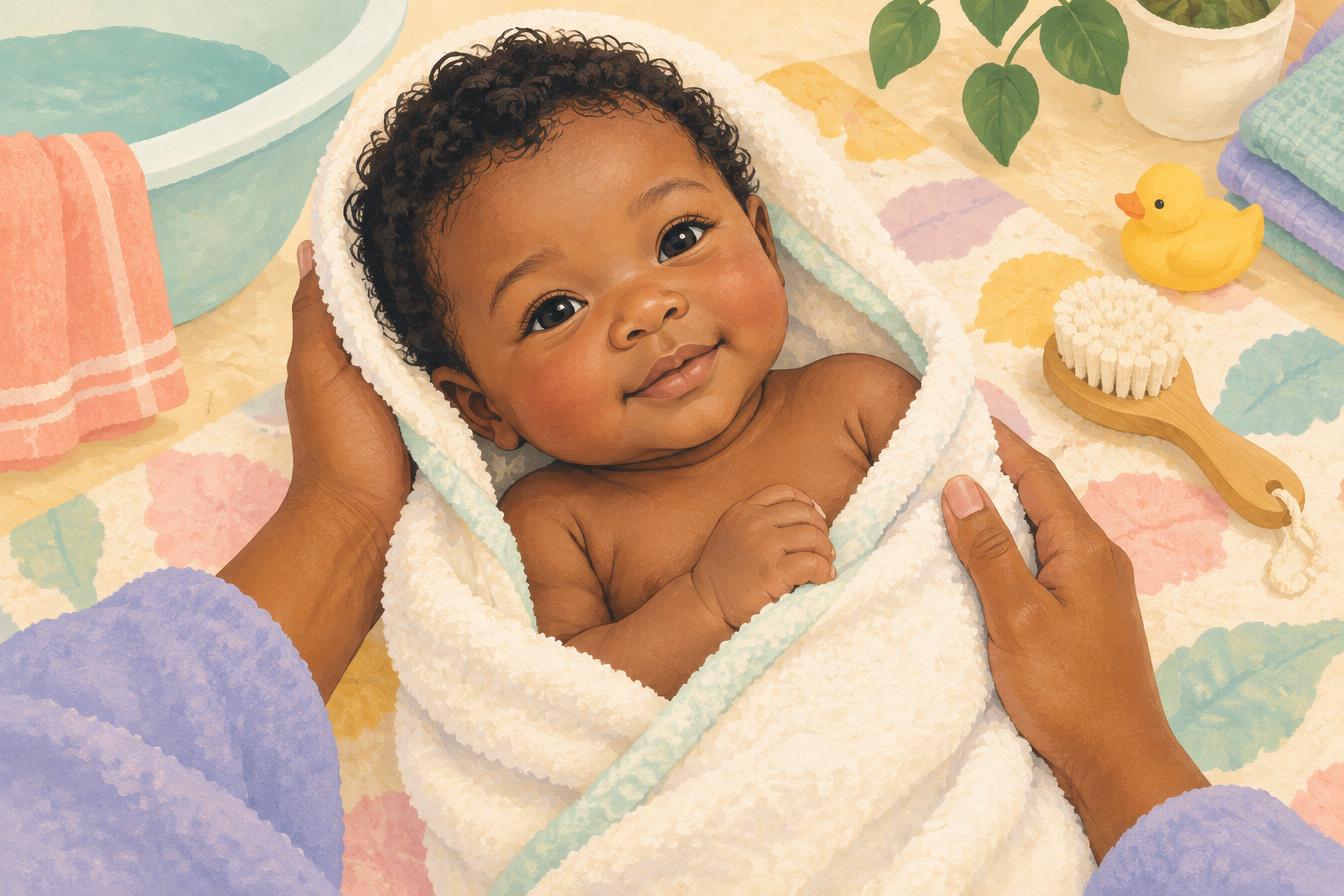
Hair may be sparse, straight, curly or change completely. Care is about cleanliness and comfort, not styling.
- Wash with a mild, fragrance-free baby wash a couple of times a week, or as your pediatrician suggests.
- Loosen cradle cap gently while shampooing; never pick at it.
- Use fingers or a soft baby brush.
- No beads, clips, tight elastics or products near the face.
- Nothing on the head during sleep.
Toddlers (1 to 3 years)
Curls often become more defined, and toddlers begin to have strong opinions about sitting still.
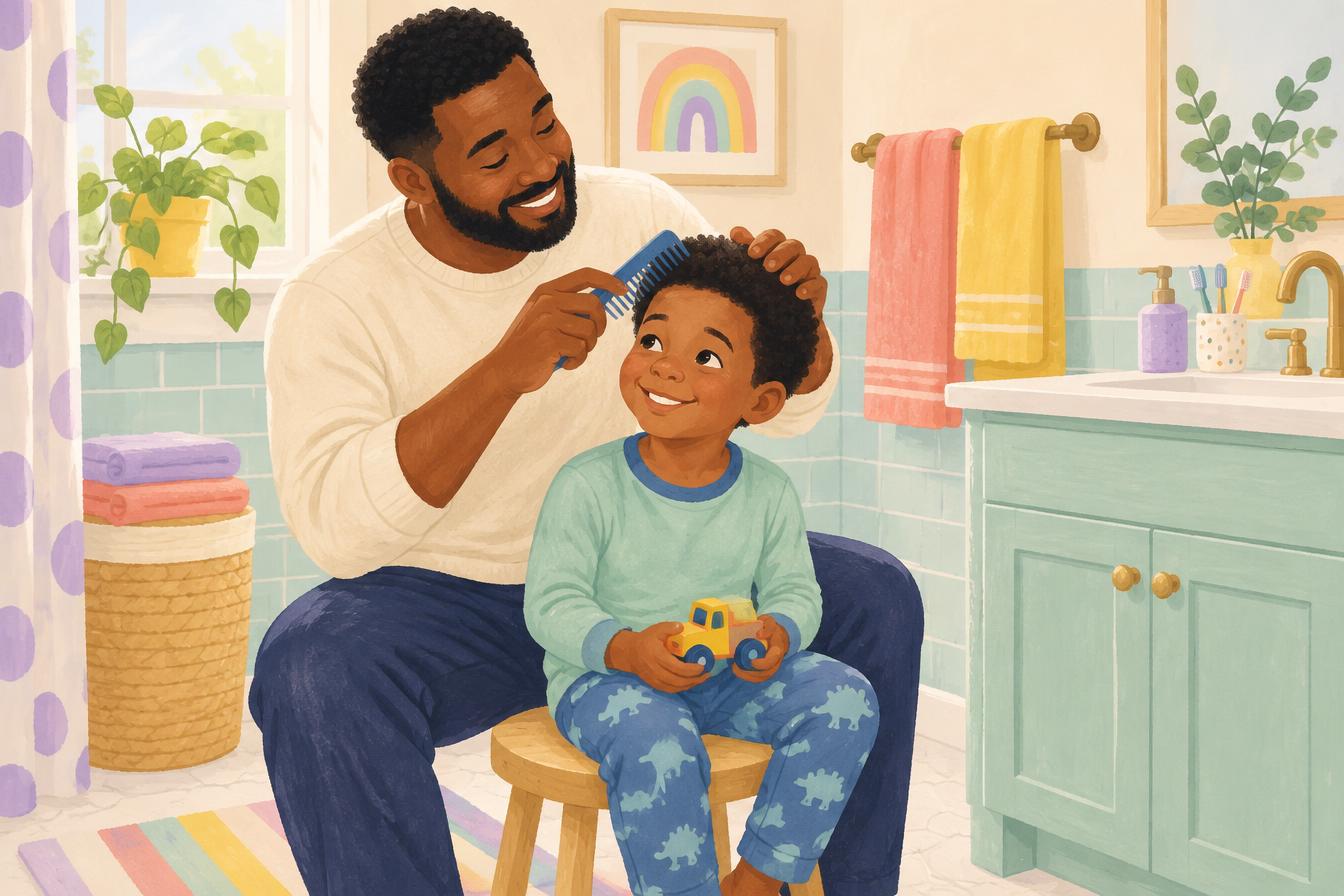
- Wash about once a week or as needed, with conditioner every time.
- Detangle damp hair with fingers and a wide-tooth comb, in short sessions.
- Choose simple, loose styles: free curls, one or two puffs, a few chunky twists.
- Avoid small beads and clips that could be a choking hazard.
- Introduce a satin pillowcase once a pillow is appropriate.
Preschoolers (3 to 5 years)
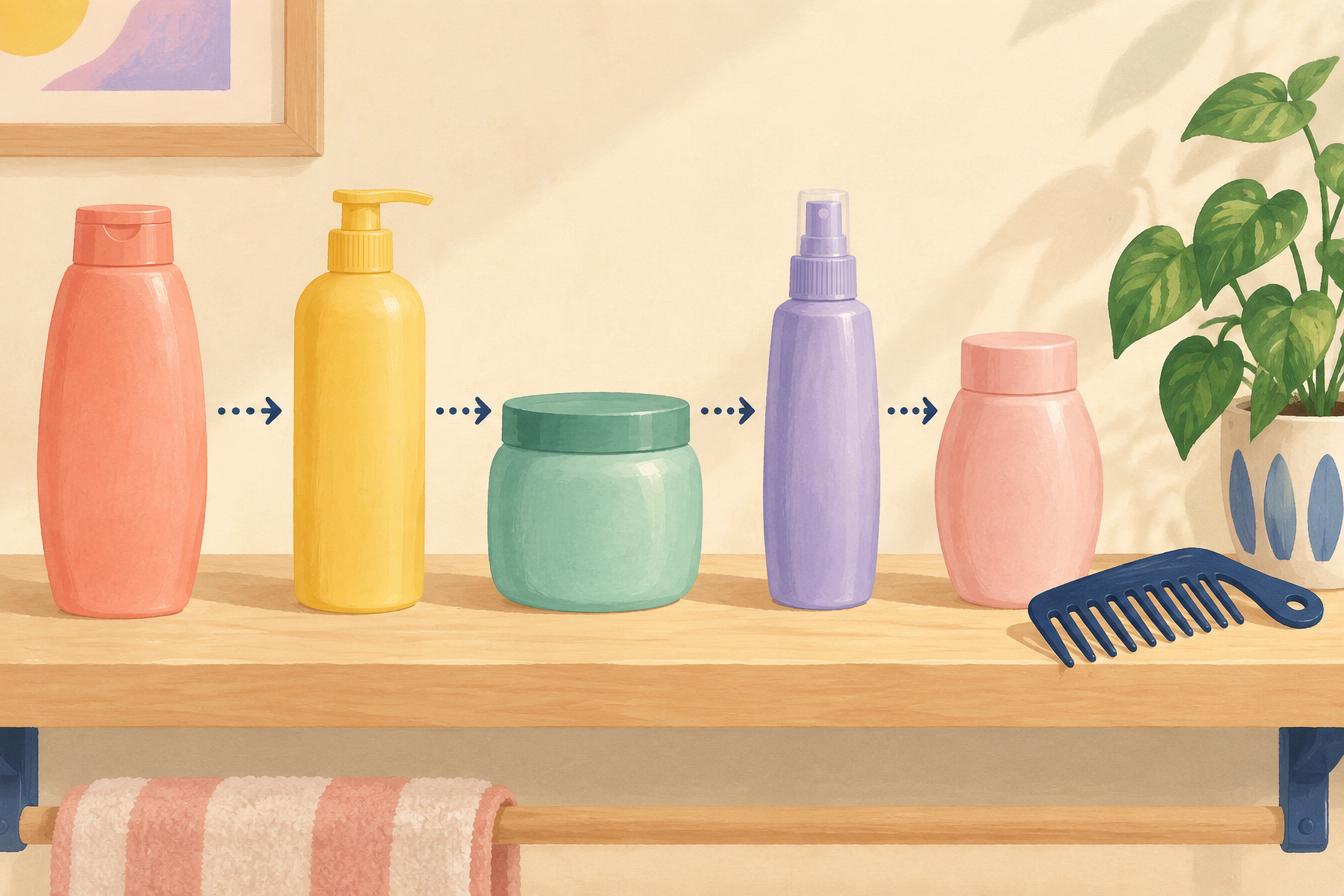
Preschoolers love to help and to choose. Routines and visual steps keep things calm.
- Wash every one to two weeks for curly and coily hair, rinsing after heavy play or swimming.
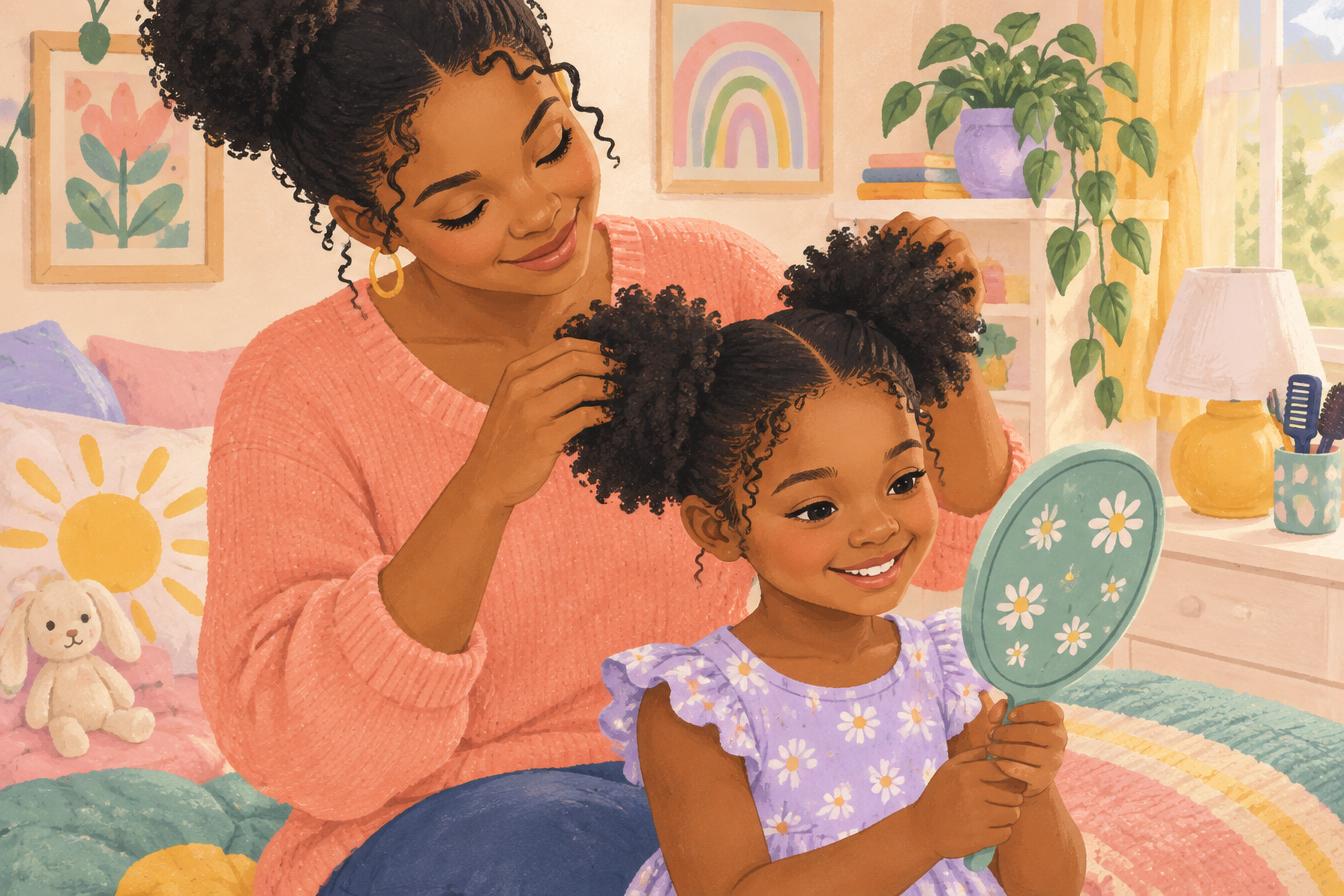
- Let them spray water, smooth in leave-in and choose accessories.
- Styles that last several days, like loose twists or larger braids, reduce handling.
- Start a bonnet or scarf habit at bedtime.
- Keep extensions and long, tight installs off the menu.
School age (6 to 9 years)
Children can start doing parts of their routine and want more say in how they look.
- Teach them to moisturize, tie on a bonnet and gently finger-detangle the front.
- Longer-lasting protective styles are common — keep them loose and wash the scalp.
- Plan wash days around swimming, sports and school photos.
- Talk about comments and questions at school and practice confident responses.
Preteens (10 to 12 years)
Preteens can run most of their own routine with some coaching. As puberty starts, some find their scalp gets oilier and needs washing more often; dermatologists suggest adjusting frequency by watching for oiliness or dryness between washes.
- Coach them to notice dryness, buildup, oiliness and flakes, and adjust.
- Discuss heat and chemical straightening honestly, including risks, and encourage low-heat, occasional use if any.
- Encourage them to speak up if a stylist makes a style too tight.
- Respect their developing sense of style.
At every age
Every child is different — use these as a starting point, not a rulebook.
0–12 months
Clean, comfortable, no styling. Fingers or soft brush.
1–3 years
Short sessions, loose puffs and chunky twists. No small accessories.
3–5 years
Visual routines, helping hands, long-lasting loose styles.
6–9 years
Shared routine: they moisturize and tie up; you detangle the back.
10–12 years
Mostly independent with coaching. Wash frequency may change with puberty.
Common mistakes to avoid
- Using adult-strength products or treatments on young children.
- Introducing chemical relaxers or texturizers to young children.
- Expecting toddlers to sit still for long styling sessions.
- Doing everything for older children instead of teaching them.
- Keeping the same routine even as hair texture and needs change.
Tips for curly, coily and textured hair
- Hair texture often changes throughout childhood — revisit your routine every few months.
- Different areas of the head may need different care.
- Longer hair usually needs more sectioning and more conditioner.
Questions parents ask
When can my child start washing their own hair?
Many children can start shampooing their own scalp around ages 6 to 8 with supervision, and take over more fully in the preteen years. Help with rinsing and detangling for as long as they need.
When is it okay to start braids with extensions?
Many families wait until school age, and choose light, short extensions installed loosely. Skip them for toddlers and preschoolers.
Should young children use heat on their hair?
We recommend avoiding regular heat styling for young children. Air-drying and stretched styles like twists give length without heat.