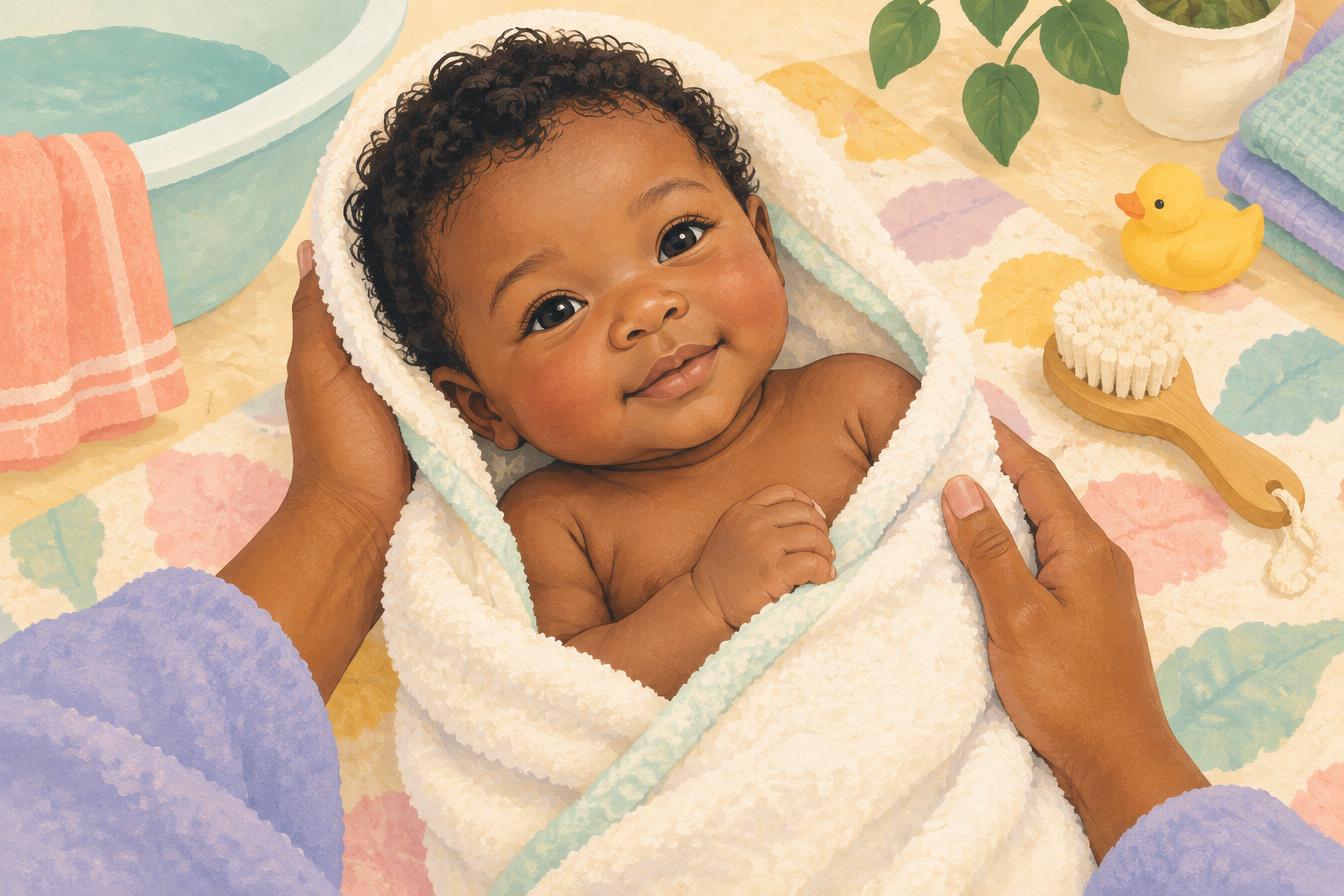
Gentle cleansing
Many families wash baby hair a couple of times a week. Your pediatrician may suggest a different rhythm if your baby has eczema or another skin condition.
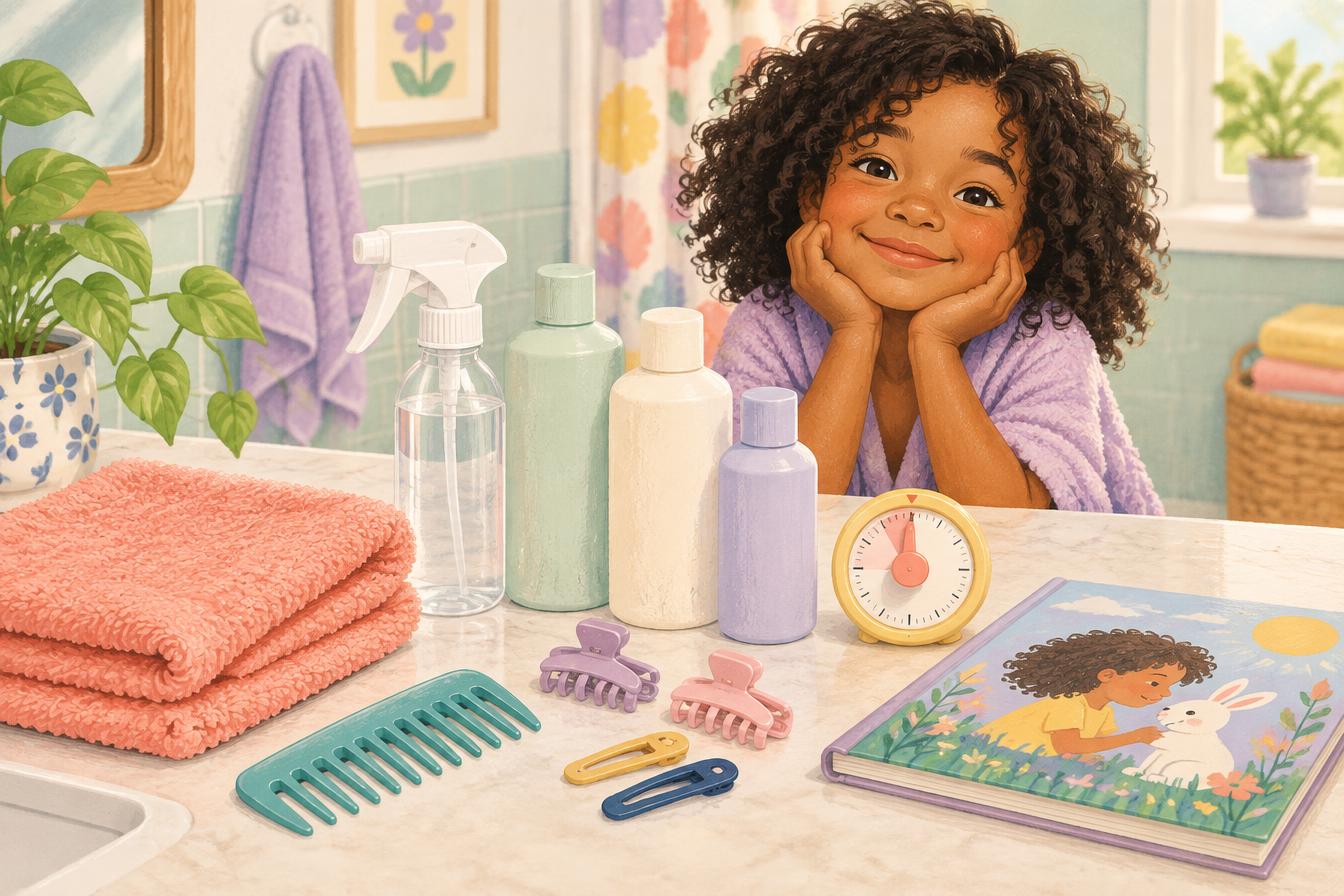
- Gather everything first: towel, mild fragrance-free baby wash, a cup for rinsing and a soft washcloth. Never leave a baby alone in the bath, even for a moment.
- Use lukewarm water and a very small amount of wash on the scalp.
- Massage gently with your fingertips — not your nails.
- Tip your baby’s head back slightly and rinse from front to back so water runs away from the eyes.
- Pat the hair and scalp dry with a soft towel; don’t rub.
Moisturizing baby curls
Once hair grows in and starts to curl, it may begin to feel dry between baths. A tiny amount of a gentle, fragrance-free moisturizer made for babies or children, smoothed over damp hair, is usually plenty. Avoid heavy greases on the scalp, and keep products away from the face and hands, which quickly end up in little mouths.
Cradle cap
Cradle cap — greasy, yellowish or scaly patches on the scalp — is very common in the first months. The American Academy of Pediatrics notes it isn’t caused by poor hygiene, isn’t contagious, and usually clears up on its own. You don’t need to treat it, but you can help loosen the scales.
- Wash the hair a little more often; dermatologists say every other day helps most babies.
- Use a mild, fragrance-free baby shampoo. Ask your pediatrician before using any medicated shampoo.
- Gently massage the scales with your fingers or a soft baby brush while shampooing.
- For stuck-on scale, dermatologists suggest a little non-food-based oil, such as baby oil, before the bath — then shampoo it out.
- Never pick or scratch at the scales.
Tip: Call your pediatrician if the rash spreads beyond the scalp, seems itchy or painful, has an odor, or comes with hair loss.
First combs, first styles
For babies, a soft brush or your fingers are all you need. As toddler hair grows, a wide-tooth comb on damp, conditioned hair makes detangling easier.
- Keep styles loose and simple: free curls, one or two soft puffs, or a few chunky twists.
- Skip beads, small clips and hair jewelry that could be pulled out and swallowed.
- Avoid tight braids, extensions and anything that pulls at the delicate hairline.
- Never put a baby to sleep with loose items like headbands, bonnets or clips on the head. Follow safe-sleep guidance from your pediatrician.
Hair loss and friction patches
Many babies lose some hair in the first months, and many develop a bald or thin patch at the back of the head from lying and rubbing on the mattress. This usually fills in as they sit up and move more. Check with your pediatrician about any patchy hair loss with redness, scaling or broken hairs.
At every age
Every child is different — use these as a starting point, not a rulebook.
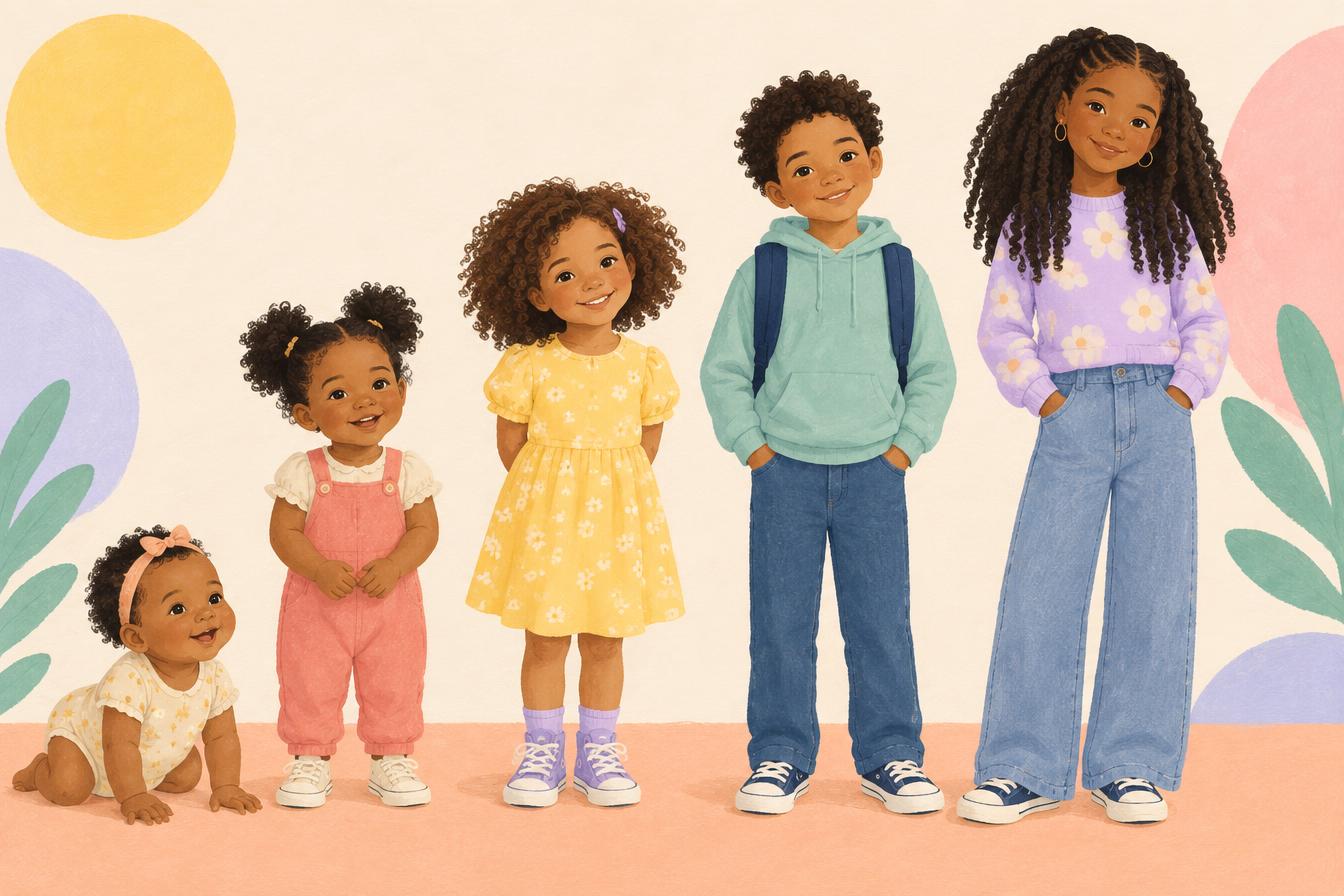
Newborns (0–3 months)
Water and a tiny amount of mild wash. Focus on cradle cap care if needed. No styling products.
Babies (3–12 months)
Gentle washing a couple of times a week, a small amount of moisturizer if hair feels dry, and fingers or a soft brush.
Young toddlers (1–2 years)
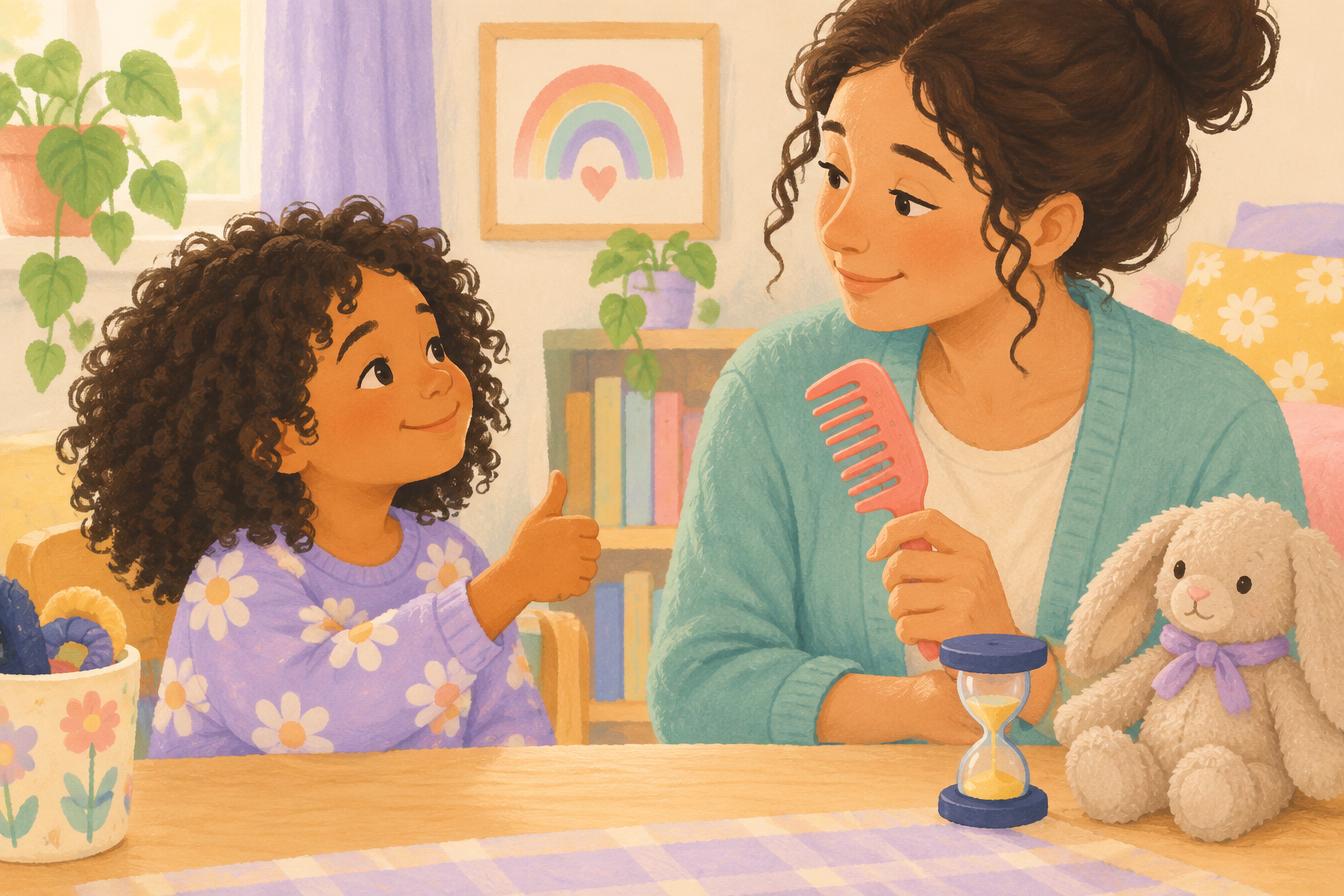
Introduce a wide-tooth comb on damp hair and short, playful routines. Loose puffs are plenty.
Older toddlers (2–3 years)
Invite them to help pour water or hold the comb. Chunky twists can last a few days with night protection.
Common mistakes to avoid
- Using adult shampoos, fragranced products or strong hair oils on a baby’s scalp.
- Picking at cradle cap scales.
- Putting small beads, clips or elastics on hair a toddler can reach.
- Styling babies in tight braids or ponytails.
- Leaving bonnets or headbands on a sleeping baby.
Tips for curly, coily and textured hair
- Curls often appear or tighten between six months and two years — adjust moisture as texture changes.
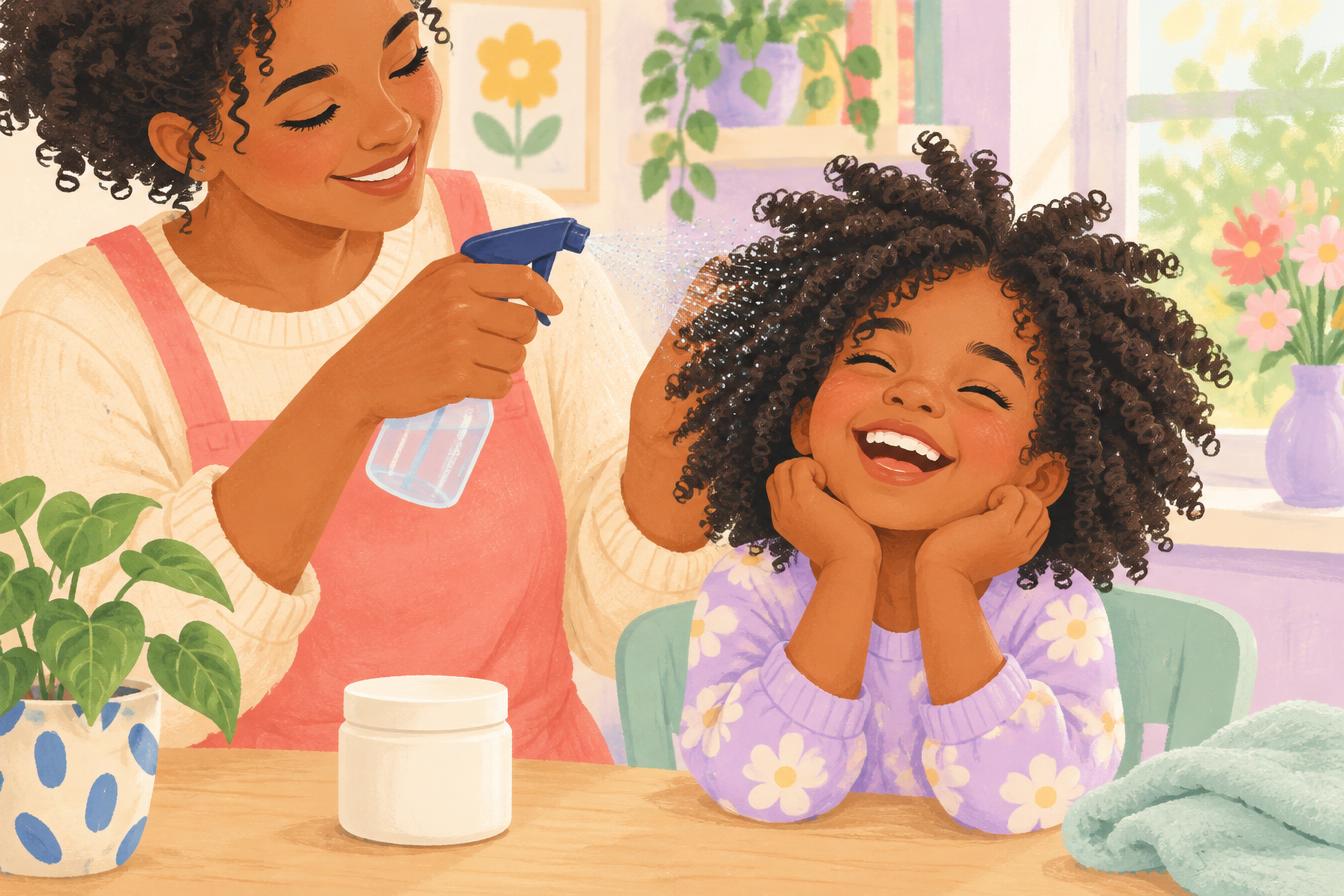
- A water spray before combing makes toddler detangling much easier.
- Short sessions during a favorite song or snack keep things happy.
Questions parents ask
When will my baby’s curls come in?
Every baby is different. Some are born with curls, while others develop them gradually over the first couple of years. Hair texture often keeps changing through early childhood.
Can I use oil on my baby’s hair?
Dermatologists suggest a non-food-based oil, like baby oil, to help loosen cradle cap before shampooing. For everyday moisture, a small amount of gentle, fragrance-free product made for babies is usually enough.
Should I shave my baby’s head to make hair grow thicker?
No. Shaving doesn’t change how thick or fast hair grows. It’s a personal or cultural choice, not a hair-care necessity.