Why some children feel it more
- Dry or tangled hair drags and pulls, which hurts.
- Tight styles put steady tension on the scalp.
- Some children are simply more sensitive to touch. Autistic children and children with sensory processing differences may experience touch, sound or pressure more intensely.
- Past painful sessions can make a child anxious before the comb even touches their head.
Reduce pulling first
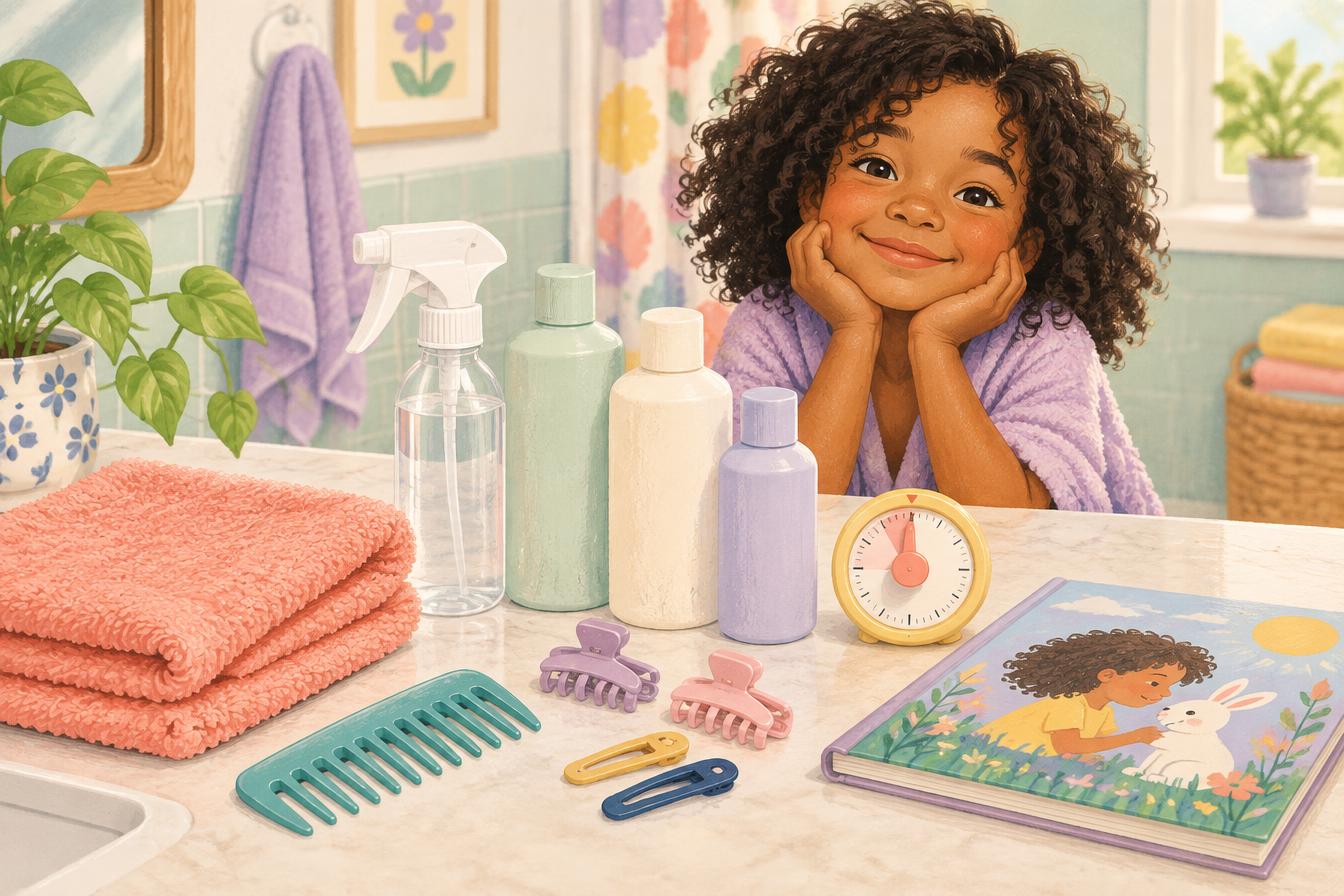
- Always detangle damp, well-conditioned hair.
- Work in small sections, clipped away from each other.
- Hold each section above where you’re combing so any pull is against your hand, not the scalp.
- Comb from the ends first and work up toward the root.
- Use your fingers before any comb, and a wide-tooth comb before anything finer.
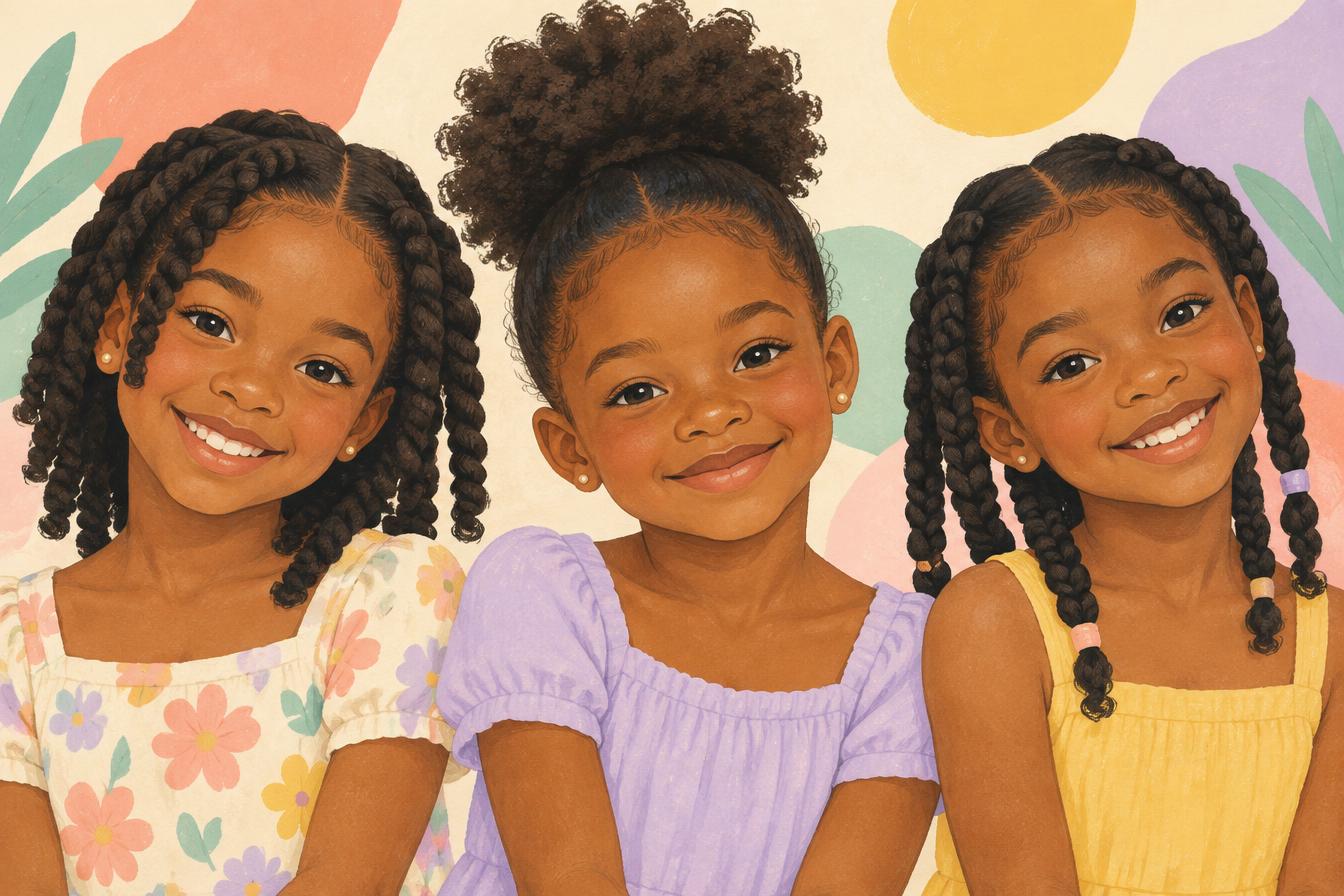
- Choose looser, larger styles that need less tension.
Breaks, choices and control
Children cope much better when they have some control. Small choices make a big difference.
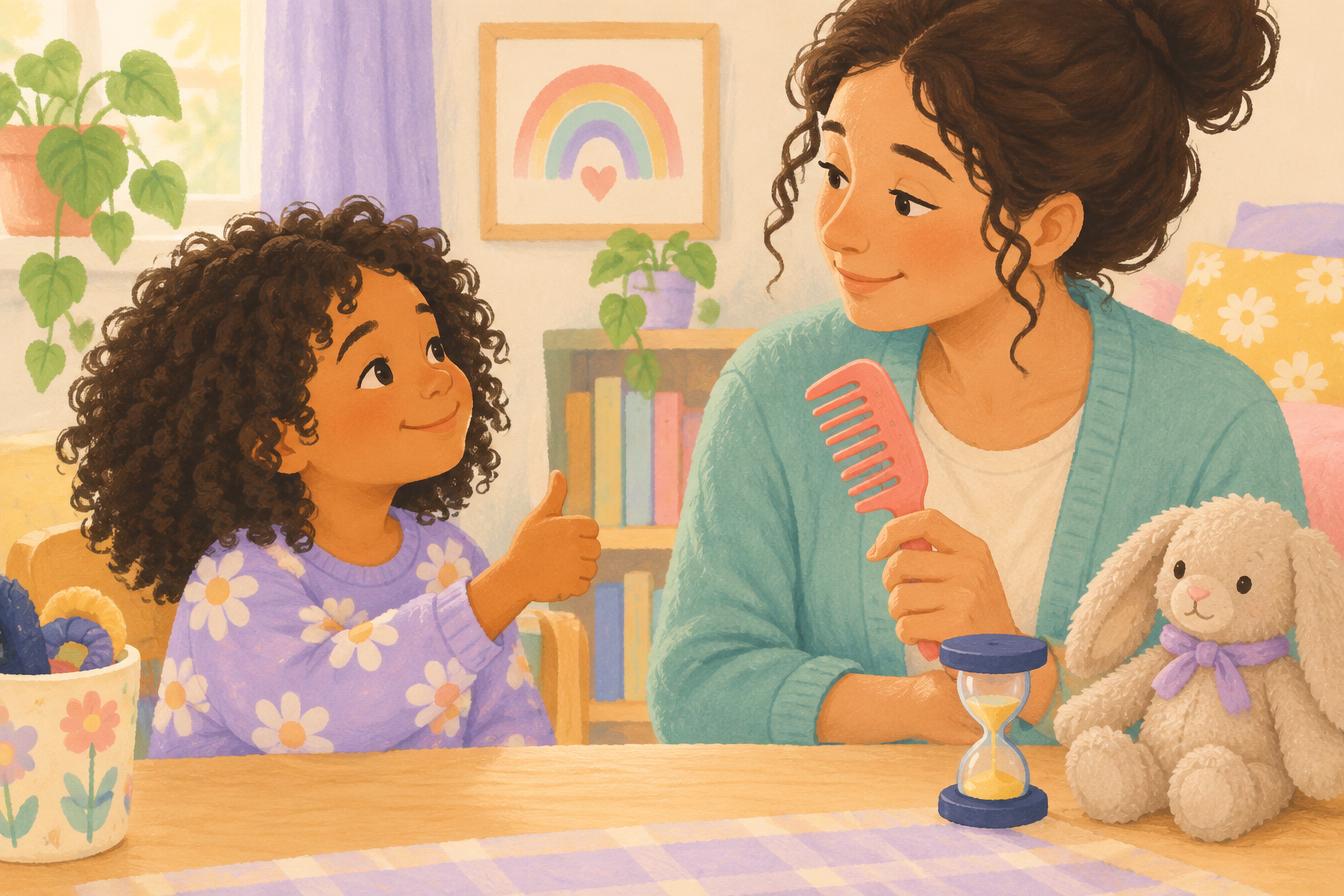
- Agree on a break signal — a thumbs-up, a word, a tap — and honor it every time.
- Use a timer: “We’ll do this section until the sand runs out, then break.”
- Let them choose the style, the accessory, or which section comes first.
- Count down out loud: “Three more twists.”
- Split long sessions across two days if needed.
Tip: Stopping when asked builds trust. Children who know they can pause usually need fewer pauses.
Sensory support
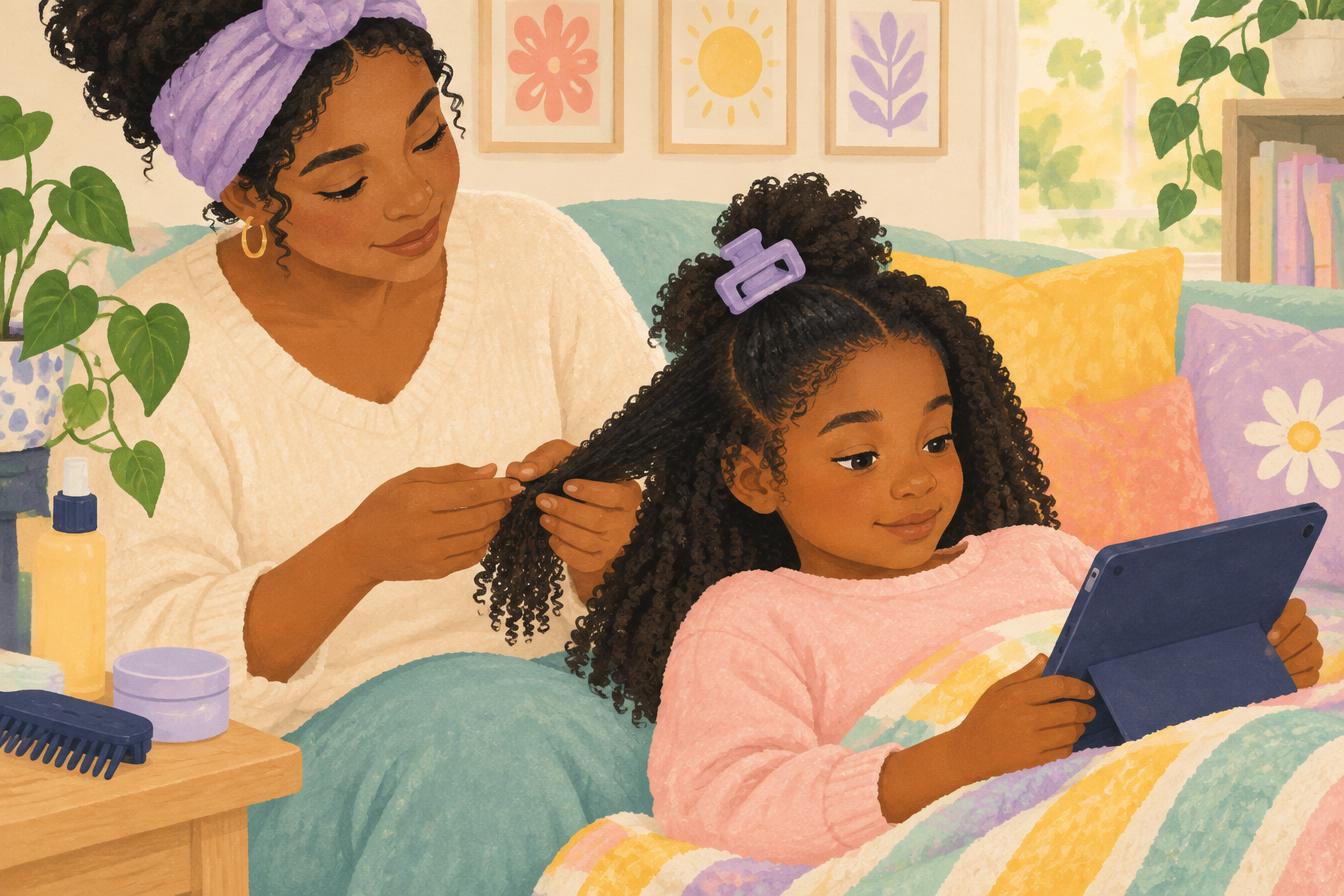
- Offer headphones, a weighted lap pad, a fidget or a favorite show.
- Tell them before you touch: “I’m going to spray the back now.”
- Try firm, steady touch rather than light, ticklish touch — many sensitive children prefer it.
- Use lukewarm water and let them hold the spray bottle.
- Keep the room calm and the routine predictable, perhaps with a picture schedule of each step.
Making hair time positive
Hair time can become a warm ritual: a special playlist, a story you only read on wash day, or talking about the day together. Praise effort and patience, not stillness. And try never to talk about their hair as “bad,” “nappy” or “difficult” — even jokingly. Children hear it.
When to get extra help
Talk to your pediatrician or a dermatologist if your child has scalp pain even without styling, sores, bumps, flaking or patches of hair loss. If sensory distress around grooming is significant, an occupational therapist can offer strategies tailored to your child.
At every age
Every child is different — use these as a starting point, not a rulebook.
Babies
Soft brushes and fingers only, with lots of gentle talk and eye-level smiles.
Toddlers
Very short sessions tied to a favorite song or snack. Detangle during bath play.
Preschoolers
Use a timer and a break signal. Let them style a doll’s or toy’s hair alongside.
School age & preteens
Involve them in planning styles and let them detangle sections themselves for control.
Common mistakes to avoid
- Telling a child to “stop being dramatic” or that beauty requires pain.
- Holding a child still to finish a style.
- Combing from the root down through dry hair.
- Choosing tight styles to make them “last longer.”
- Doing hair when your child is hungry, tired or already upset.
Tips for curly, coily and textured hair
- Tighter coils usually need more slip and more finger-detangling.
- Styles that last several days mean fewer uncomfortable sessions.
- Stretching hair with twists after washing makes the next detangle easier.
Questions parents ask
Is being tender-headed a real thing?
Yes, in the sense that some children’s scalps are more sensitive, and dry, tangled hair and tight styles genuinely hurt. It’s not a character flaw, and children don’t need to toughen up.
Will my child grow out of it?
Many children find hair care easier as they get older, especially once they have some control over the process. Gentle technique helps at every age.
My autistic child finds hair care very distressing. Where do I start?
Start with predictability and choice: a picture schedule, advance warning before touch, headphones, and short sessions. An occupational therapist can help design a plan that fits your child.