Start with the words you use
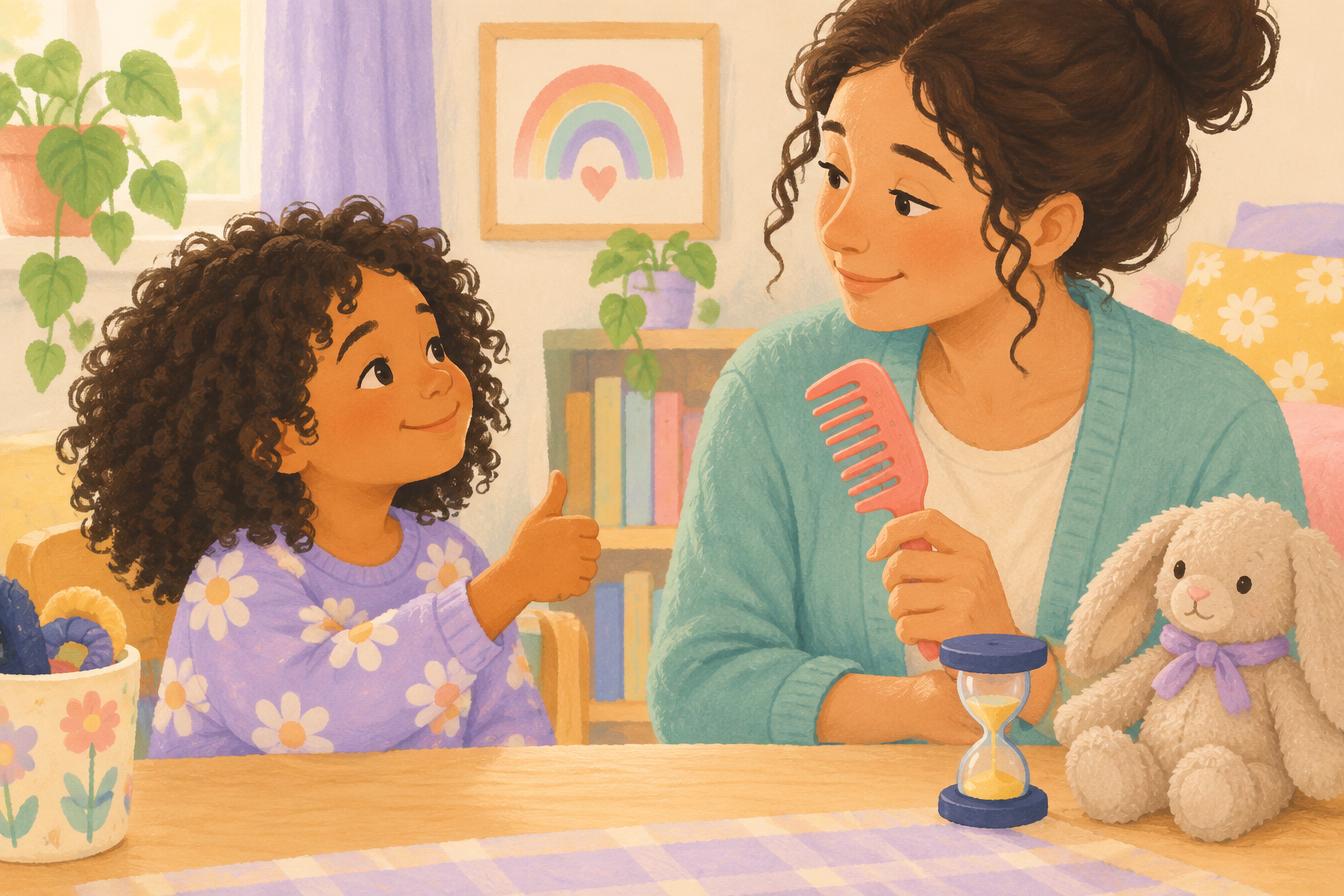
Children absorb the language grown-ups use during hair time. Describe hair by what it is, not by how hard it is to manage.
- Instead of “Your hair is so difficult,” try “Your curls are really thirsty today.”
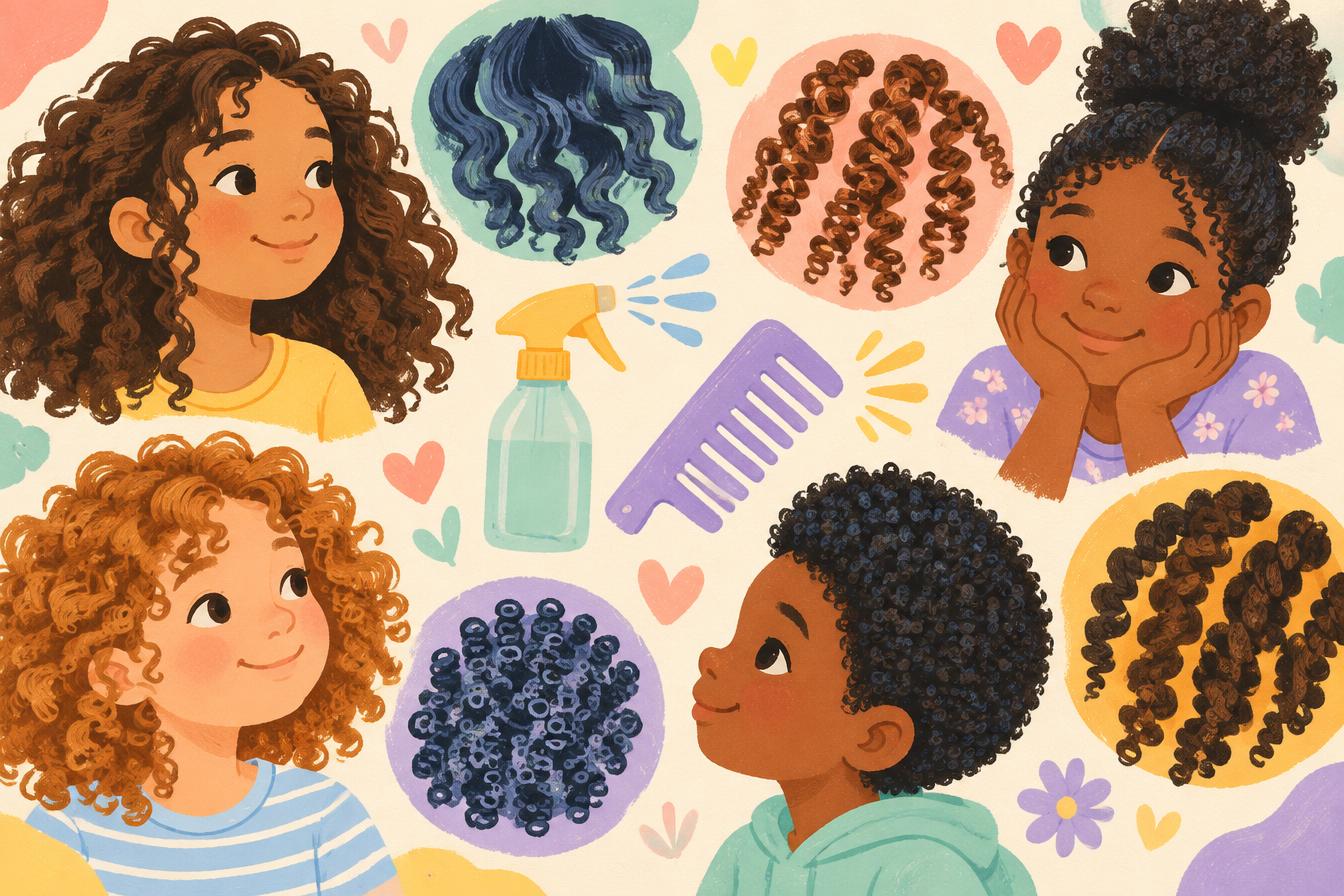
- Instead of “good hair” and “bad hair,” talk about curly, coily, wavy, springy and soft.
- Instead of “Sit still, this is taking forever,” try “You’re being so patient. Two more sections.”
- Avoid joking about kinks, shrinkage or edges — even affectionately.
Show them hair like theirs
- Choose books, shows, dolls and toys that feature characters with curly and coily hair.
- Point out family members, friends and public figures who wear natural styles.
- Look at family photos together and talk about the styles people wore.
- Visit stylists or barbers who clearly celebrate textured hair.
Affirmations that feel natural
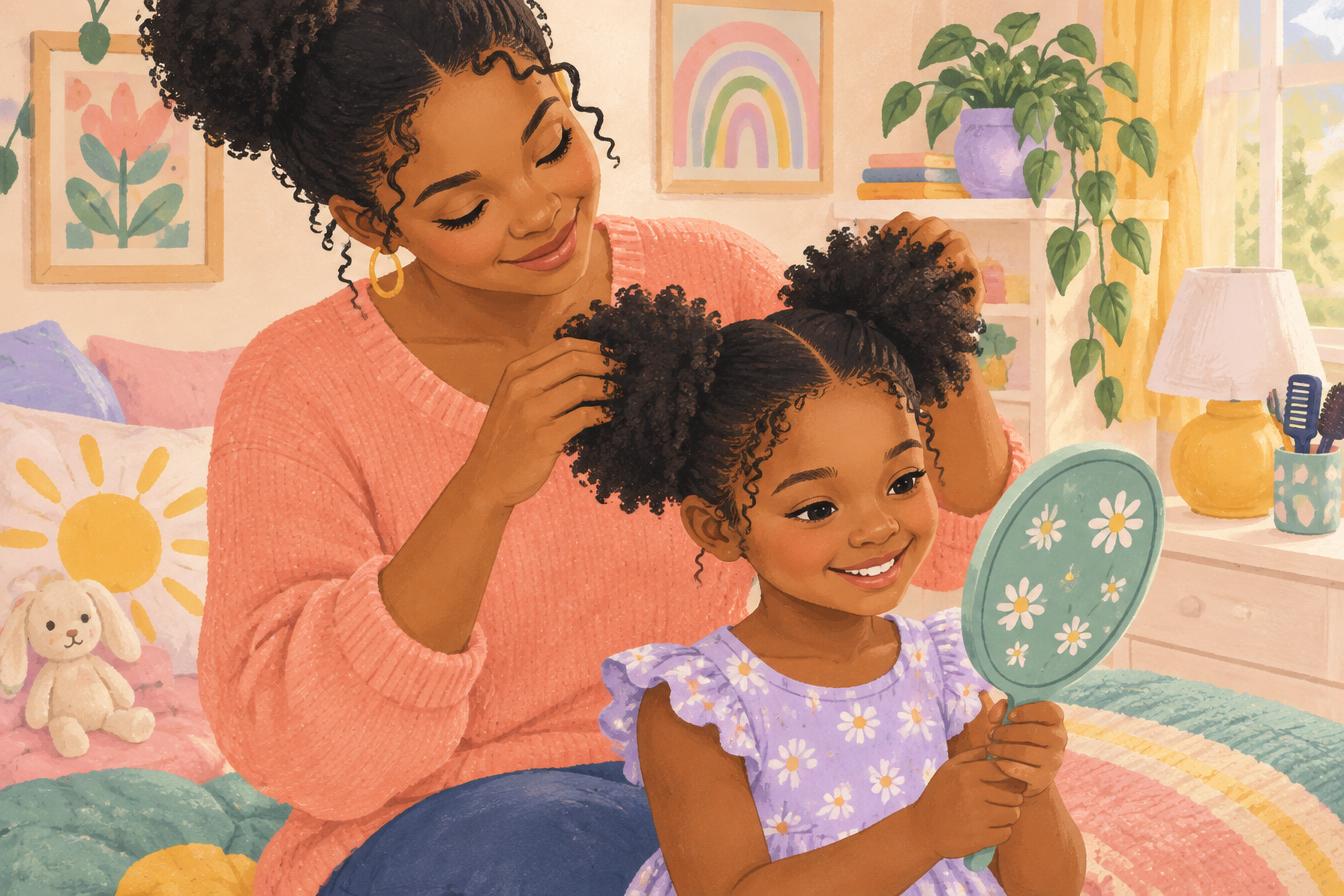
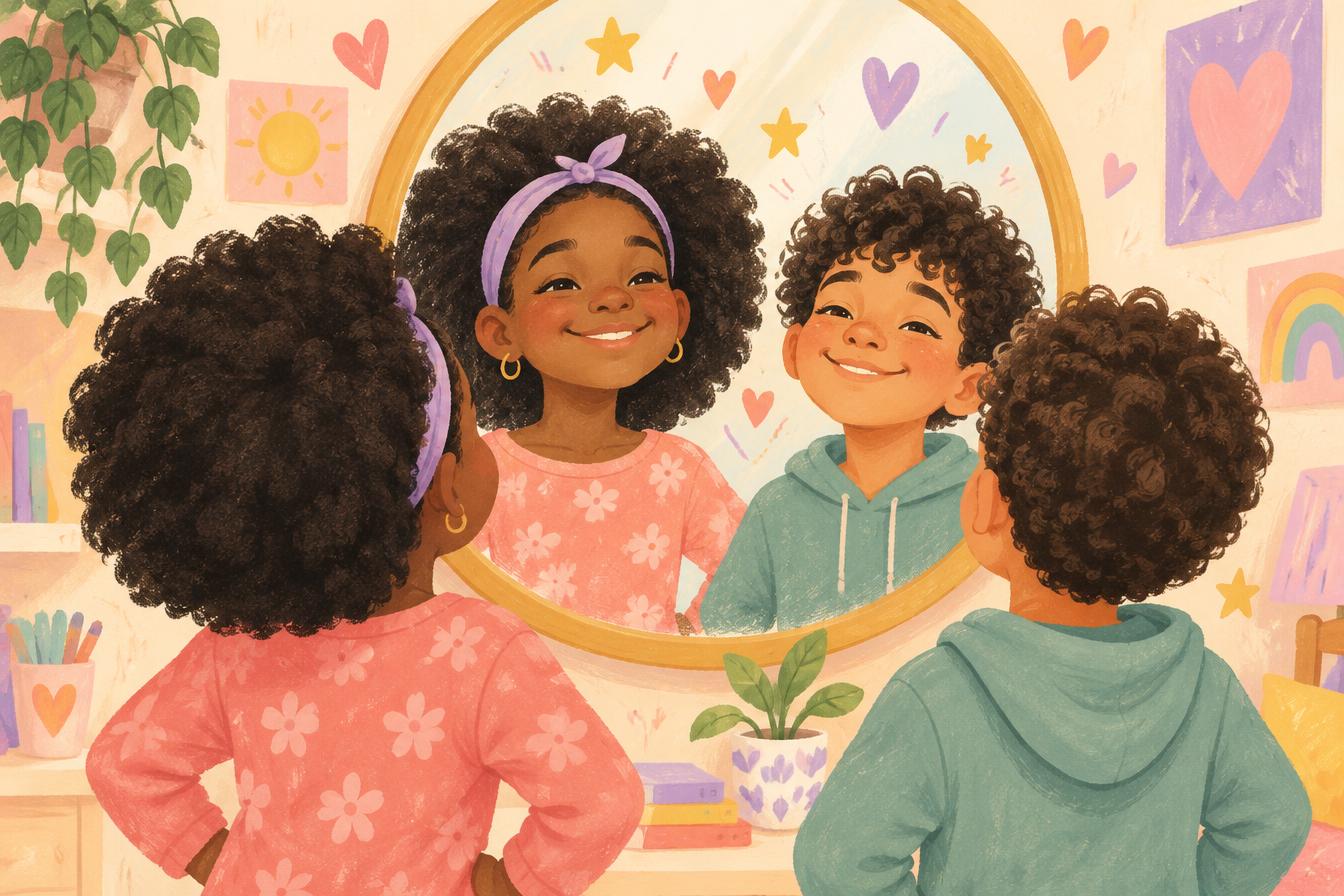
Affirmations work best when they’re short, true and repeated often. Say them in the mirror, during wash day, or as part of bedtime.
- “My hair grows in its own special way.”
- “My curls are strong and beautiful.”
- “I love my hair, and my hair is part of me.”
- “My hair can do so many amazing styles.”
- “I get to decide how I feel about my hair.”
Tip: Let your child make up their own affirmation. The ones they create themselves tend to stick.
Make room for self-expression
As children grow, let them have more say. Offer two or three safe style choices, let them pick accessories, and respect their preferences about length, patterns and how their hair is worn — within gentle, low-tension options. Being heard about their own body builds confidence far beyond hair.
When someone comments or touches
Children with curly and coily hair often get questions, comments or unwanted touching. Practice simple, confident responses together.
- “Please don’t touch my hair.”
- “It’s my natural hair. It grows like this.”
- “I wear it this way because I like it.”
Tip: If comments at school become teasing, or a dress code singles out natural hair or protective styles, talk to the teacher or school. Your child deserves to feel welcome as they are.
At every age
Every child is different — use these as a starting point, not a rulebook.
Toddlers
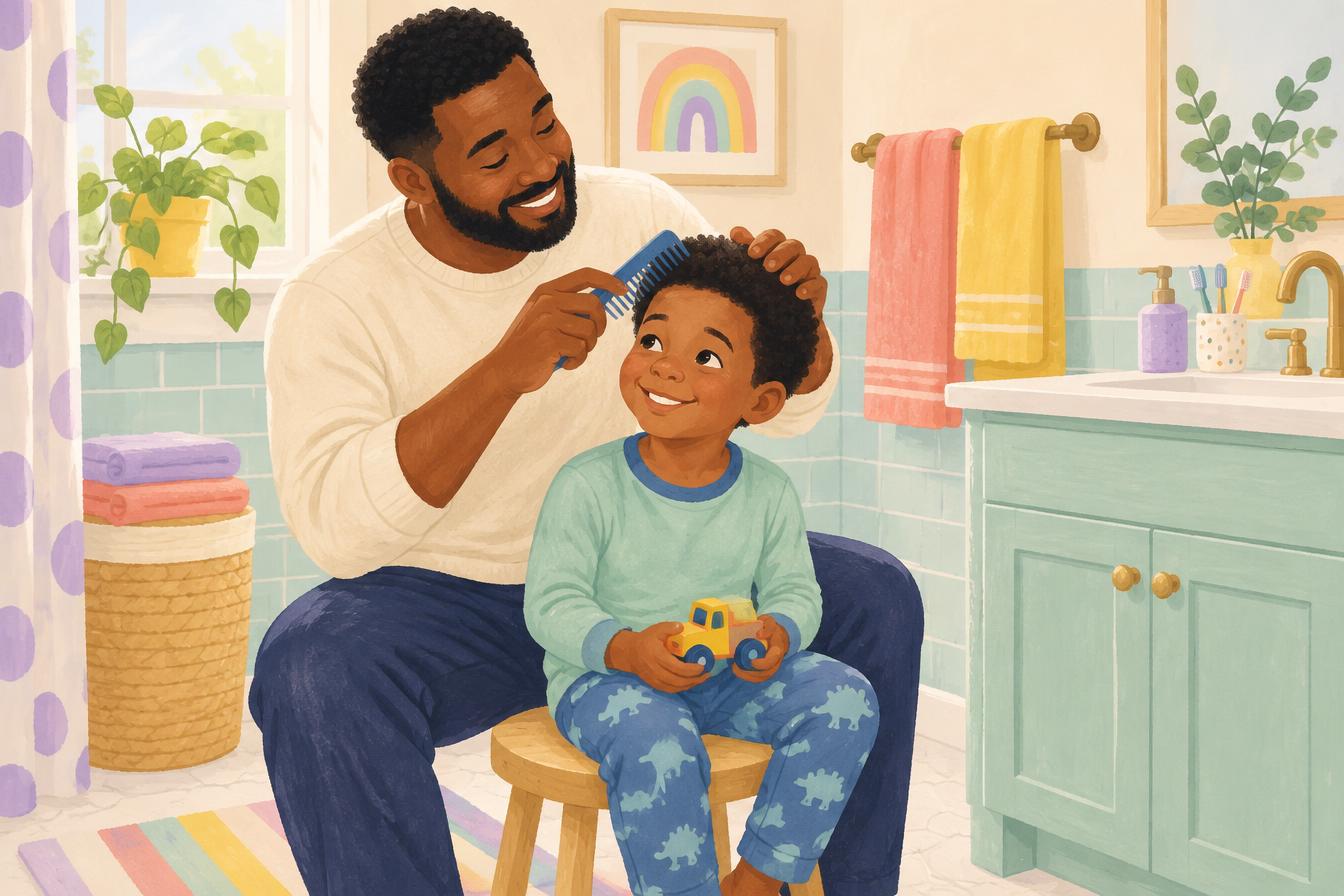
Name and celebrate their hair during bath and bedtime: “Look at your springy curls!”
Preschoolers
Read books with characters who look like them, and practice “Please don’t touch my hair.”
School age
Offer style choices and talk openly about comments at school.
Preteens
Respect their choices, share information about healthy options, and stay curious about how they feel.
Common mistakes to avoid
- Calling textured hair “bad,” “nappy,” “unruly” or “a mess.”
- Always straightening or hiding natural hair for special occasions.
- Laughing at shrinkage or edges, even as a joke.
- Letting strangers touch your child’s hair without asking.
- Making hair time feel like a punishment.
Tips for curly, coily and textured hair
- Celebrate shrinkage — it shows the curl pattern is healthy.
- Show children what their hair can do: puffs, twists, twist-outs and braids.
- Let them see you caring for your own hair lovingly, whatever your texture.
Questions parents ask
My child says they want straight hair. What should I do?
Listen without judgment and ask what’s behind it. Often it’s about fitting in. Surround them with images of curly and coily hair, highlight what they love about their hair, and offer styles that feel new and fun.
How do I handle comments from relatives?
Kindly and firmly: “We only say positive things about hair in our house.” Children notice when a grown-up stands up for them.
Should I let my child choose their own hairstyle?
Yes, within safe, low-tension options that fit your routine. Having a say builds confidence and makes hair time more cooperative.