Short hair still needs a routine
Close cuts dry out faster than you might expect, and the scalp is more exposed to sun, sweat and friction from hats. A short routine keeps hair soft and the scalp comfortable.
- Wash about once a week, or a little more often if your son sweats heavily or swims. Focus the shampoo on the scalp.
- Condition every time, even on very short hair.
- While the hair is damp, smooth in a small amount of leave-in or light cream.
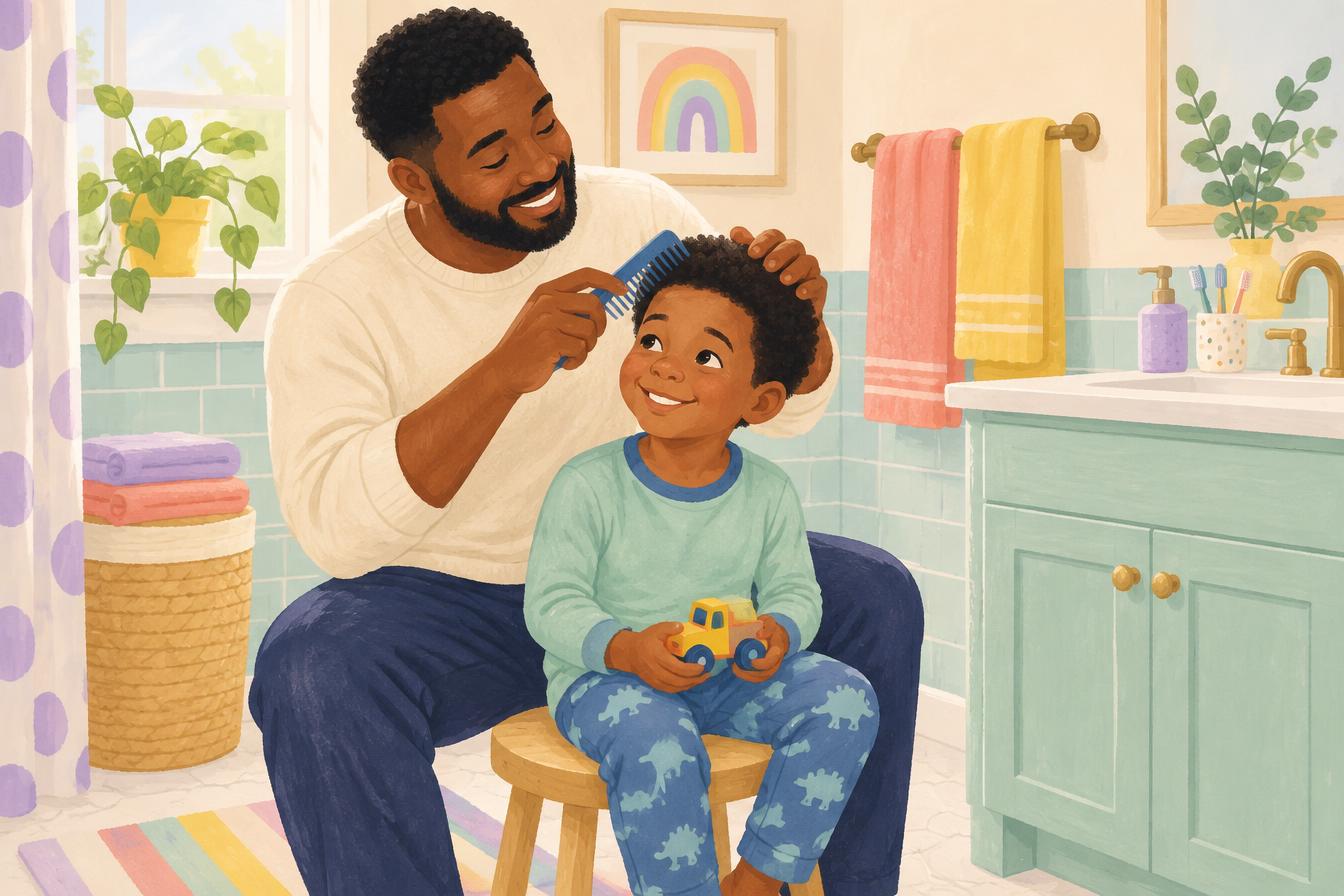
- Use a soft brush or your palms to lay the hair down, brushing gently in the direction it grows.
- Between washes, a light mist of water and a little leave-in in the morning keeps hair from looking dry.
Making barbershop visits go well
For many families, the barber is a big part of hair care. A calm first few visits set the tone for years.
- Visit once just to watch before the first cut, if your child is nervous.
- Ask for clippers to be introduced slowly, starting at the back of the neck.
- Bring noise-reducing headphones if the buzzing is uncomfortable. Sensory differences are common and worth planning for.
- Ask that razor line-ups near the hairline be skipped or kept light for young children, and speak up if you see irritation or bumps afterward.
- Keep the scalp moisturized after the cut; freshly cut edges can feel dry and itchy.
Growing it out: twists, sponge curls and longer styles
Plenty of boys want longer hair, and textured hair offers lots of options. The awkward in-between stage is easier with a plan.
Two-strand twists and coils
Great for medium lengths. Twist damp, moisturized hair in small-to-medium sections and keep them loose at the root. Most last a week or two with nightly protection.
Longer curls
Treat longer curls just like any other long textured hair: detangle in sections with conditioner, and protect ends at night.
Locs
Starting locs is a long-term commitment. If you choose them, avoid tight retwisting at the root, keep the scalp clean, and see a loctician who works gently with children.
Cornrows and braids
Ask for them to be loose enough that your son can move his eyebrows and sleep comfortably. Pain, bumps or headaches mean they are too tight.
Sports, hats and helmets
- Rinse sweat out with water after heavy practice, then add leave-in — you don’t need a full shampoo every time.
- A thin satin-lined cap under a helmet or beanie reduces friction.
- Avoid pulling hair back tightly under headgear; the rubbing plus tension can stress the hairline.
At every age
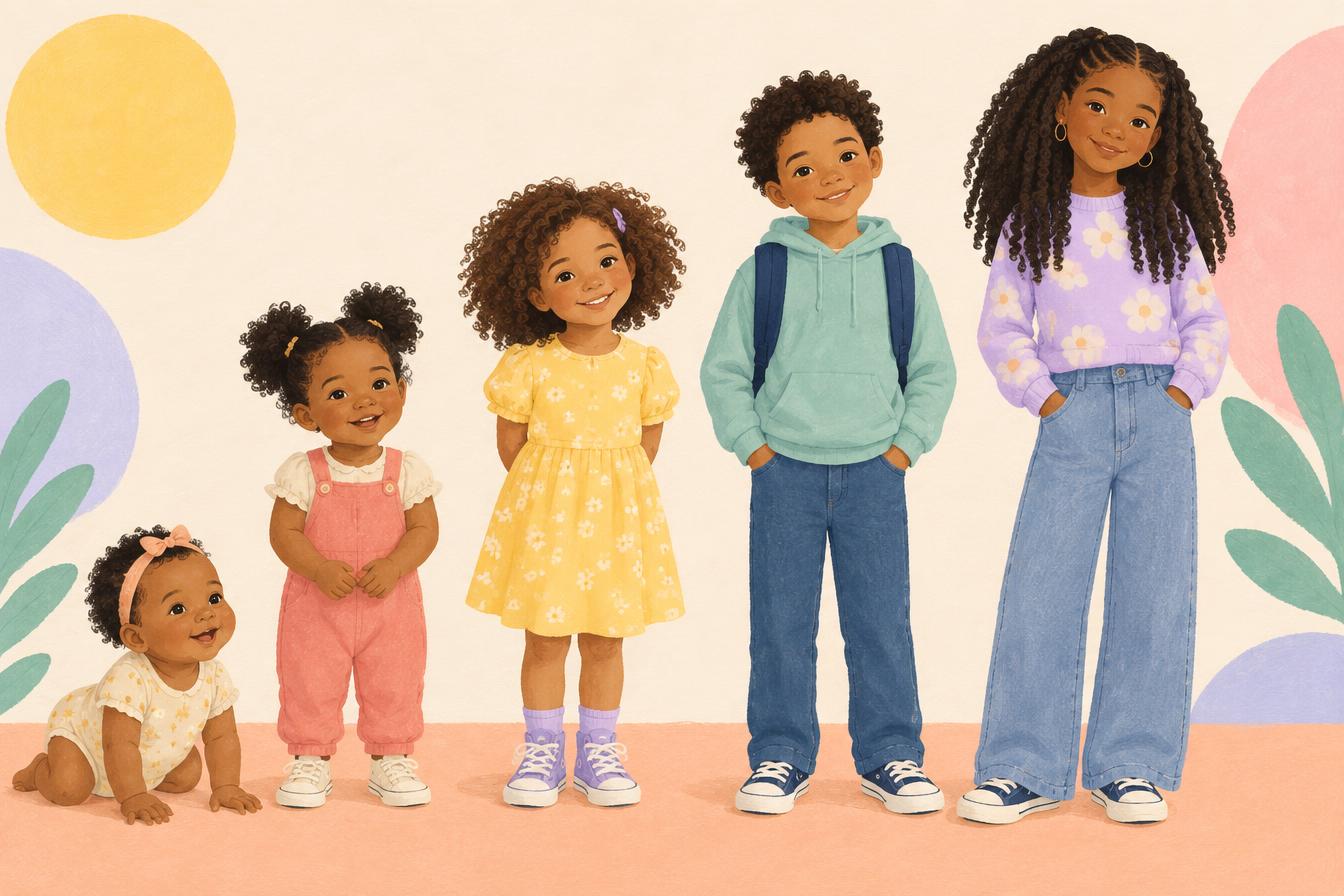
Every child is different — use these as a starting point, not a rulebook.
Toddlers
Keep first cuts short and sweet. A towel over the shoulders and a favorite show help.
Preschoolers
Let them spray water and choose between two styles. Short routines under ten minutes work best.
School age
Teach him to moisturize and brush his own hair in the mornings; check the back where he can’t see.
Preteens
Support his style choices and teach him to spot dryness, scalp flakes or irritation after cuts.
Common mistakes to avoid
- Skipping conditioner because the hair is short.
- Brushing hard against the growth direction.
- Heavy grease on the scalp every day, which can build up and trap flakes.
- Ignoring bumps or irritation along the neckline after cuts.
- Tight braids or retwists that cause pain or headaches.
Tips for curly, coily and textured hair
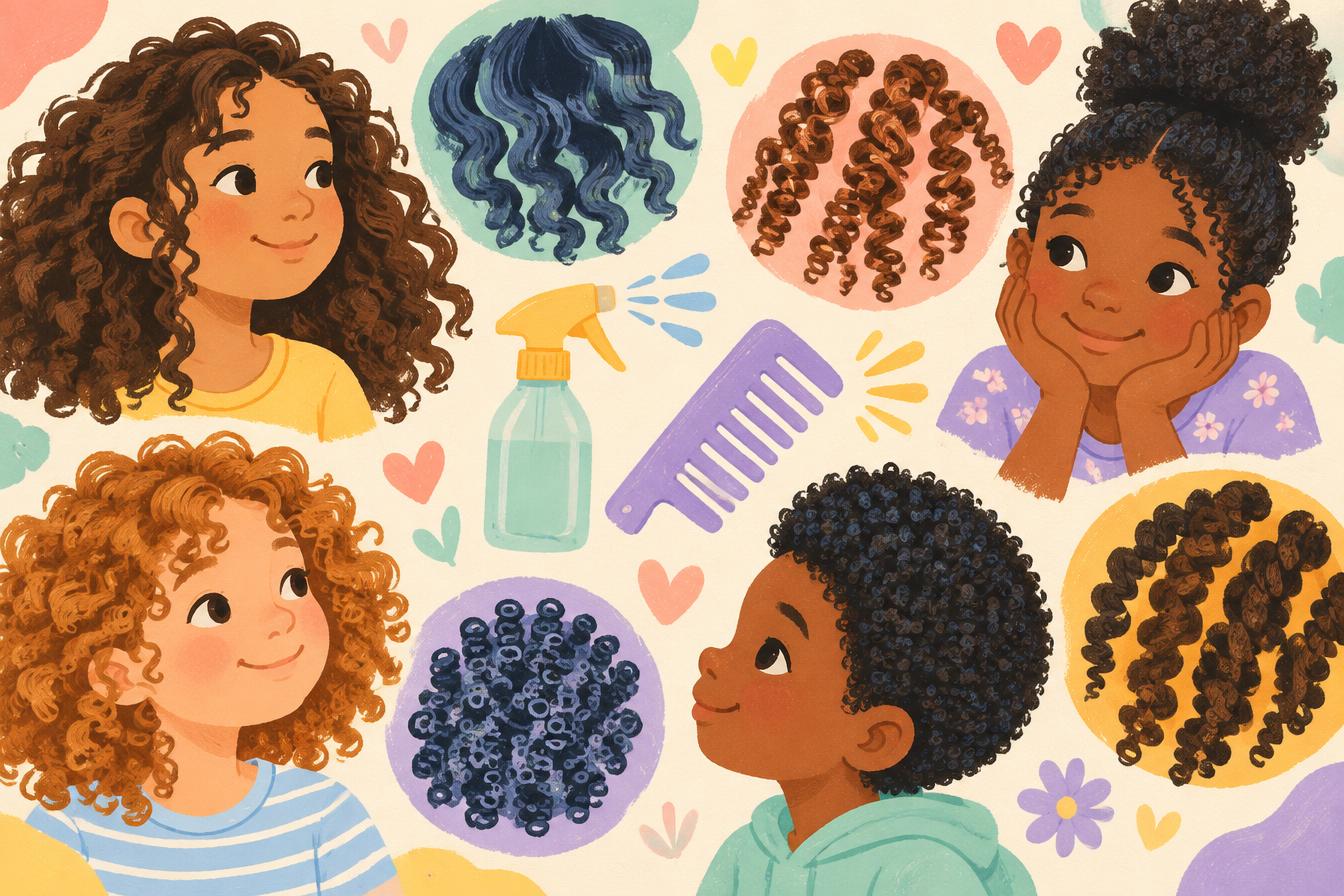
- A soft-bristle brush works well on short coily hair; use fingers or a wide-tooth comb once hair gets longer.
- Sponge-style tools can create curls on short hair — use them lightly and on moisturized hair.
- A satin durag or bonnet at night keeps short styles neat and reduces dryness.
Questions parents ask
How often should a boy with curly hair get a haircut?
It depends on the style. Close fades may be trimmed every two to four weeks; longer styles only need an occasional trim of dry or split ends.
Is it okay to use gel for waves or a neat look?
Occasionally, yes. Choose a gentle product, use a small amount, and rinse it out on wash day so it doesn’t build up on the scalp.
Can boys wear protective styles?
Absolutely. Twists, cornrows, braids and locs are all great options for boys when they are installed loosely and the scalp is cared for.