Why curly and coily hair needs a different approach
Every strand of hair is coated in natural oil from the scalp. On straight hair, that oil slides easily down the strand. On curly and coily hair, every bend and twist slows it down, so the ends often stay drier than the roots. That is why textured hair tends to feel dry, and why it can tangle and knot more easily.
Pediatric dermatologists also point out that the thickness of a curly or coily strand varies along its length. The narrower points bend less easily, which makes them more likely to snap when hair is dry and pulled. None of this means textured hair is “difficult.” It simply means it thrives with more moisture and less force.
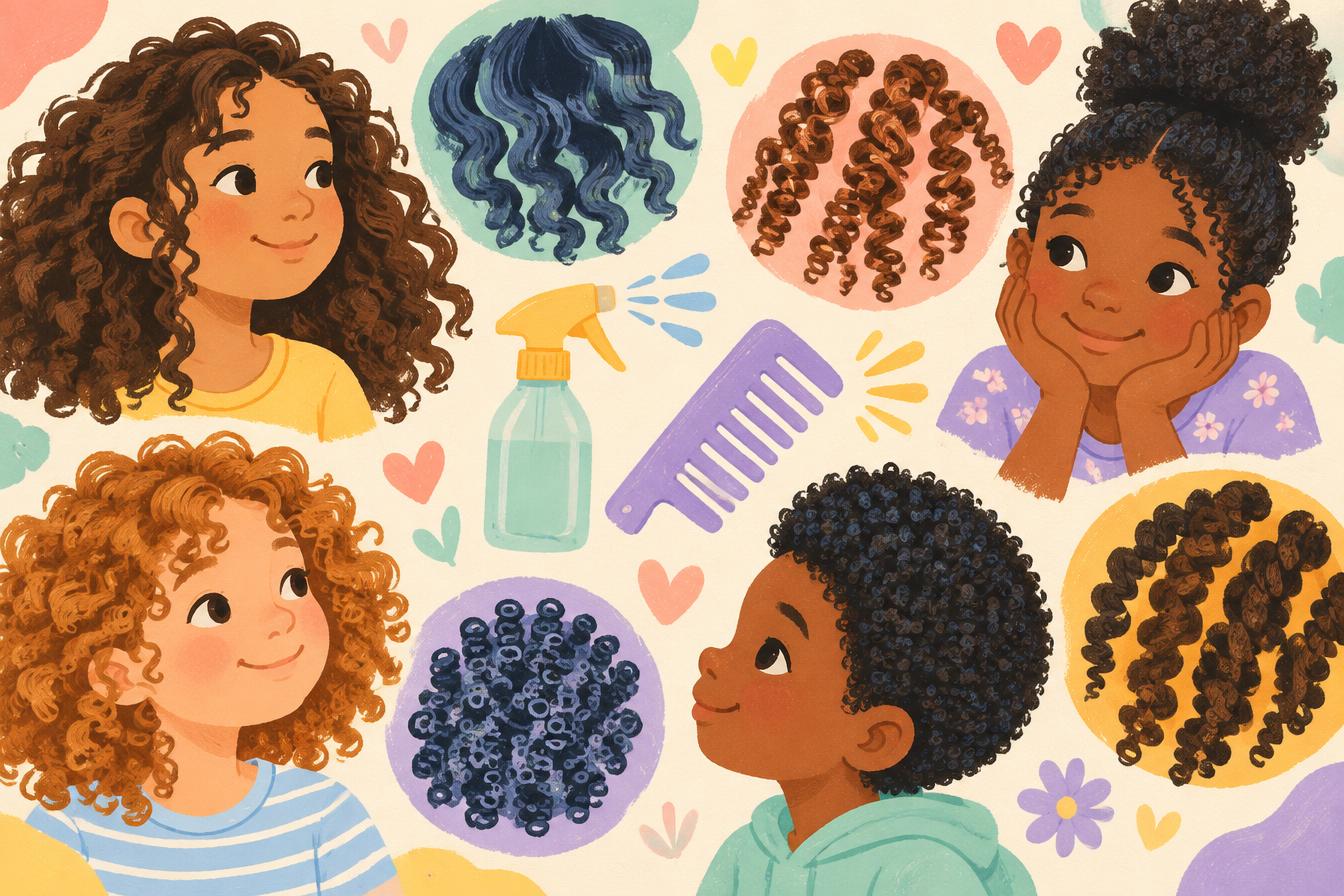
Curls, coils and everything in between
You may see hair described with numbers and letters, running from loose waves to tight coils. These charts can be handy for finding tutorials, but most children have several patterns on one head — looser at the nape, tighter at the crown, for example. Treat any chart as a rough guide, not a label.
Waves and loose curls
Bendy S-shapes that can be weighed down by heavy products. Lighter creams and leave-ins usually work well.
Springy curls
Defined ringlets that shrink when dry and stretch when wet. They love a leave-in conditioner and gentle finger-styling.
Coils and tight zig-zags
Tightly packed patterns with lots of shrinkage — hair can look much shorter than it really is. Coily hair is often the most fragile, so richer moisture and very gentle handling help most.
Porosity, in plain language
Porosity describes how easily hair takes in and holds on to water. You don’t need a test kit — just notice what happens on wash day.
- If water beads on top of the hair and it takes a while to get fully wet, the hair may be lower porosity. Warm water and lighter, water-based products tend to absorb better.
- If hair soaks up water quickly but feels dry again within a day or two, it may be higher porosity. Layering a leave-in with a cream or light oil can help it hold moisture longer.
- Many children fall somewhere in the middle, and porosity can change with sun, swimming and seasons. Let the hair’s feel guide you more than any label.
A simple starter routine
You can build on this later, but this is enough for most children to start with.
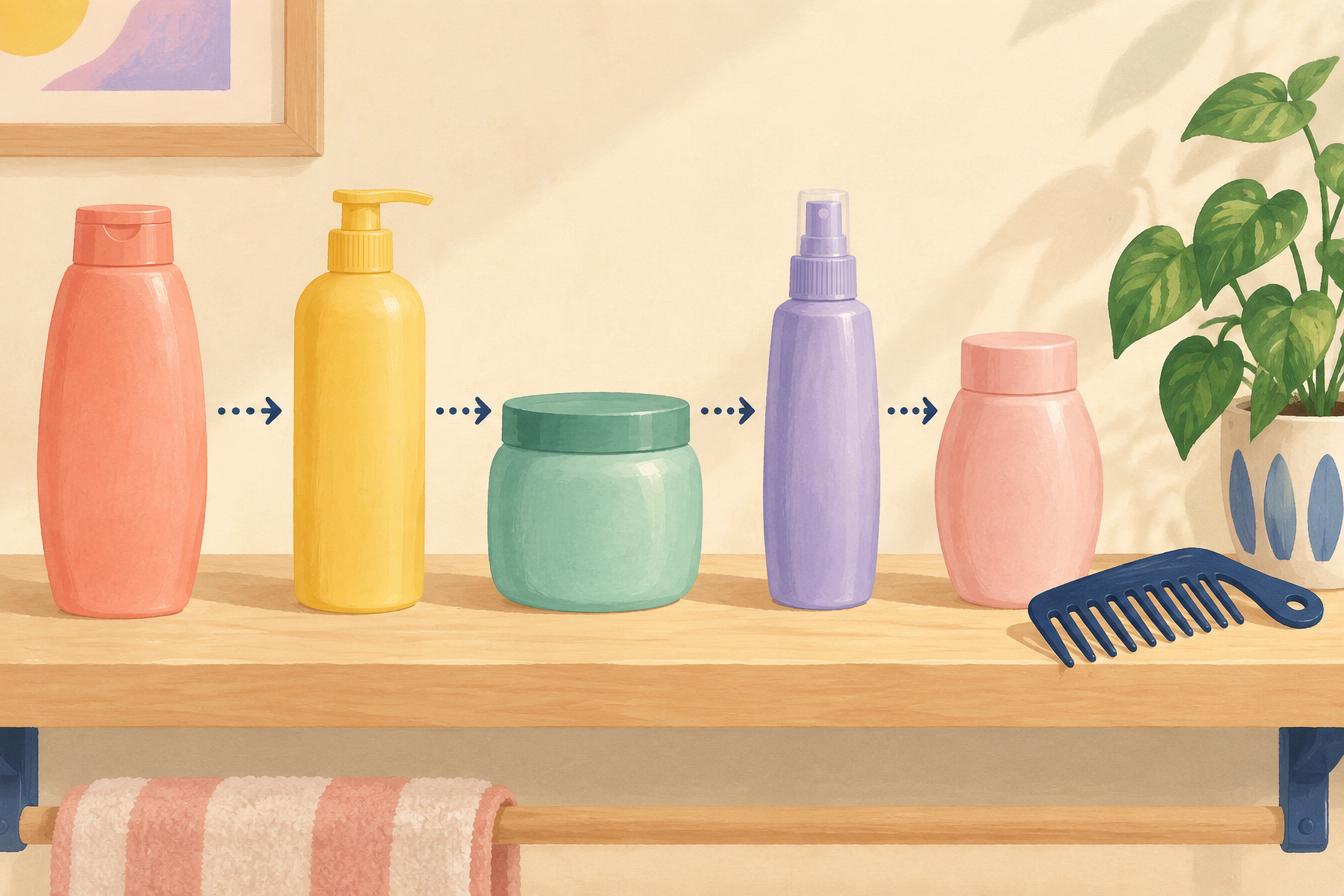
- Wash when needed rather than daily. Dermatologists suggest curly or coily hair can be shampooed as needed and at least every two to three weeks; many families land on once every one to two weeks.
- Condition every time you wash, covering the full length of the hair, not just the ends.
- Detangle while the conditioner is still in, using fingers or a wide-tooth comb, working from the ends up toward the scalp.
- Apply a leave-in conditioner to damp hair, then a cream or light oil if the hair still feels thirsty.
- Choose a gentle, loose style and protect the hair at night with satin or silk.
- Between wash days, refresh dry areas with a little water and leave-in rather than washing again.
Tip: Write your routine on a sticky note inside the bathroom cabinet. Consistency does more than any single product.
When to check in with a professional
Talk to your pediatrician or a board-certified dermatologist if you notice patches of missing hair, broken hairs around the hairline, a scalp that is persistently red, scaly, sore or itchy, or bumps along the edges. These can have many causes and are worth having looked at early.
At every age
Every child is different — use these as a starting point, not a rulebook.
Babies
Keep it simple: a mild, fragrance-free baby wash, soft hands, and no styling products unless your pediatrician suggests one.
Toddlers & preschoolers
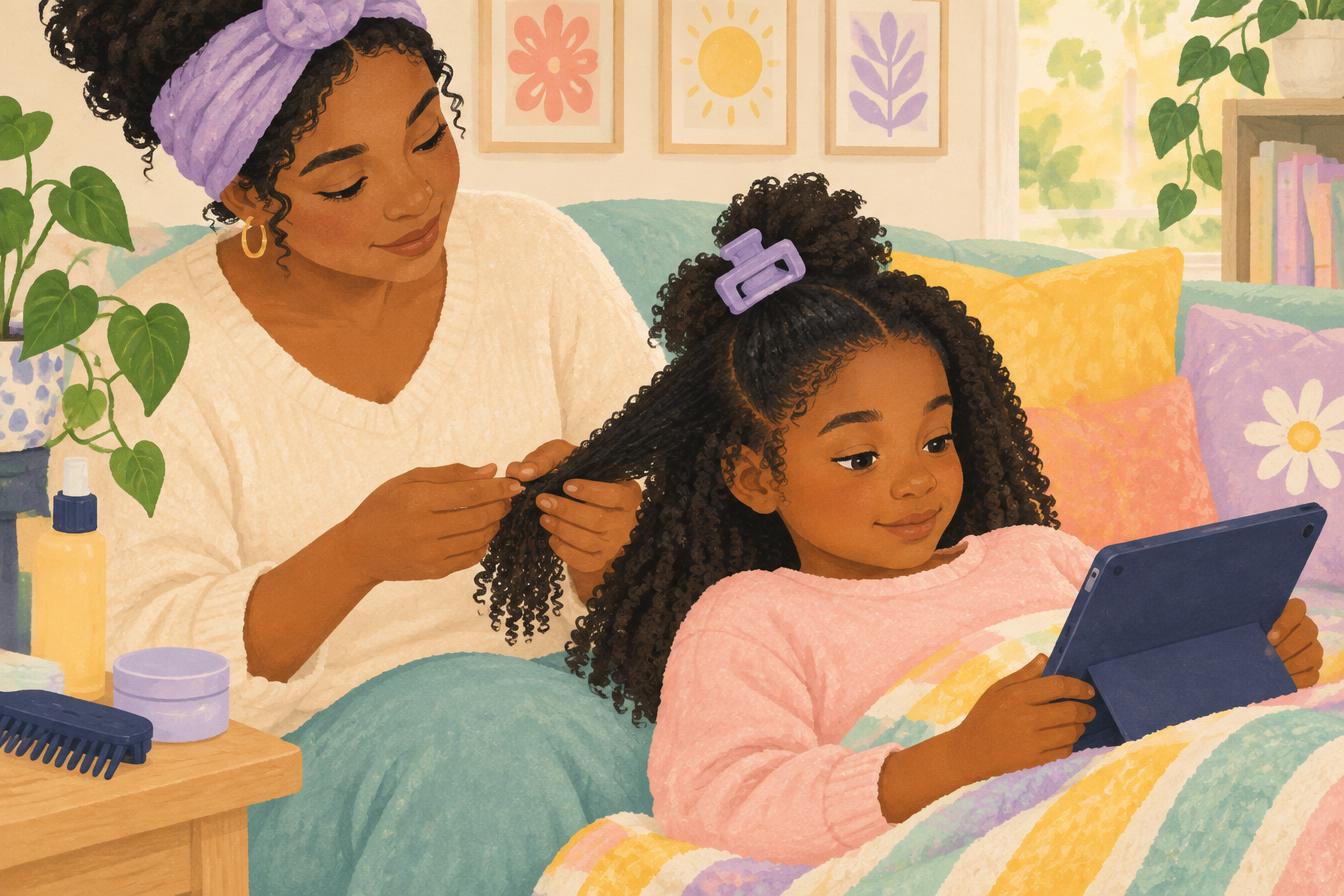
Short, predictable routines with lots of breaks. Loose puffs and simple twists last well without tension.
School age
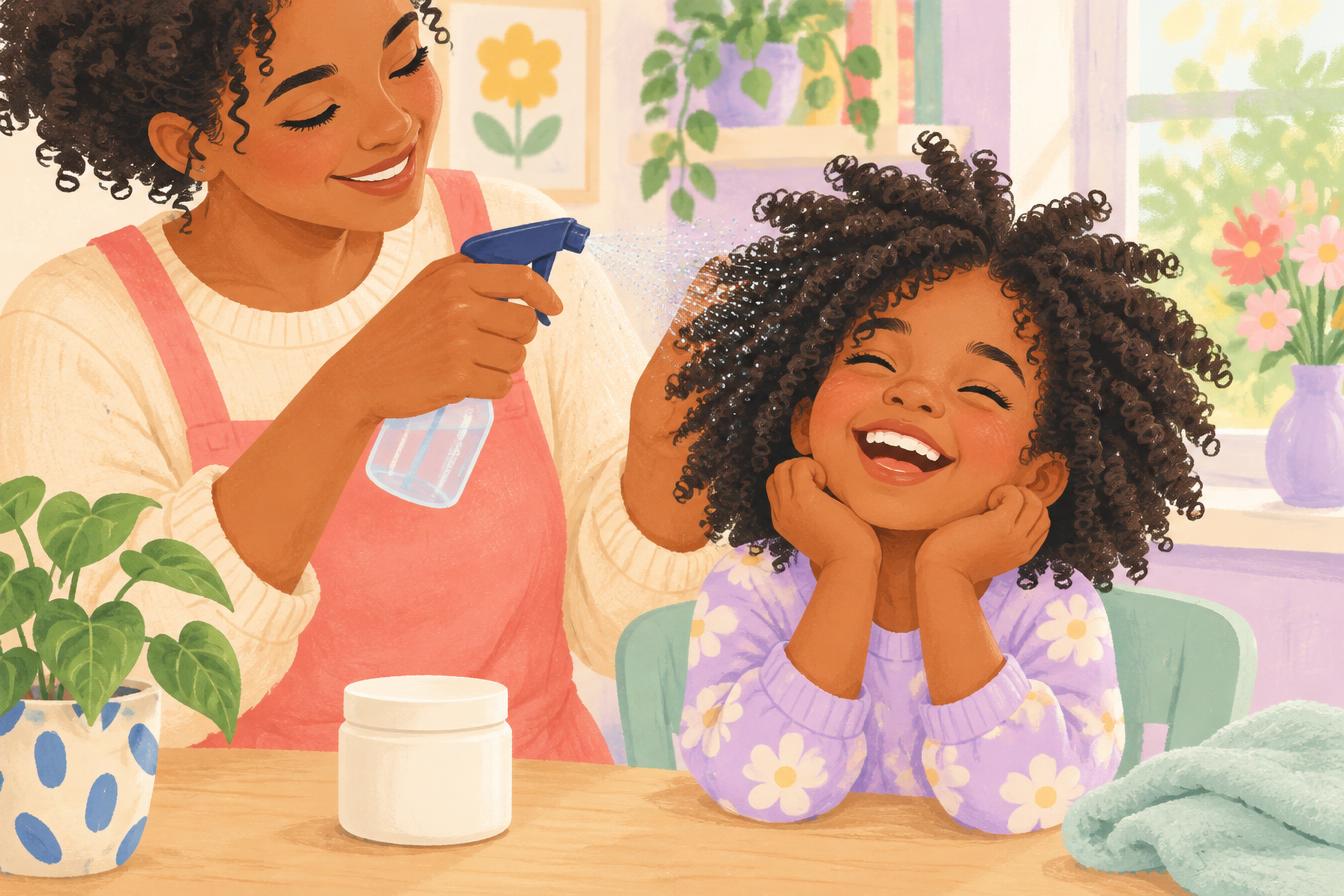
Let children help — spraying water, smoothing in leave-in, choosing a style — so they learn how their hair works.
Preteens
Coach rather than do. Help them spot dryness and buildup, and plan their own wash-day timing around sports and swimming.
Common mistakes to avoid
- Brushing or combing dry curly or coily hair from the root down.
- Washing too often with a strong shampoo and skipping conditioner.
- Assuming dryness means the hair needs more oil — it usually needs water first, then something to hold it in.
- Rubbing hair with a rough towel instead of wrapping or gently squeezing it.
- Choosing styles that pull at the edges or cause headaches.
Tips for curly, coily and textured hair
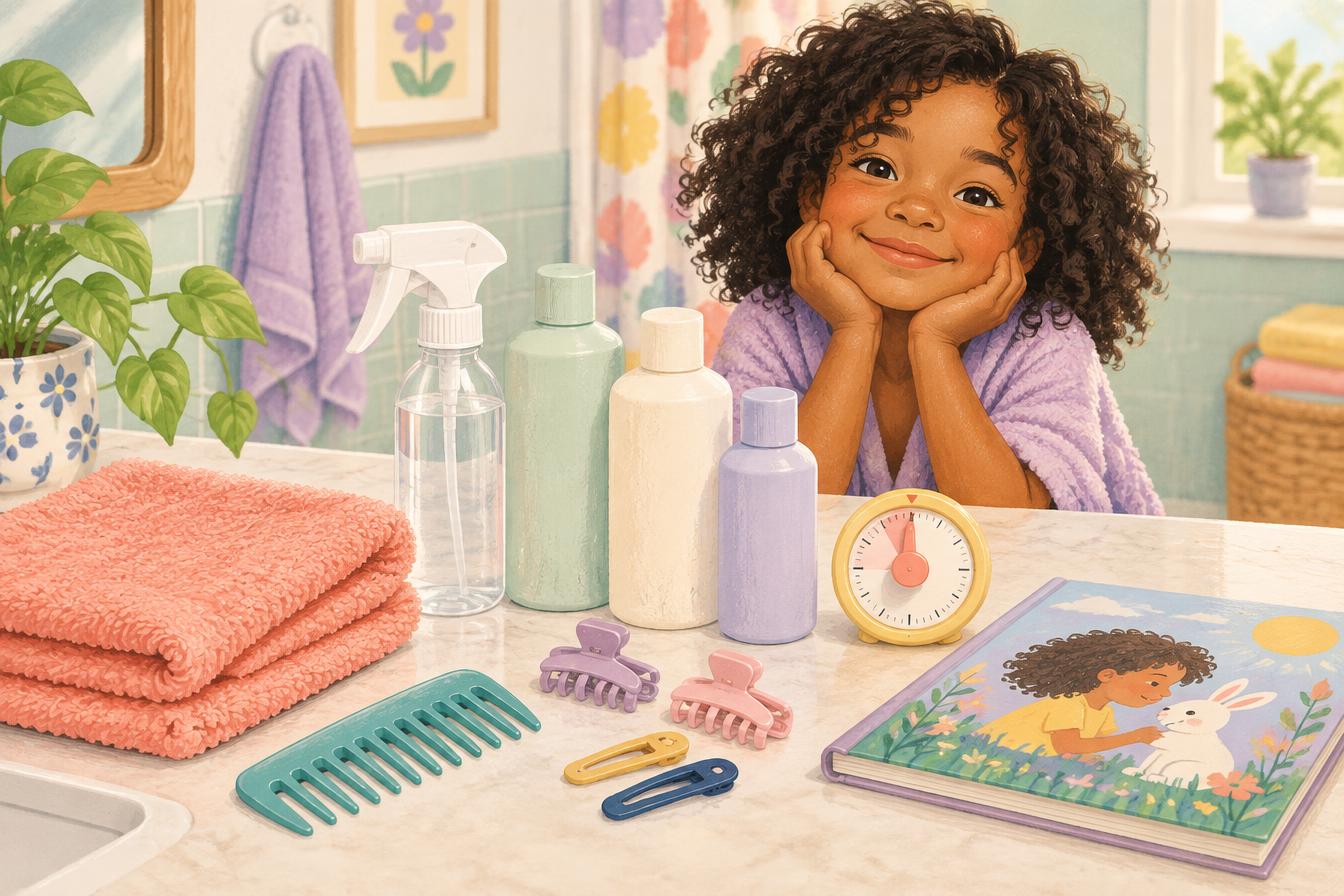
- Work in sections — four to eight clips make everything faster and gentler.
- Shrinkage is normal and healthy. It is not a sign of damage.
- A spray bottle of plain water is one of the most useful tools you can own.
- Notice which parts of the head dry fastest (often the crown and nape) and give them extra attention.
Questions parents ask
How often should I wash my child’s curly hair?
Most children with curly or coily hair do well with a wash every one to two weeks, and dermatologists suggest at least every two to three weeks. Wash sooner if the scalp looks oily, flaky or itchy, or after heavy sweating or swimming.
Do I need special products?
No. A gentle shampoo, a conditioner, a leave-in and something to seal (a cream or light oil) cover the basics. Products described as made for curly or coily hair can be helpful, but the routine matters more than the brand.
My child’s hair has several curl patterns. Is that normal?
Yes, very. Many children have looser and tighter areas. Treat each area according to how it feels — the tighter or drier areas may need a little more moisture.
Is it bad if my child’s hair shrinks a lot?
No. Shrinkage is a normal feature of curly and coily hair and a sign that the curl pattern is intact.