How often is wash day?
Curly and coily hair doesn’t need daily washing. Dermatologists suggest shampooing textured hair as needed and at least every two to three weeks, and for children aged 8 to 12 with dry, curly hair — including hair in braids — roughly every 7 to 10 days. After heavy sweating or swimming, a rinse and conditioner may be all that’s needed.
Wash more often if the scalp looks oily, flaky or itchy. Wash a little less often if the hair feels dry and dull.
Before you start
- Pick a time when your child isn’t hungry or overtired — not right before bed on a school night.
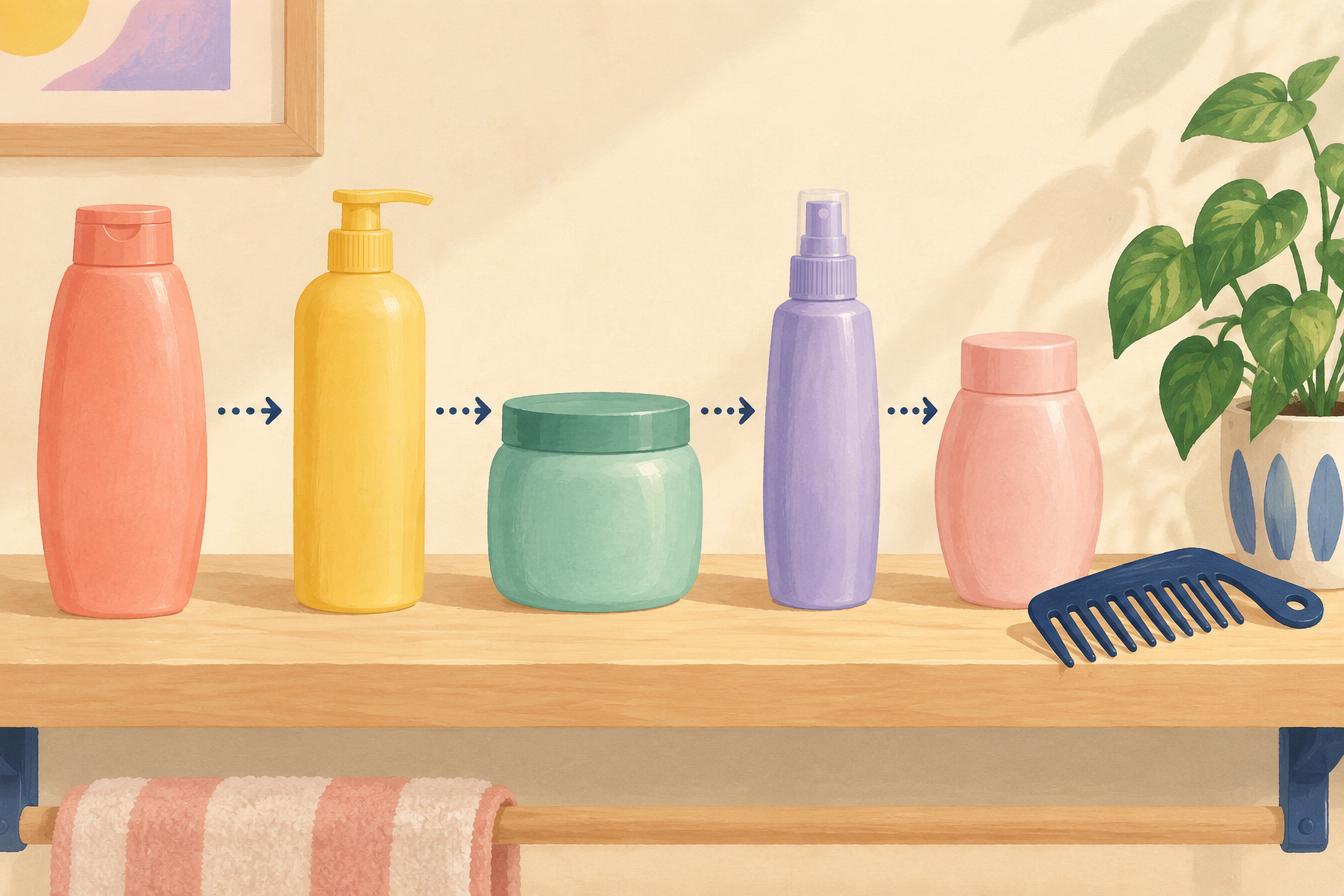
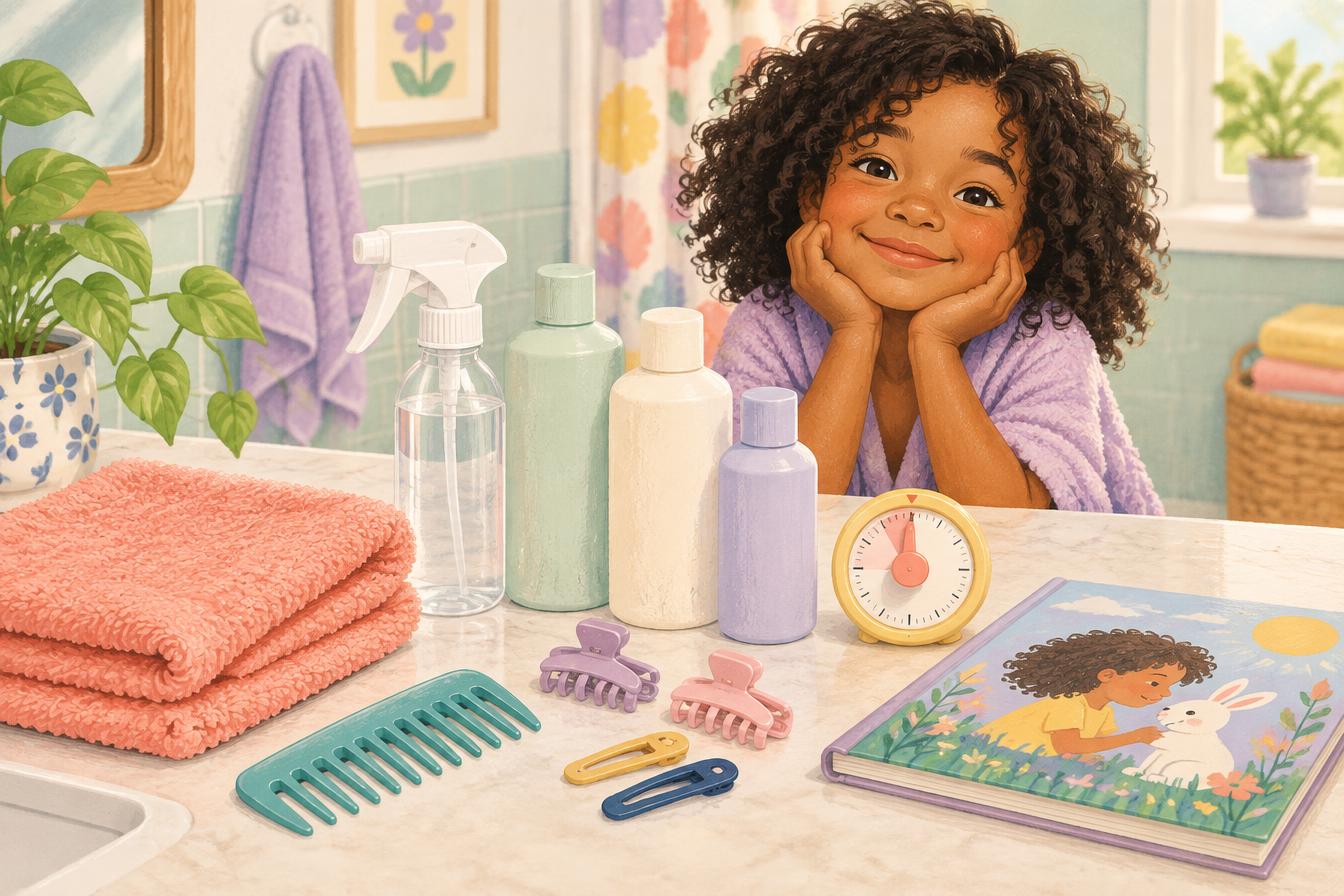
- Lay out everything: shampoo, conditioner, leave-in, wide-tooth comb, 4–8 clips, spray bottle, a soft T-shirt or microfiber towel.
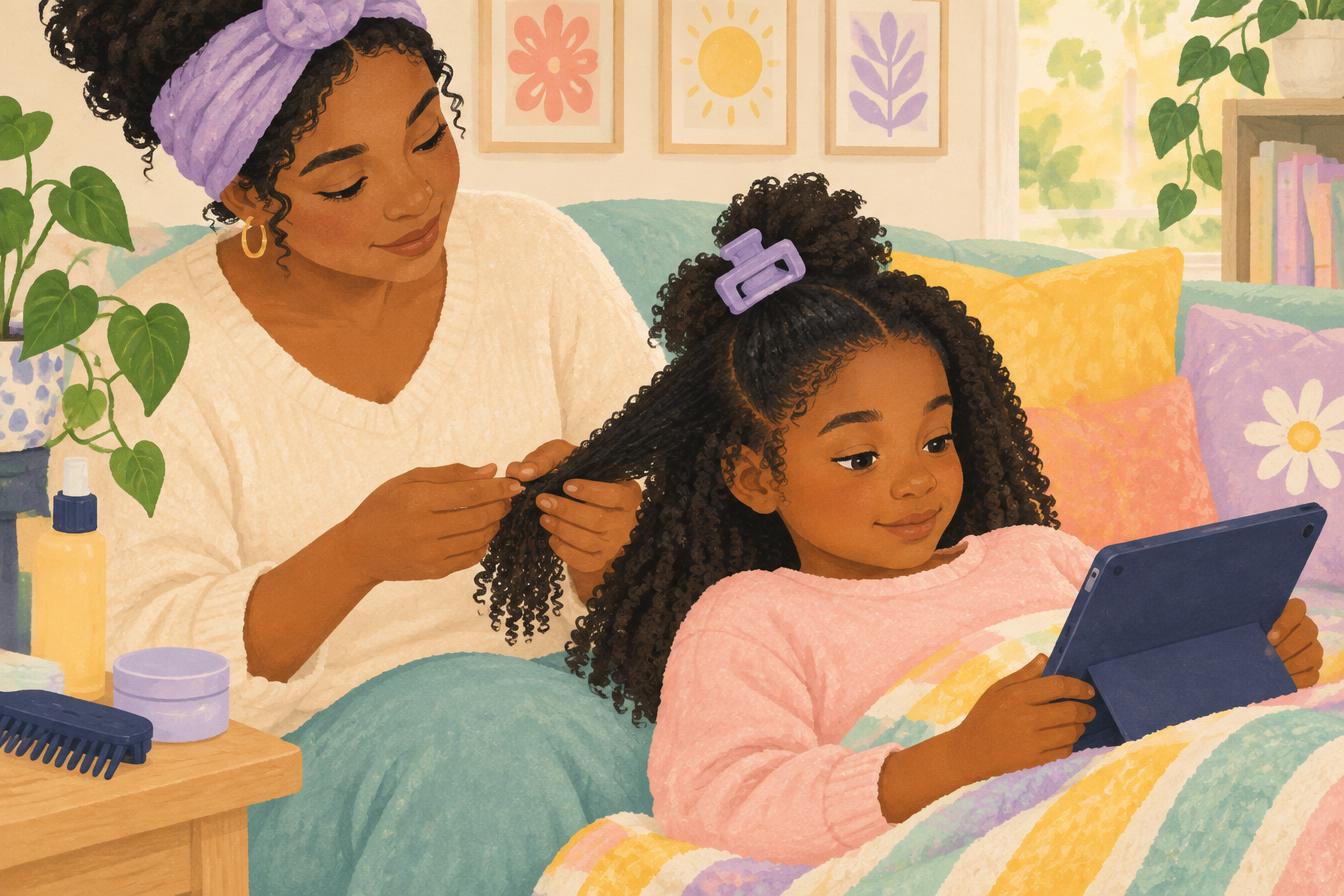
- Plan entertainment: an audiobook, a show, a bath toy, or a snack for a break.
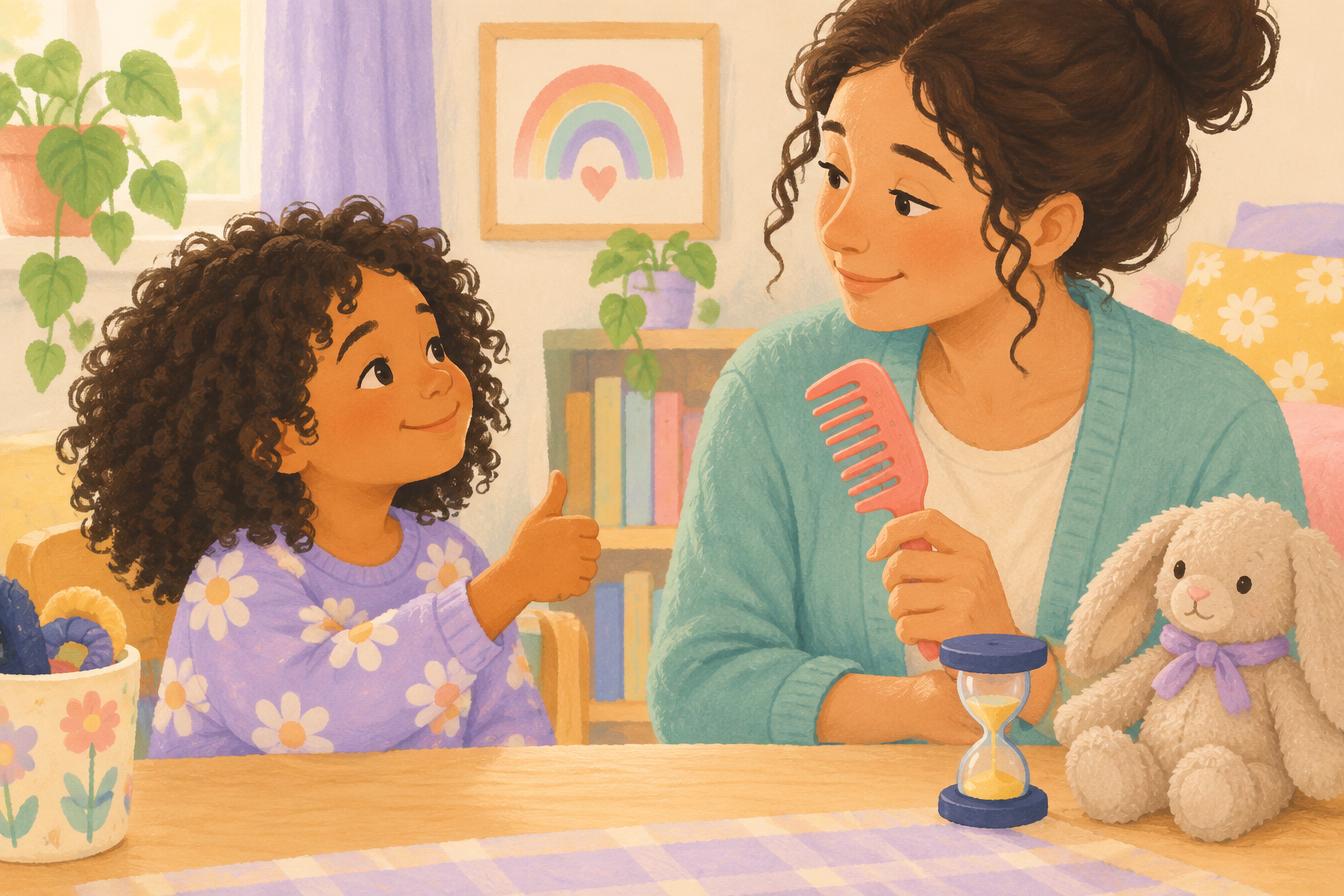
- Agree on a “pause” signal so your child can ask for a break.
- If the hair is in a braided or twisted style, take it down slowly the day before with a little conditioner.
The wash-day routine
- Pre-detangle (optional). On dry or damp hair, smooth a conditioner or light oil through the lengths and gently finger-detangle in sections. This “pre-poo” step protects the hair from the shampoo and makes later steps easier.
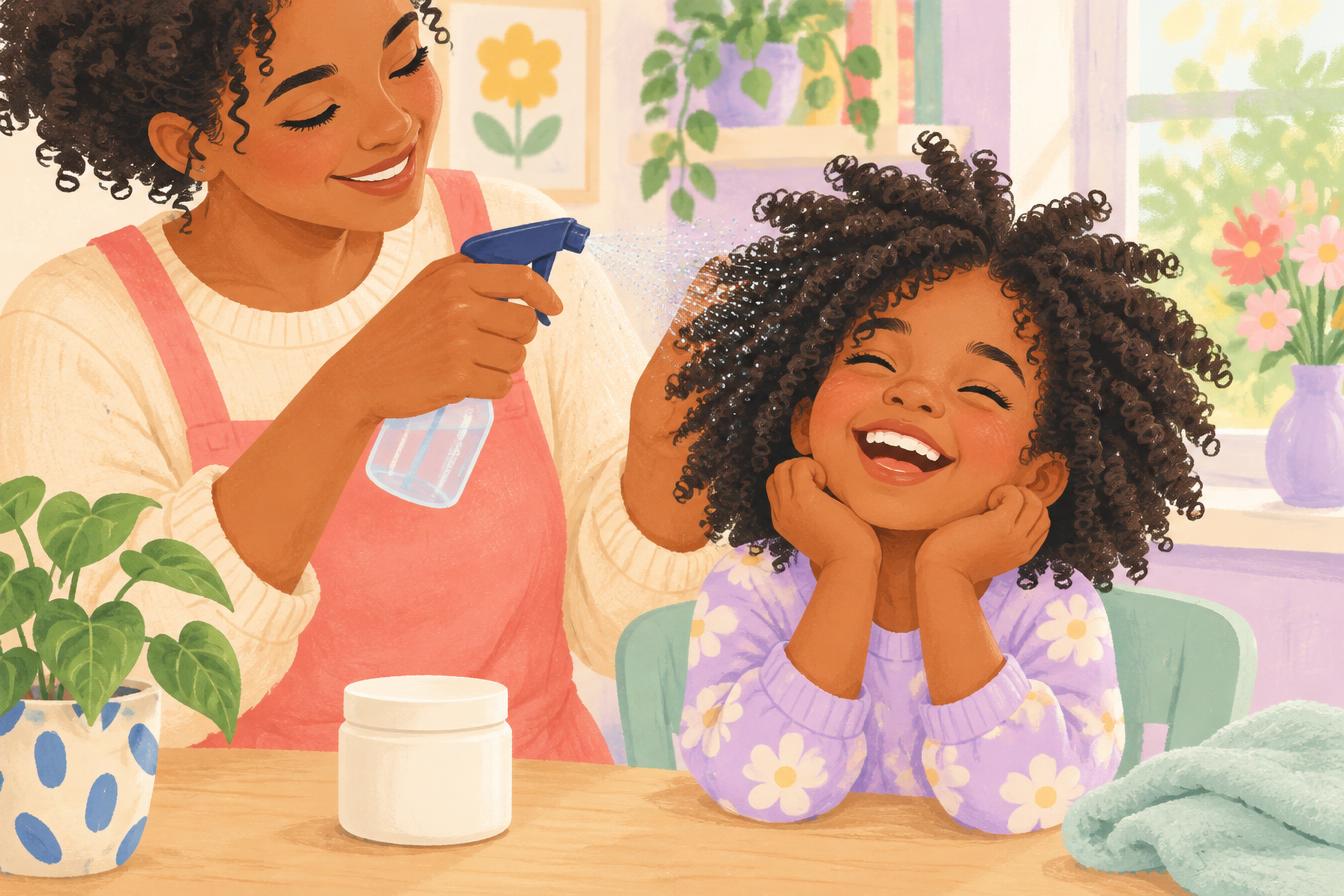
- Wet the hair thoroughly with lukewarm water. Thick coily hair can take a while to get fully saturated.
- Shampoo the scalp, not the length. Dermatologists recommend massaging shampoo into the scalp with your fingertips and letting the rinse flow down the hair, rather than scrubbing the lengths. Long or thick hair can be washed in four loose sections or twists.
- Rinse well. Leftover shampoo can leave the scalp itchy.
- Condition the full length, from root to tip, generously.
- Detangle with the conditioner in, section by section, from the ends up toward the scalp using fingers or a wide-tooth comb. Twist or clip each finished section.
- Rinse the conditioner with cool-to-lukewarm water.
- Blot, don’t rub. Wrap the hair in a soft T-shirt or microfiber towel for a few minutes.
- Apply leave-in to damp hair, section by section, then a cream or light oil if needed.
- Style and dry. Choose a simple style, then let it air-dry. If you use a hairdryer, keep it on a low heat setting with a diffuser and hold it moving, not still.
Tip: Detangling in the shower before rinsing out conditioner is the gentlest time to comb thick, curly hair.
Clarifying and deep conditioning
If you use gels, creams or oils regularly, product can build up. An occasional clarifying shampoo before your usual shampoo can reset the hair — follow it with a generous conditioner. Deep conditioning, leaving a rich conditioner on for 10–20 minutes under a shower cap, can help very dry hair feel softer. Neither needs to be weekly for most children.
At every age
Every child is different — use these as a starting point, not a rulebook.
Babies
A quick, gentle wash with mild baby wash — no pre-poo, clarifying or styling steps needed.
Toddlers
Split wash day into two short sessions, such as pre-detangle in the morning and wash in the evening.
Preschoolers
Use a visual checklist of steps so they know what comes next and how many are left.
School age & preteens
Let them shampoo their own scalp and apply conditioner while you help with detangling the back.
Common mistakes to avoid
- Piling all the hair on top of the head and scrubbing, which creates knots.
- Detangling dry hair before washing.
- Using very hot water, which can leave hair and scalp feeling dry.
- Rubbing hair with a rough bath towel.
- Trying to do everything in one long session when your child is tired.
Tips for curly, coily and textured hair
- Washing in sections keeps curls clumped and stops long hair from matting.
- A shower cap between wash days keeps styles from getting wet during baths.
- Coily hair shrinks a lot as it dries — stretch it gently with twists or braids if you want less shrinkage.
Questions parents ask
Can I just rinse and condition instead of shampooing?
Yes, as an in-between step. A rinse and conditioner after sweating or swimming helps. The scalp still needs a proper shampoo regularly to remove oil, sweat and product.
How long should wash day take?
It depends on length and density. For younger children, aim for under 45 minutes including breaks, and split it up if needed.
Should I use a hairdryer?
Air-drying is gentlest. If you need a dryer, use low heat, a diffuser attachment, and keep it moving.
What if my child hates having water on their face?
Try a folded washcloth held over the eyes, a bath visor, or rinsing with a cup while they tip their head back looking at a sticker on the ceiling.