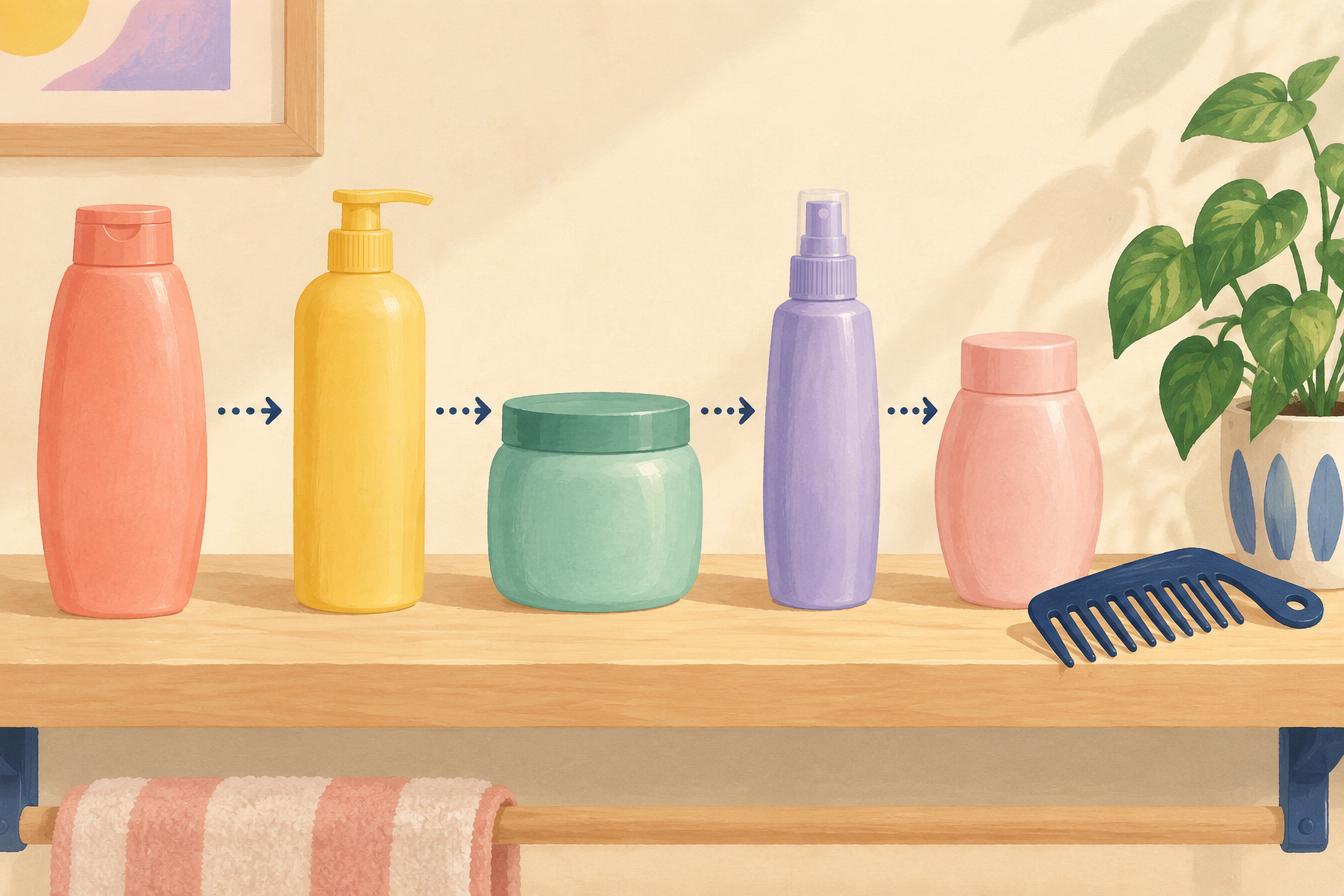
What each product does
Shampoo
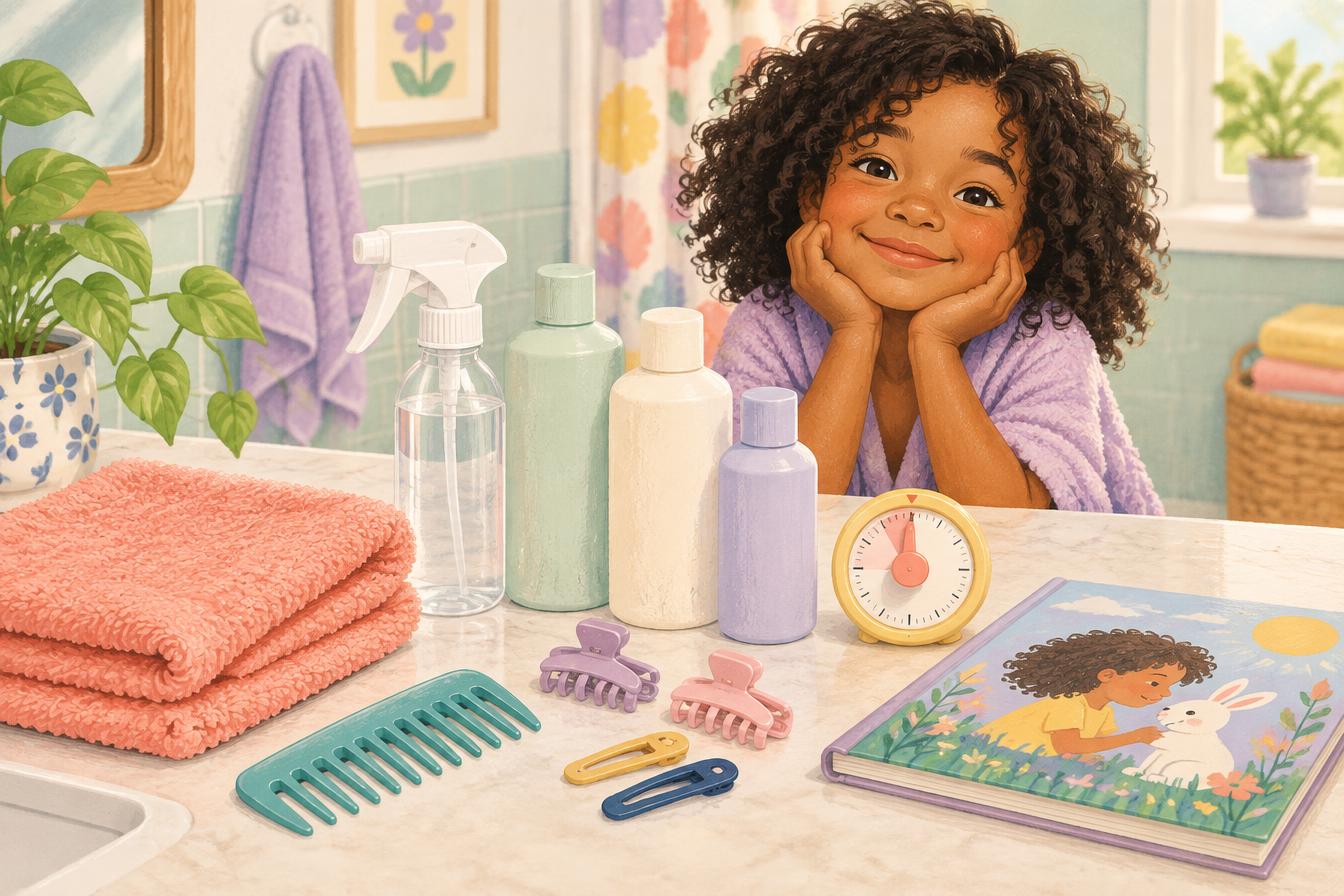
Cleans oil, sweat, dirt and product from the scalp. Choose a gentle, moisturizing formula and focus it on the scalp. An occasional clarifying shampoo removes buildup.
Conditioner
Softens and detangles, and makes hair easier to manage. Dermatologists recommend conditioning every time you wash, covering all of curly hair, not just the ends.
Leave-in conditioner
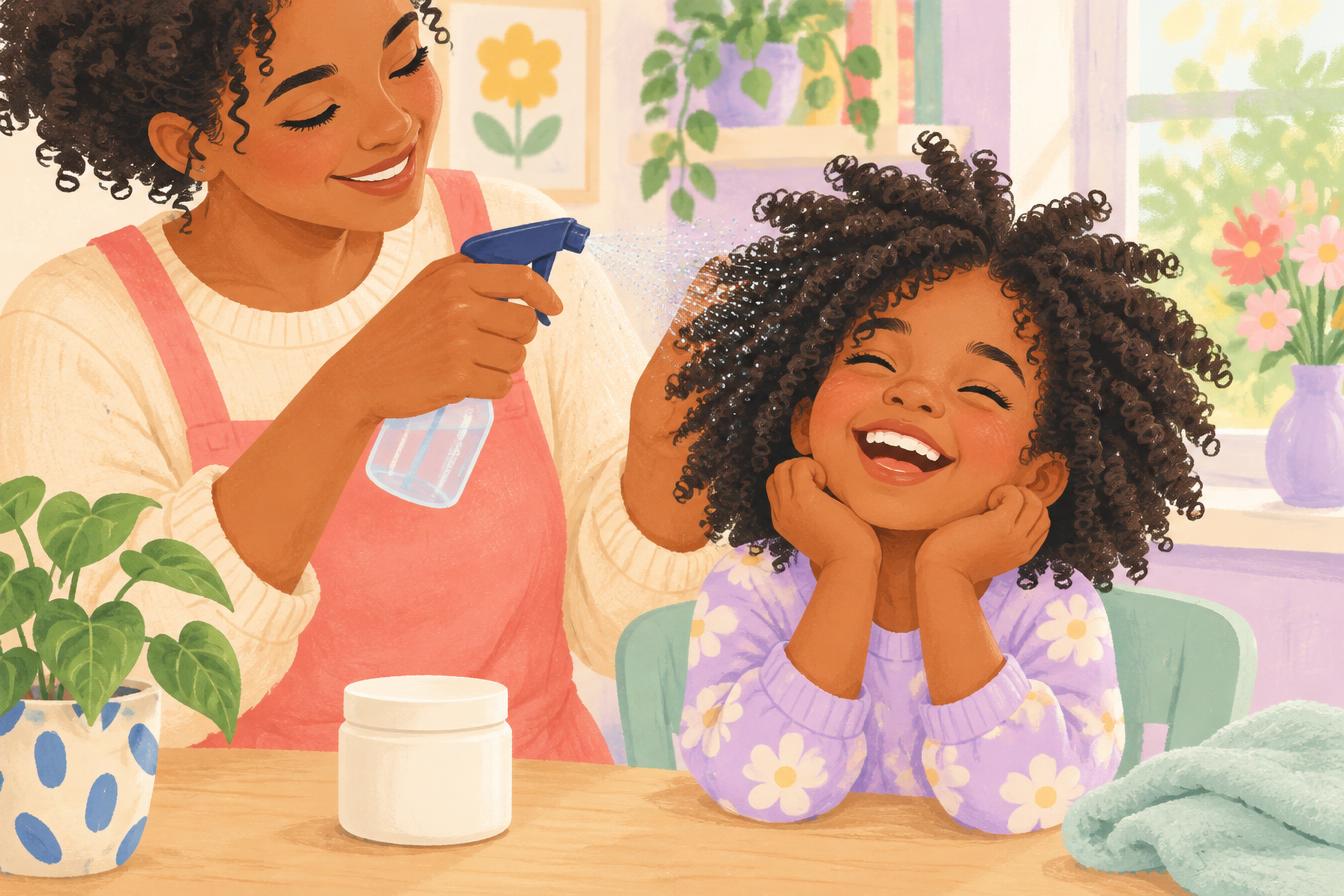
A lighter conditioner that stays in to keep hair soft and help with day-to-day moisture. It’s often the most useful product for curly kids.
Moisturizer or cream
Adds softness and helps hold moisture in. Richer creams suit coily hair; lighter lotions suit looser curls.
Oil
A small amount seals in moisture and adds shine, best used last over damp hair and leave-in.
Styling products
Gels, custards and edge products help define or hold a style. Use sparingly and wash out on wash day.
The order matters
A reliable order for wash day is:
- Shampoo (scalp only)
- Conditioner (full length) — detangle now
- Leave-in conditioner on damp hair
- Cream or moisturizer, if needed
- Oil on the ends, if needed
- Styler, if needed, then style
Tip: Think “water, then seal.” Lighter, water-based products go on first; heavier creams and oils go on last.
Three sample routines
The minimal routine (great for toddlers)
- Wash day: shampoo, conditioner, leave-in.
- Between: water mist and a dab of leave-in on dry ends.
- Night: satin pillowcase.
The everyday routine (most school-age kids)
- Wash day: shampoo, conditioner, leave-in, cream, loose style.
- Mid-week: mist, leave-in, re-twist or retie.
- Night: bonnet or scarf.
The extra-moisture routine (coily or very dry hair)
- Wash day: pre-poo, shampoo, deep conditioner, leave-in, cream, light oil on ends.
- Two or three times a week: mist, leave-in, seal ends.
- Night: bonnet plus satin pillowcase.
Choosing and trying products
- Look for products described as made for curly or coily hair, and fragrance-free options for sensitive skin.
- Try one new product at a time for a couple of weeks, so you can tell what’s working.
- Patch-test new products on a small area of skin if your child has sensitive skin or eczema, and stop if there’s any redness or itching.
- Keep products out of reach of young children, and away from eyes.
- Price and packaging aren’t signs of quality — how your child’s hair feels is the real test.
At every age
Every child is different — use these as a starting point, not a rulebook.
Babies
A mild, fragrance-free baby wash and a tiny bit of gentle moisturizer if needed. Nothing more.
Toddlers
The minimal routine. Keep styling products to a minimum.
Preschoolers & school age
The everyday routine, with children helping apply leave-in and cream.
Preteens
They can run their own routine and adjust products with your guidance.
Common mistakes to avoid
- Switching products constantly before any has a fair try.
- Using too much product, which weighs hair down and builds up.
- Putting heavy oil on dry hair before any water or leave-in.
- Skipping conditioner on wash day.
- Using adult treatments, relaxers or strong fragrances on young children.
Tips for curly, coily and textured hair
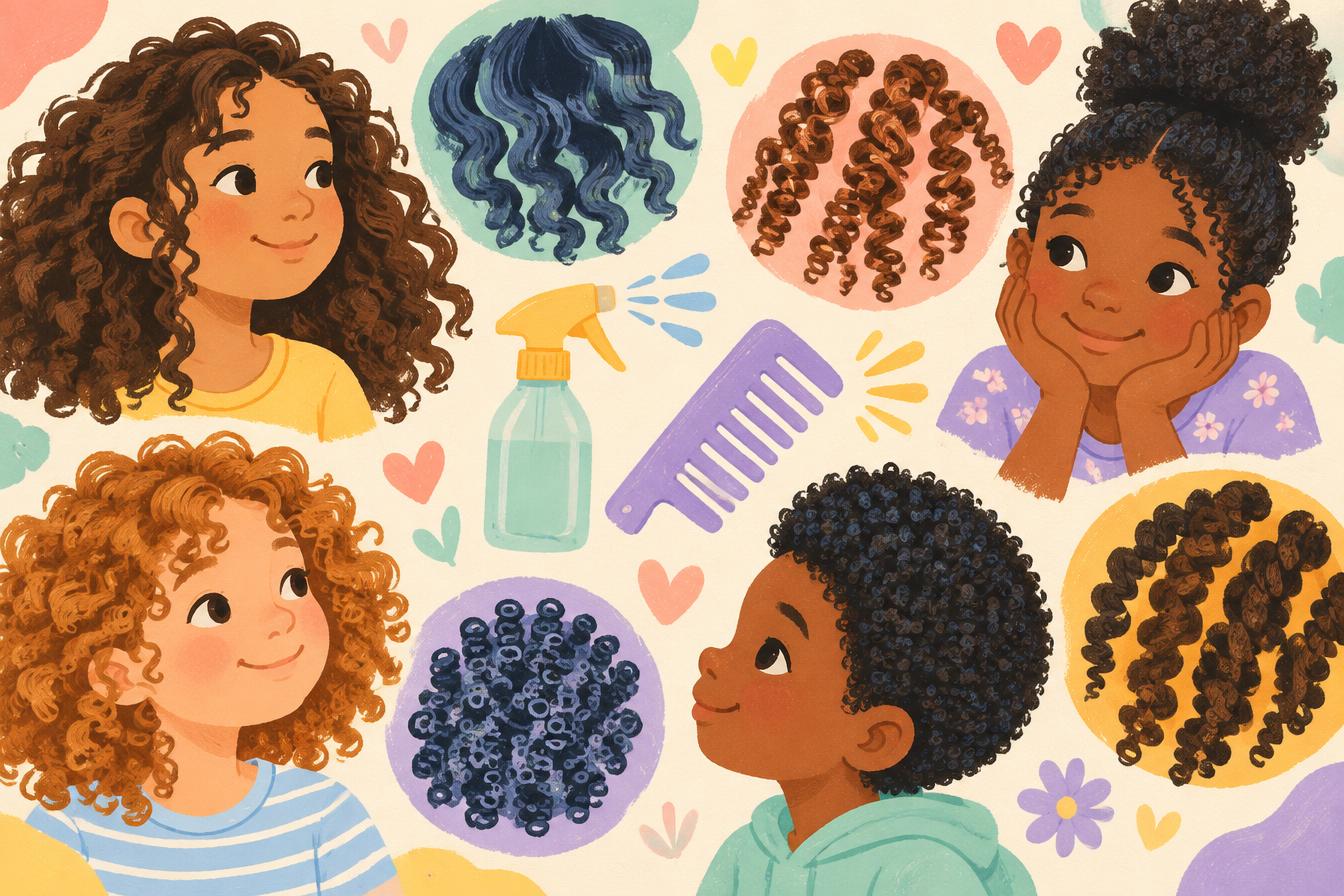
- Tighter coils often need more slip and richer creams; looser curls may need lighter products.
- Apply products section by section so every strand gets covered.
- Clarify occasionally if you use gels or heavy creams regularly.
Questions parents ask
How many products does my child really need?
Most children do well with three: a gentle shampoo, a conditioner and a leave-in. Add a cream, oil or styler only if the hair needs it.
Do I need to buy products made for kids?
Gentle, fragrance-free and non-irritating matters more than the label. Products made for children are designed with that in mind, which can make choosing easier.
How do I know if a product isn’t working?
Hair that feels dry, sticky, heavy or tangles quickly after use, or a scalp that becomes itchy or flaky, are signs to adjust. Give each product a couple of weeks unless there’s irritation.