What pool and sea water do to hair
Chlorine helps keep pools clean, but it strips away natural oils that protect the hair, leaving it dry, rough and more likely to break. Salt water can have a similar drying effect. Curly and coily hair, which is already on the dry side, feels these effects quickly — especially with frequent swimming.
Before swimming
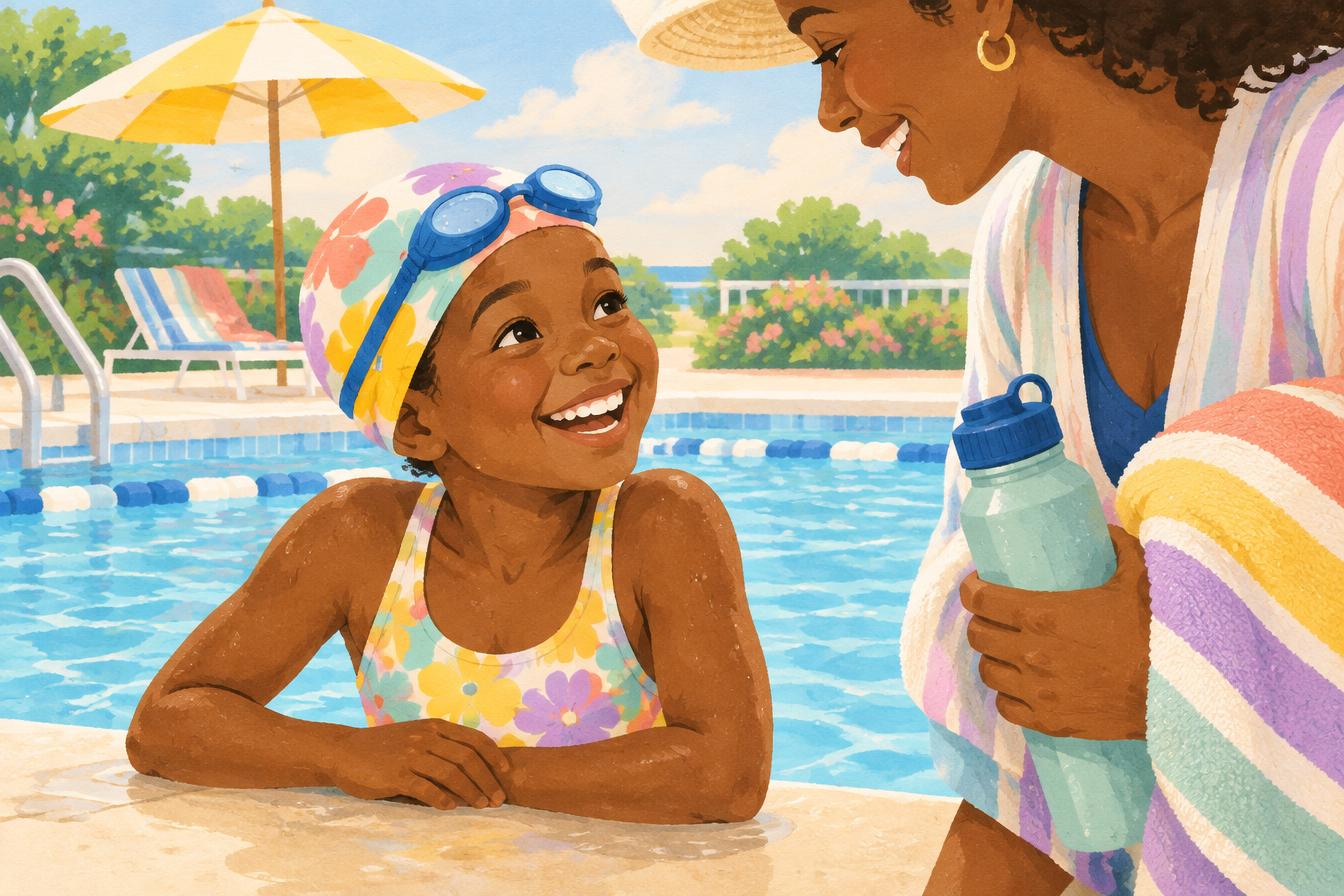
- Wet the hair with clean tap water first. Hair that’s already full of clean water absorbs less pool or sea water.
- Smooth a leave-in conditioner or light layer of conditioner through the hair.
- Gather the hair into a loose braid, twists or a low bun to reduce tangling.
- Add a swim cap if your child is comfortable in one. Caps made with extra room for thick, curly or braided hair are widely available.
Tip: Wetting the hair and adding conditioner first also makes a swim cap easier to put on and take off.
After swimming
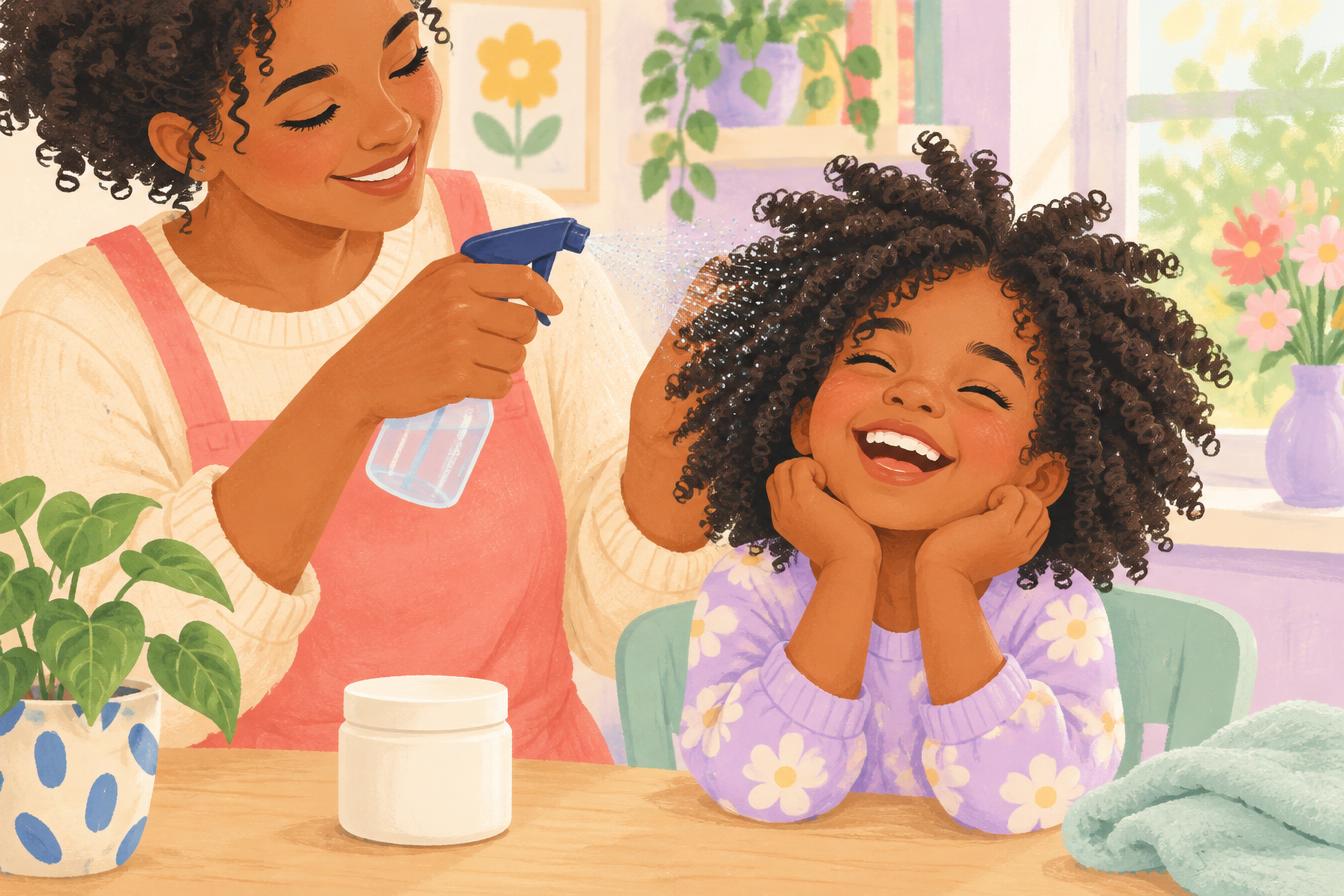
If a full wash isn’t possible after every swim, a thorough rinse and conditioner is the next best thing. Plan a proper wash within a day or two.
- Rinse the hair with clean water as soon as possible — poolside showers are fine.
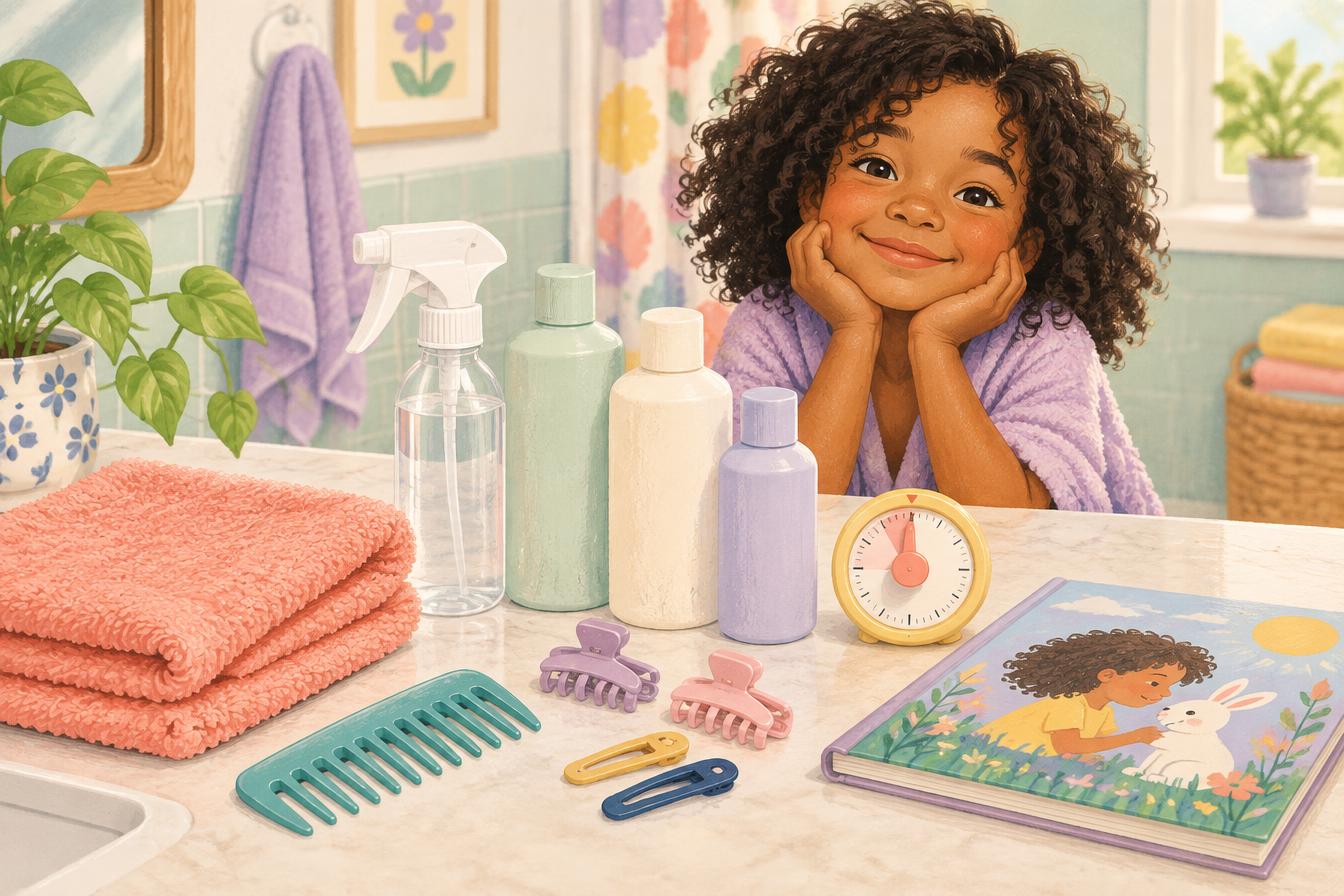
- Back home, wash with a shampoo, or a swimmers’ shampoo if your child swims often. Dermatologists recommend following with a deep conditioner.
- Detangle gently in sections with the conditioner in.
- Apply leave-in, then a cream or oil to seal.
- Re-style loosely and let the hair dry.
Swim lessons and frequent swimmers
- Braids or twists are practical for lesson weeks — rinse and condition them after each swim.
- Wash the scalp in braided styles after swim weeks so chlorine doesn’t sit on the scalp.
- Add a deep condition once a week during swim season.
- Watch for extra dryness or breakage and adjust by rinsing and conditioning more.
Sun and beach days
Sun can dry hair and burn the scalp along parts. A hat or a light scarf helps. Rinse sand and salt water out with fresh water before it dries into the curls.
At every age
Every child is different — use these as a starting point, not a rulebook.
Babies
Keep swims short, rinse hair with clean water afterward and use a gentle baby wash. Follow pool guidance for infants.
Toddlers & preschoolers
Pre-wet and condition, then rinse straight after. Loose twists make after-swim detangling easier.
School age
Teach the rinse-before and rinse-after habit. Pack a small leave-in in the swim bag.
Preteens & team swimmers
A swim cap, swimmers’ shampoo and weekly deep conditioning become part of the routine.
Common mistakes to avoid
- Letting pool water dry in the hair without rinsing.
- Detangling dry, chlorinated hair.
- Skipping conditioner after swimming.
- Pulling tight swim caps on and off dry hair.
- Keeping children out of the pool to protect their hair — swimming matters more.
Tips for curly, coily and textured hair
- Silicone caps are more waterproof; fabric caps are gentler but let more water in.
- Loose braids under a cap reduce friction and matting.
- Coily hair often needs a richer conditioner after chlorine.
Questions parents ask
Does my child need a swim cap?
Not necessarily. A cap reduces how much pool water reaches the hair, but pre-wetting, conditioning and rinsing afterward already help a lot. Choose what makes your child comfortable in the water.
Should I wash my child’s hair after every swim?
Rinsing after every swim is important. A full wash and condition after swimming is ideal, especially for frequent swimmers; a rinse and conditioner can bridge the gap.
Can my child swim with braids?
Yes. Rinse and condition the braids after swimming, and wash the scalp regularly during swim season.
Does chlorine turn hair green?
Green tints come mainly from minerals like copper in pool water, and show most on lighter or chemically treated hair. Rinsing promptly helps.