What makes a style “protective”
- The ends of the hair are tucked in or grouped together.
- The style lasts several days to a few weeks, so hair is handled less.
- It is installed without pulling, pain or tight edges.
- The scalp can still be cleaned and moisturized.
Kid-friendly low-tension styles
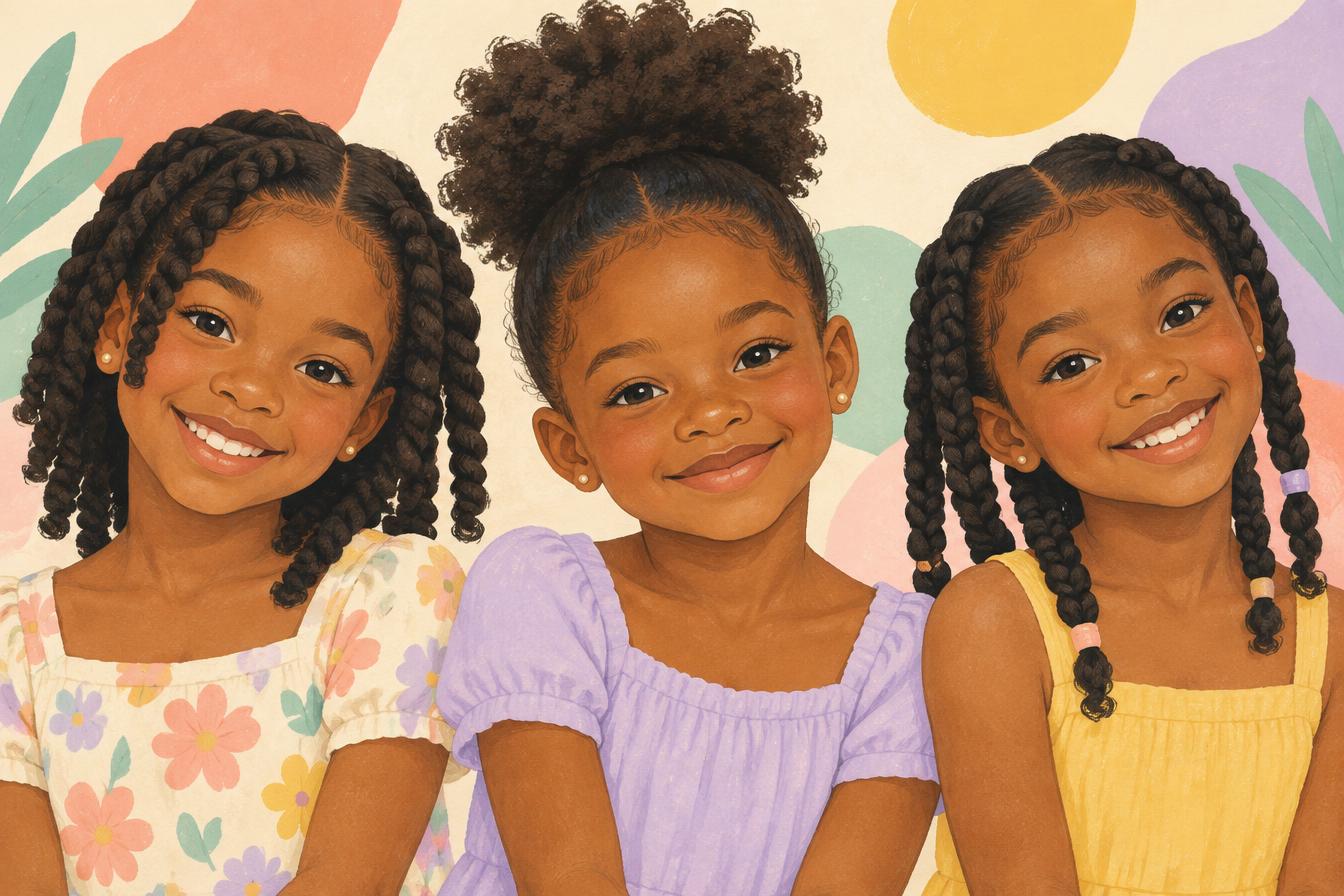
Chunky two-strand twists
Quick to install and easy to take down. Larger sections mean less tension on each spot of the scalp.
Loose box braids
Choose medium-to-large braids and keep any extensions light and short. The lighter the braid, the less it pulls.
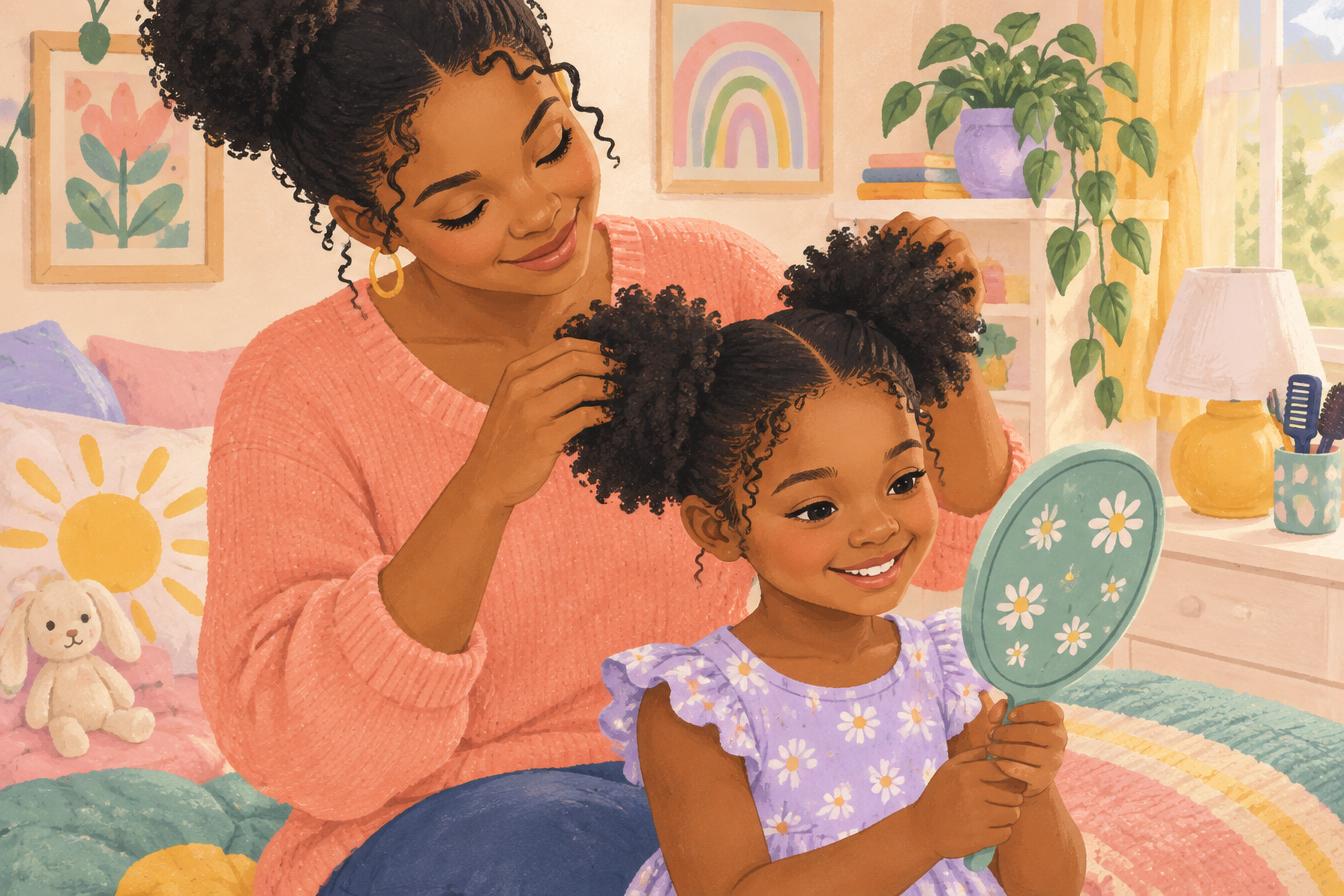
Soft puffs
Use a stretchy, fabric-covered tie. Move the position of the puff every few days.
Loose cornrows
Ask for a gentle grip at the root, especially along the hairline. Fewer, larger rows are best for young children.
Bantu knots and flat twists
Cute for a few days and a nice way to stretch hair. Keep knots loose so they don’t tug at the root.
Tension: the part that matters most
Dermatologists say that tight cornrows, braids, locs, ponytails and heavy extensions can pull hair out over time, causing traction alopecia — and that girls and women of African descent are especially affected, with habits often starting in childhood. The American Academy of Dermatology puts it simply: if it hurts while being styled, ask for it to be stopped and redone. Pain equals damage.
- Your child should be able to move their eyebrows and forehead freely.
- There should be no bumps, redness or “tented” hair at the roots.
- Your child shouldn’t need pain relief to sleep after a new style.
- Leave the edges out or style them very loosely.
Scalp care in protective styles
- Wash the scalp every one to two weeks with diluted shampoo applied between the parts, then rinse thoroughly.
- Follow with a light leave-in or conditioner spray on the lengths.
- Lightly moisturize the lengths two or three times a week.
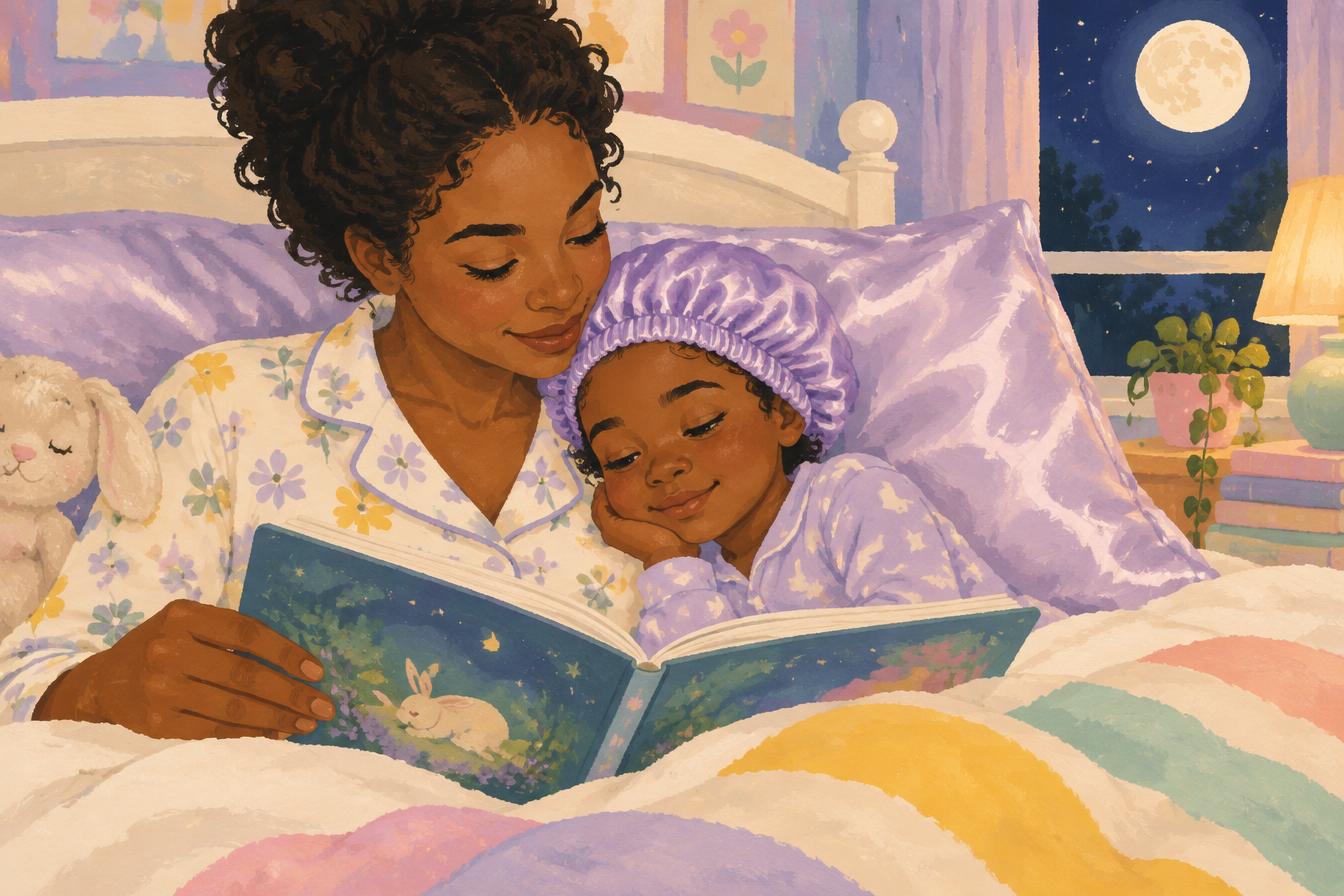
- Protect the style at night with a satin bonnet or scarf.
- Watch for itching, flakes, bumps or tender spots and take the style down if they appear.
Taking it down
Plan take-down day for when you have time. Work slowly with a little conditioner or oil, remove shed hair gently, and detangle each section before washing. Give the hair and hairline a rest of a few days to a week with a loose style before the next install.
At every age
Every child is different — use these as a starting point, not a rulebook.
Toddlers
Simple, quick styles like a few chunky twists or puffs. Skip extensions and long installs.
Preschoolers
Short installs with breaks. Loose twists or a few larger braids work well.
School age
Braids and twists lasting two to four weeks are common. Keep extensions light and edges loose.
Preteens
Help them learn their own limits, speak up about tightness, and care for their scalp in the style.
Common mistakes to avoid
- Tight edges, or styles that cause pain, headaches or bumps.
- Heavy or very long extensions on young children.
- Leaving styles in so long that roots mat and lock together.
- Forgetting to wash and moisturize the scalp.
- Re-installing the next tight style immediately after take-down.
Tips for curly, coily and textured hair
- Install on clean, moisturized, fully detangled hair.
- Stretching the hair with twists beforehand makes braiding faster and gentler.
- Rotate part placement so the same spots aren’t under tension every time.
Questions parents ask
How long should a protective style stay in?
It depends on the style and the child. Many families aim for about one to four weeks, taking it down sooner if there’s itching, bumps, pain or matting.
Are extensions safe for children?
Light, short extensions installed loosely can be fine for older children. The added weight increases pull on the scalp, so skip them for very young children.
My child says the style hurts. Will it loosen?
Don’t wait for it to loosen. Pain means the hair is being pulled hard enough to cause damage. Loosen the sore sections or take them out.
Can boys wear protective styles?
Yes. Twists, braids, cornrows and locs are great for any child when installed gently.