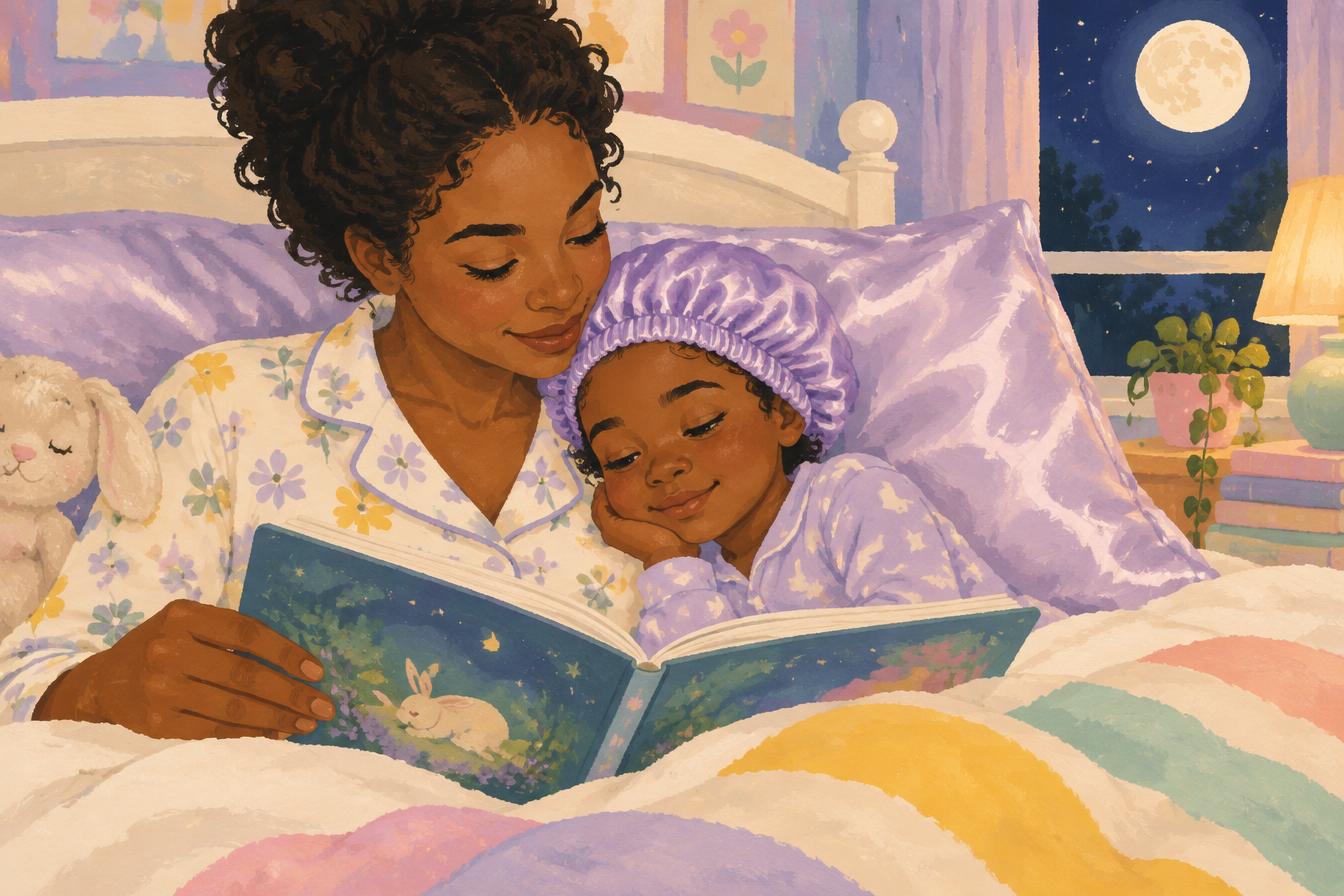
Why night-time protection matters
Cotton is absorbent and slightly rough, so it soaks up the moisture you put into the hair and snags curls as your child moves. Satin and silk are smoother and less absorbent, so hair glides over them. Many families find their child’s style lasts days longer once they start protecting it at night.
Your options
Satin or silk bonnet
Covers all the hair and is easy for children to put on themselves. Choose one with a soft, wide band that sits comfortably — not a tight elastic that digs into the hairline.
Satin scarf
Great for shorter hair or styles that need to stay flat. Tie it snugly enough to stay on, but never tight.
Satin or silk pillowcase
The easiest option for children who pull off bonnets during the night. It also works as a back-up under a bonnet.
Durag
Helps keep short styles and waves neat. Tie it comfortably and avoid a tight band across the forehead.
A five-minute bedtime routine
- Check the hair for dry spots. Lightly mist and add a little leave-in to the ends if needed.
- Gather the hair so it doesn’t mat: loose twists or braids for longer hair, a high loose “pineapple” for curls, or leave short hair as is.
- Put on the bonnet or scarf, or check the satin pillowcase is on.
- Make it part of the routine — after teeth, before stories — so it becomes automatic.
Tip: Keep a spare bonnet in the car or overnight bag for sleepovers and grandparents’ houses.
Safe sleep for babies
Bonnets, scarves, headbands and loose fabric are not safe for babies to sleep in. Follow your pediatrician’s safe-sleep guidance, and protect baby hair with a gentle routine during the day instead. Many families introduce a bonnet or satin pillowcase once a child has moved to a toddler bed and their pediatrician says a pillow is appropriate.
At every age
Every child is different — use these as a starting point, not a rulebook.
Babies
No bonnets, scarves or loose items in the crib. Keep hair care to daytime.
Toddlers
Start with a satin pillowcase once a pillow is appropriate. Try a soft bonnet when they’re ready.
Preschoolers
Let them choose a bonnet in a favorite color or pattern and practice putting it on.
School age & preteens
They can manage the whole routine. A bonnet plus satin pillowcase is the best back-up plan.
Common mistakes to avoid
- Tight elastic bonnets that press on the hairline.
- Tying scarves tightly across the forehead.
- Going to bed with soaking-wet hair, which can mat and stay damp.
- Skipping protection only on busy nights — that’s often when styles unravel.
Tips for curly, coily and textured hair
- Stretching hair in loose twists overnight gives defined curls in the morning.
- A “pineapple” — loosely gathering curls on top of the head — keeps curl shape for wash-and-go styles.
- Washing bonnets and pillowcases regularly keeps oils and product off the skin.
Questions parents ask
Satin or silk — which is better?
Both are smooth and gentle. Silk is a natural fiber and often pricier; satin is a weave, usually polyester, and easy to wash. Either works well.
My child pulls the bonnet off every night. What now?
Use a satin pillowcase as the main protection. A bonnet with a softer, wider band or a snug-fitting sleep cap may also stay on better.
At what age can children start wearing a bonnet?
Once they’re out of the baby sleep stage and your pediatrician agrees a pillow is appropriate. Many families start in the toddler years.