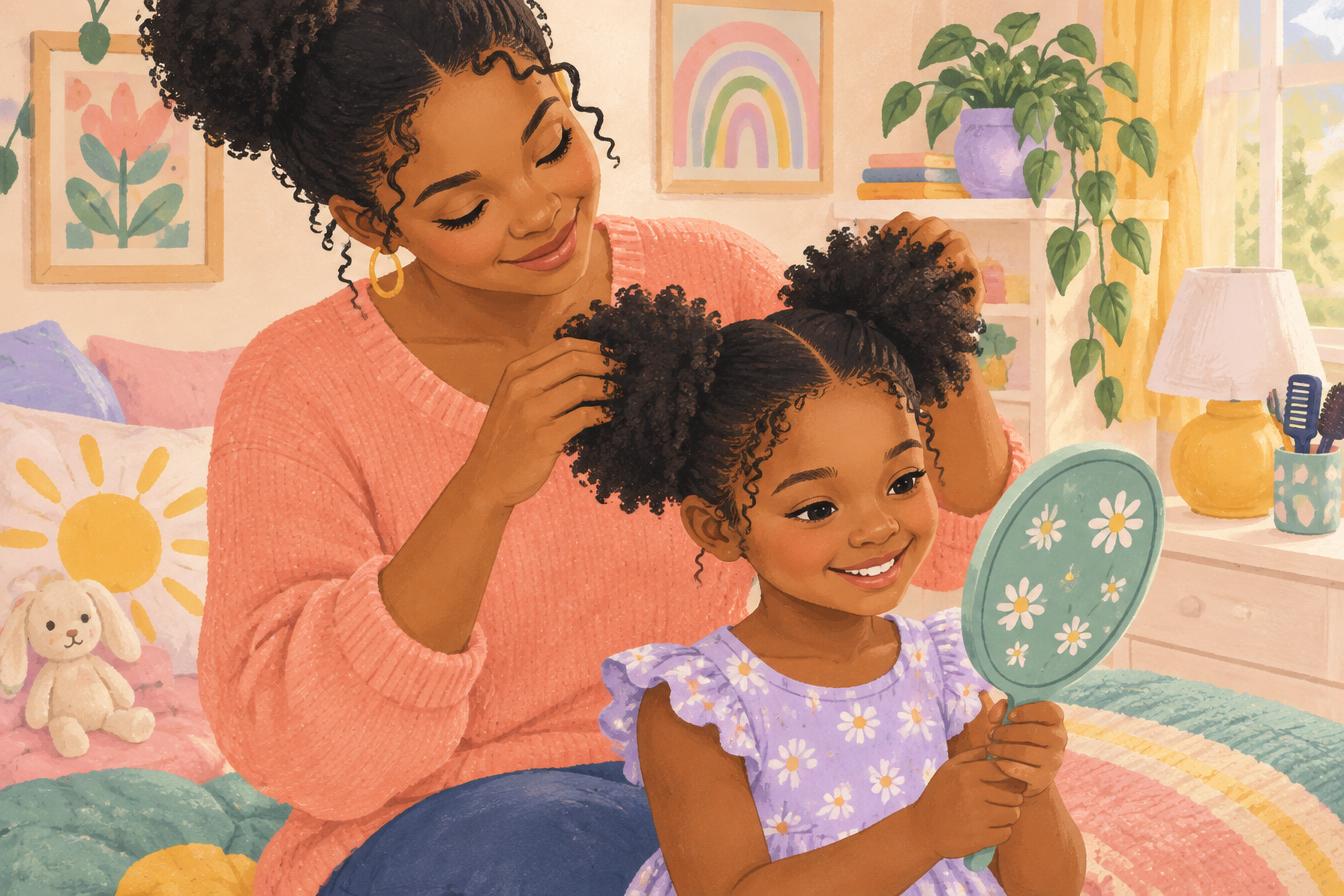
A realistic daily routine
Daily care should take minutes, not an hour. The goal is to keep the style fresh and the ends moisturized without redoing everything.
- Remove the night-time bonnet or scarf and check how the hair feels.
- Lightly mist any dry areas with water — often the ends, nape and crown.
- Smooth in a small amount of leave-in or cream, focusing on the ends.
- Refresh edges with your fingers or a soft brush. Avoid brushing them flat every day.
- Secure the style with snag-free, fabric-covered ties placed loosely.
Styles that last and feel good
Puffs
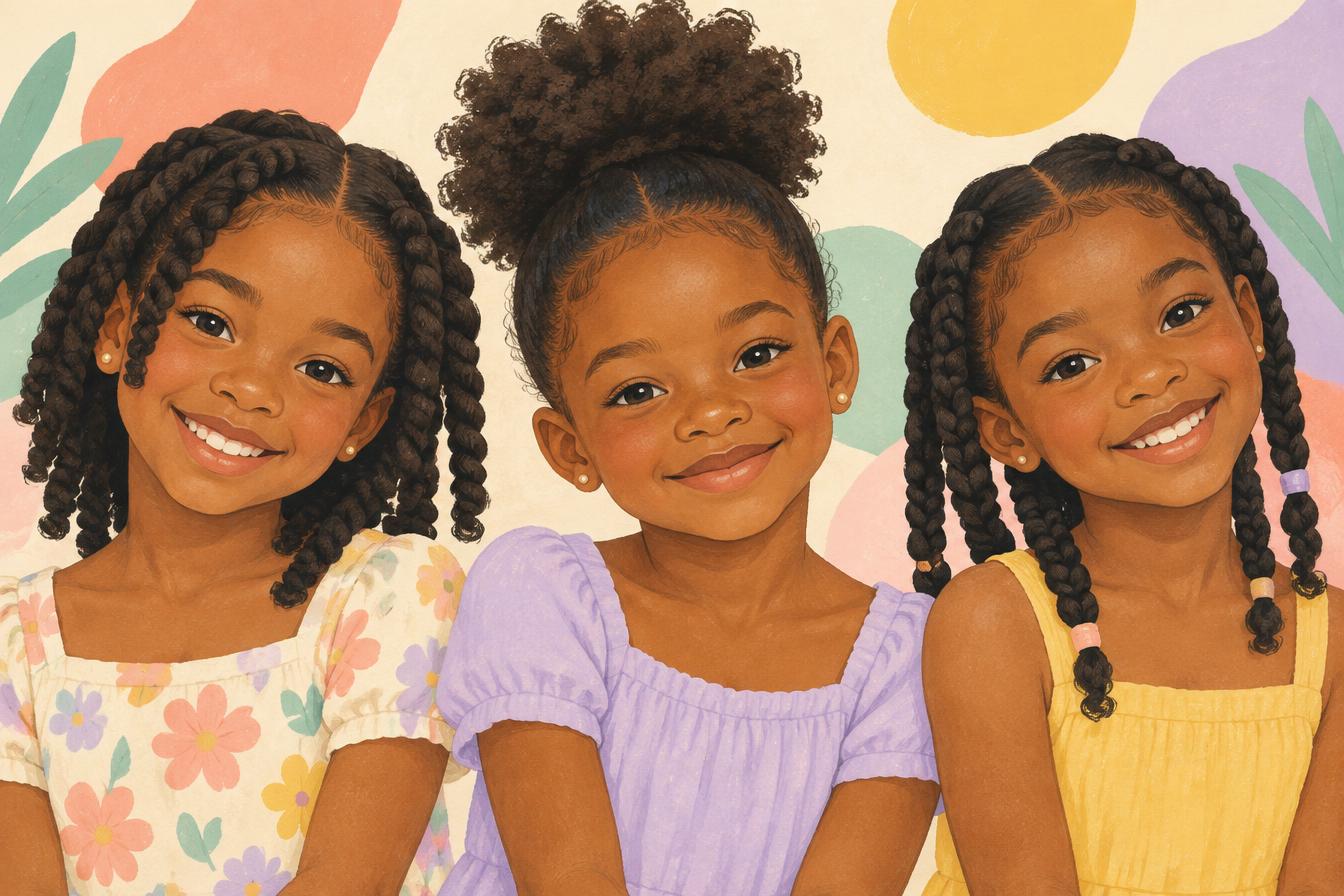
One or two loose puffs are fast and adorable. Use a soft, stretchy tie and move the puff’s position every few days so the same spot isn’t pulled.
Twists
Chunky two-strand twists on moisturized hair can last a week or more. The bigger the section, the less tension on the scalp.
Braids and cornrows
Beautiful and long-lasting when loose at the root. Keep extensions light, and ask for fewer, larger braids for younger children.
Wash-and-go
Letting curls hang free is a lovely option, especially for looser curl patterns. Protect it at night and refresh with water in the morning.
Tip: Rotate between a few styles and give the hairline a rest between braided styles.
Minimizing breakage
Breakage shows up as short, snapped hairs, especially at the ends, nape and edges. Most of it comes from dryness, friction and tension — all things you can change.
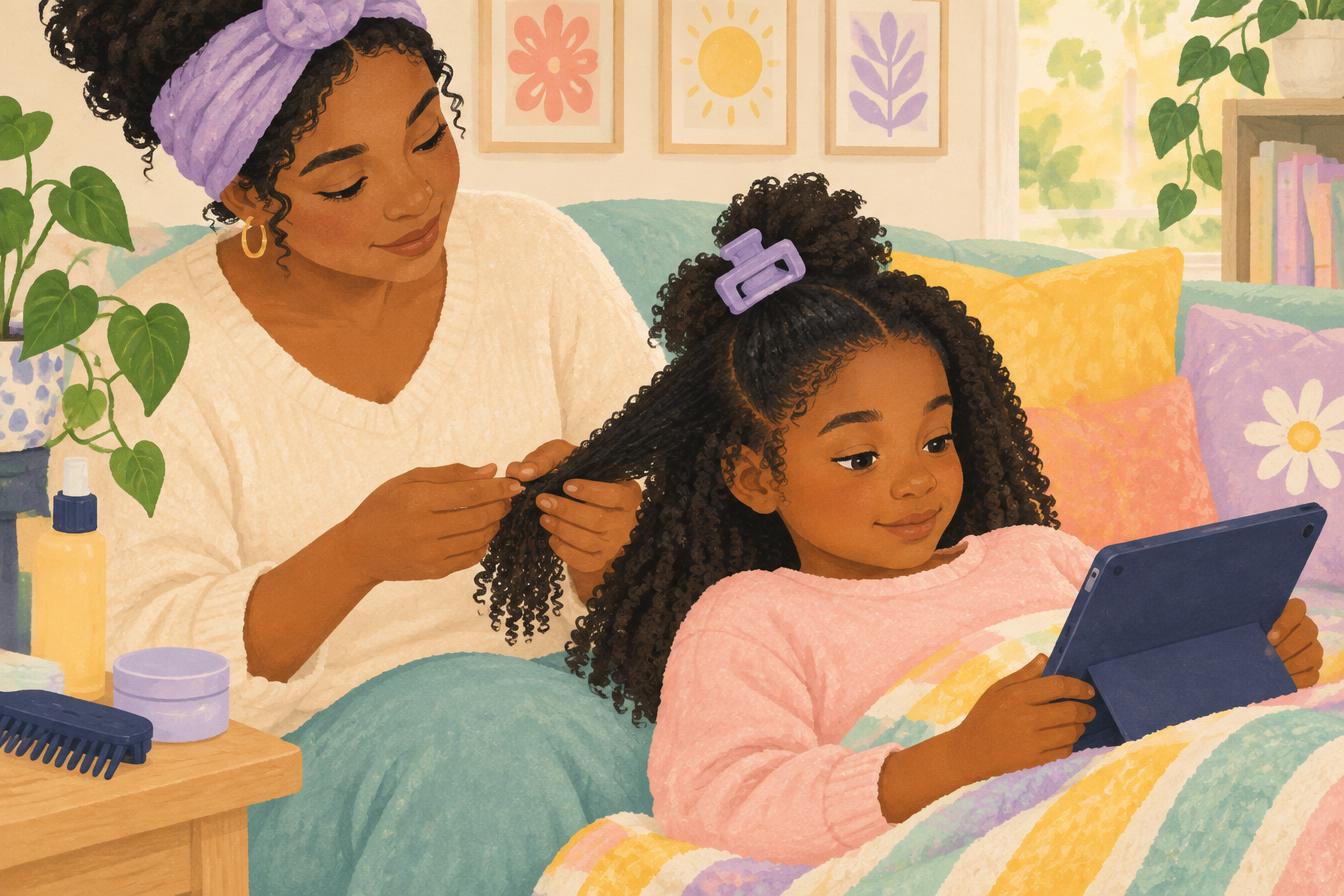
- Detangle only when the hair is damp and conditioned, in sections, starting at the ends.
- Avoid bare rubber bands and metal clasps. Choose covered ties and claw clips.
- Trim split ends every few months so splits don’t travel further up the strand.
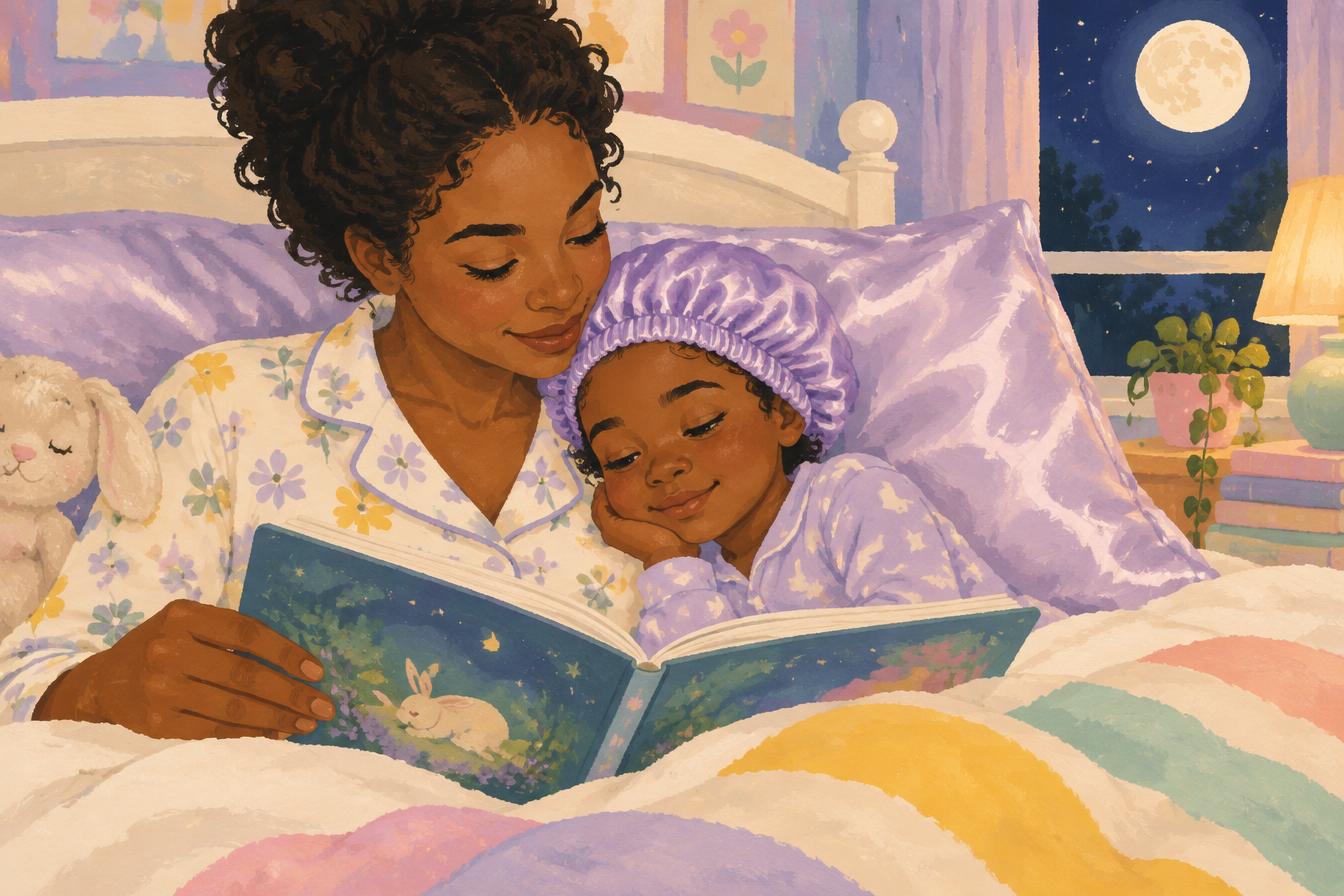
- Protect hair at night with a satin bonnet, scarf or pillowcase.
- Limit heat. If you do straighten for a special occasion, keep the temperature low and use a heat protectant.
- Keep chemical relaxers and texturizers off the table for young children.
Signs a style is too tight
Dermatologists warn that repeated tight styles can lead to hair loss called traction alopecia, and that it often starts in childhood. A style is too tight if you see:
- Small bumps or pimples around the braids or hairline
- Redness, tenderness, or your child complaining of a headache
- Hair standing up in little tents at the root
- Thinning or broken hair along the edges
Tip: If it hurts, it is too tight. Take it down or loosen it — even if the style was just finished.
At every age
Every child is different — use these as a starting point, not a rulebook.
Toddlers
Simple puffs or a few chunky twists. Skip extensions, beads that pull, and styles that take hours.
Preschoolers
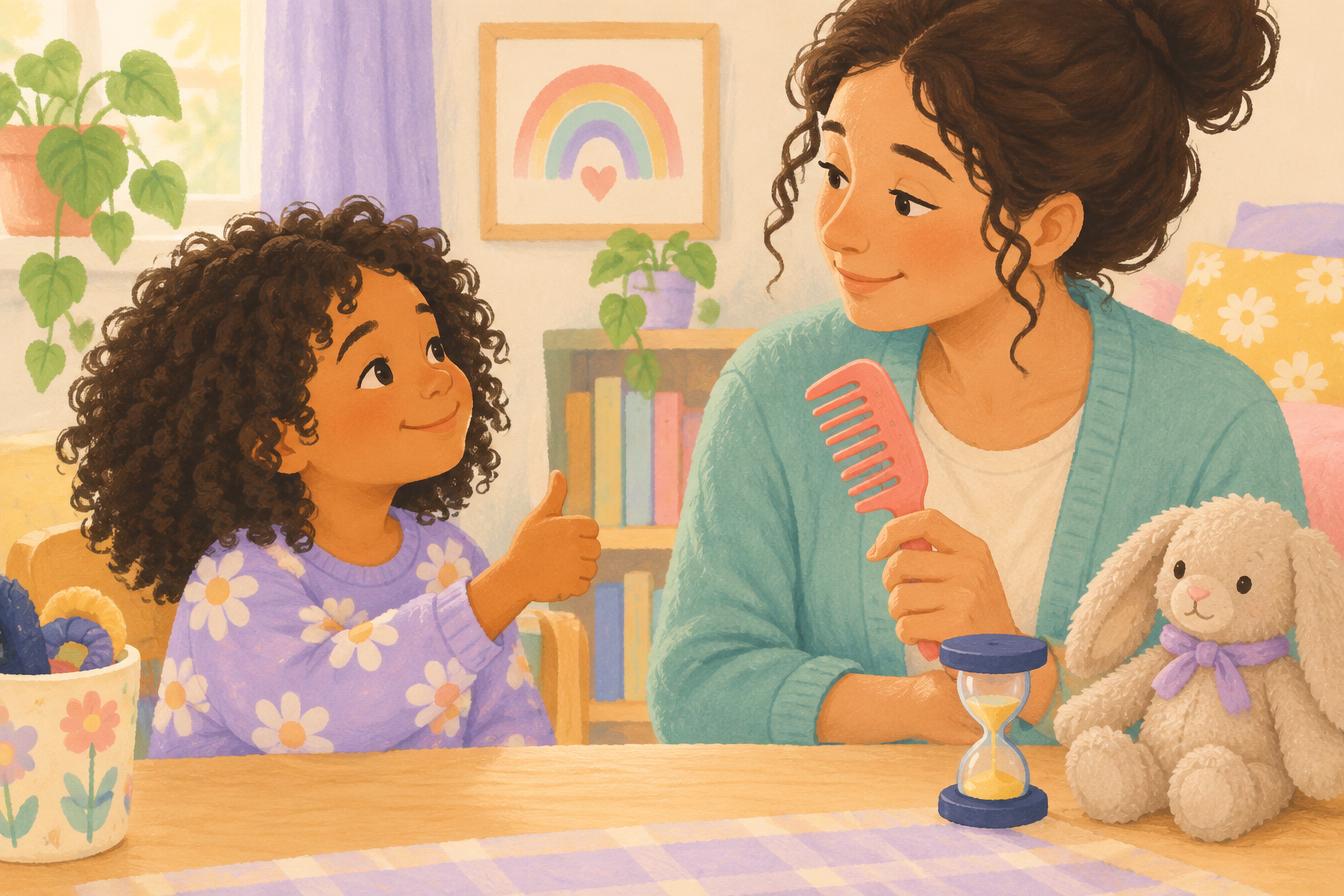
Let her pick accessories and hold the mirror. Plan styles that last several days to cut down on handling.
School age
She can learn to moisturize her ends and tie on her bonnet. Longer braided styles are fine if they stay loose.
Preteens
Talk openly about heat, chemicals and tension so she can make informed choices about her own hair.
Common mistakes to avoid
- Slicking edges down tightly with brushes and heavy gel every day.
- Leaving braided styles in for too long, until the roots mat together.
- Heavy extensions or lots of beads on young, fine hair.
- Taking down styles quickly and dry, which snaps hair.
- Frequent heat straightening before hair is well moisturized.
Tips for curly, coily and textured hair
- Take styles down slowly with a little conditioner or oil on the hair.
- Wash the scalp between braided styles and before the next install.
- Cotton towels and rough pillowcases grab curls — use a soft T-shirt and satin instead.
Questions parents ask
How long can braids stay in?
It varies with the style and the child, but many families aim for about two to four weeks. Take them out sooner if there is itching, bumps, pain or matting at the roots.
Is it okay to use edge gel?
An occasional light touch is fine. Brushing edges firmly every day, especially with tension from a tight style, can stress the hairline.
When is it okay to straighten my daughter’s hair?
Occasional low-heat straightening on well-conditioned hair can be done safely for older children. For young children, we suggest enjoying their natural texture and saving heat for rare special occasions, if at all.
Why does her hair seem to stop growing?
Hair usually keeps growing — it’s more often breaking at the ends. Focusing on moisture, gentle handling and night protection helps hair hold on to its length.